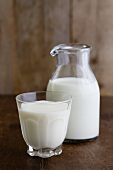
For the past decade, many people have taken to making their lives more ‘green’ or all ‘natural.’ This could mean anywhere from extreme recycling to consuming all organic and raw foods. There has been a heated debate, however, between scientists and consumers of raw milk. It has been argued that pasteurization destroys not only the ‘good’ bacteria found in milk but also some of its nutrients. Even with the claims that raw milk provides better nutrition and protects us from illness such as cardiac disease, the risks outweigh the benefits. According to the CDC, “Most public health professionals and health care providers consider pasteurization to be one of public health’s most effective food safety interventions ever.”
In New Jersey, Delaware, and Maryland, it is illegal to sell raw milk while in Pennsylvania, it is legal to sell raw milk retail and in New York it is legal to sell raw milk on farms. But before you consider crossing the state line to have a taste of what you cannot get in your home state, think about the repercussions. Consuming raw milk has the potential of containing deadly bacteria that could forever change your life and that of your loved ones.
Pasteurization kills pathogenic bacteria which occasionally may be present in milk. Milk contamination may occur from numerous sources including: cow feces coming into direct contact with the milk, infection of the cow's udder (mastitis), bacteria that live on the skin of cows and the environment. There are five common pathogens that are found in raw mild. These include: Brucella, E. coli 0157:H7, Campylobacter, Listeria and Salmonella. Each of these is prevalent in specific risk groups such as children, the elderly and the immunocompromised although anyone can contract a life-threatening infection from these bacteria. It is the higher risk groups that are more likely to go on to develop the more severe infections, especially children who drink more milk.
Find out what's happening in West Deptfordfor free with the latest updates from Patch.
Campylobacter is the most common diarrheal illness in the United States which is also found in infections from drinking raw milk. Most people who contract this organism experience diarrhea, cramping, abdominal pain, and fever within two to five days after exposure. The diarrhea may be bloody and can be accompanied by nausea and vomiting which typically lasts about one week. In immunocompromised people, the infection can very quickly take hold and spread into the blood stream which can become a life-threatening illness. Others may develop a rare disease called Guillain-Barré syndrome that affects the nerves of the body beginning several weeks after the diarrheal illness. This occurs when a person's immune system is "triggered" to attack the body's own nerves resulting in paralysis.
Brucella melitensis, which causes the infection brucellosis, produces acute flu-like symptoms or chronic symptoms that never go away such as recurrent fevers, arthritis, swelling of the testicle and scrotum area, swelling of the heart (endocarditis), neurologic symptoms, chronic fatigue, depression, swelling of the liver and/or spleen. This is a relatively rare disease and about 100-200 cases are reported annually. Dogs are infected by a different species, Brucella canis, which is rarely passed to humans and cats are resistant to the organism.
Find out what's happening in West Deptfordfor free with the latest updates from Patch.
E. coli 0157:H7 is the most common infectious agent found in travelers’ diarrhea and is also found in raw milk products. It causes severe, acute, bloody diarrhea which lasts 5-10 days and resolves on its own. Some strains of E. coli produce a toxin named Shiga toxin producing E. coli (STEC) which can cause hemolytic uremic syndrome (HUS) which predominantly affects children where the red blood cells are destroyed and the kidneys fail.
Listeria monocytogenes which causes listeriosis primarily affects older adults, pregnant women, newborns, and adults with weakened immune systems. Almost everyone who is diagnosed with listeriosis has an invasive infection, in which the bacteria spread beyond the gastrointestinal tract. Infection can range anywhere from septicemia and meningitis to aborted fetuses and neonatal bacteremia. There has been a very recent case of a Listeria outbreak in Waterloo, Wisconsin at a Crave Brothers Farmstead Cheese Company on July 3, 2013 with a total of five reported cases with one death.
Salmonella enteritidis and typhimurium are the two most common species seen in the US and cause salmonellosis. Most persons infected with Salmonella develop diarrhea, fever, and abdominal cramps 12 to 72 hours after infection. The illness usually lasts 4 to 7 days, and most persons recover without treatment. Like the above pathogens, these organisms have the potential to cause life-threatening illness. A small number of people develop a reactive arthritis with joint pain, irritated eyes and painful urination which can last for years and is not affected by antibiotics.
Even though the thought of living organically and all natural is appealing to many people, the risks should be assessed as to how an infection of this magnitude would affect your family. Some people feel very strongly about the health issues and make the argument that children raised on farms drinking and eating raw milk products have fewer allergies and do not have asthma. And then there are the beliefs that raw milk actually decreases the risk of cardiac disease even though the fat content of raw milk is much higher than whole, pasteurized milk. Either way, it is a decision which is not to be taken lightly and probably will continue for years to come.