Schools
Wheelabrator Wildlife Refuge Recertified by Habitat Council
The facility off Crown Point Road earned a nod from the group's Wildlife at Work program.


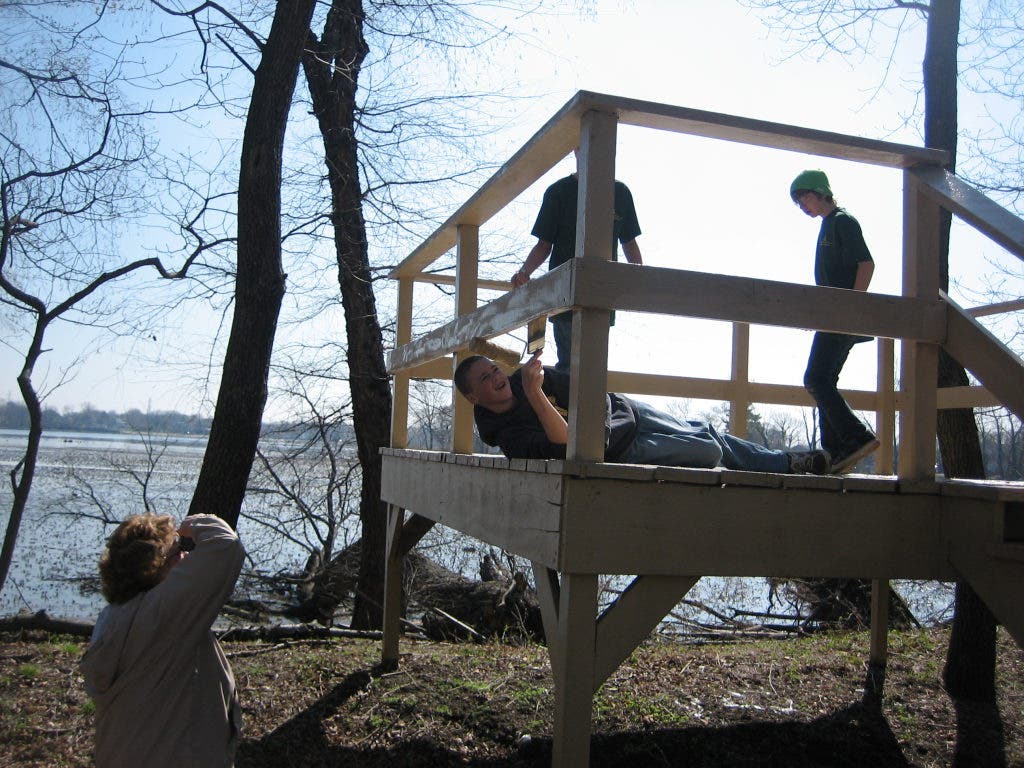


Wildlife refuge probably isn’t the first thing that comes to mind when you think of a trash-to-energy plant, like the Wheelabrator plant off Crown Point Road.
But beyond the massive, earth-toned building and its towering stack, acres upon acres of undeveloped land give hikers and animal lovers a chance to connect with nature.
It’s where students have built a butterfly garden and in the past two years, and where bobwhite quail could potentially make a comeback through a .
Find out what's happening in West Deptfordfor free with the latest updates from Patch.
Those conservation efforts are part of what led to the Wildlife Habitat Council (WHC) recertifying the Gloucester plant as part of its Wildlife at Work program at the group’s 23rd annual symposium this week.
Mike Kissel, plant manager for Wheelabrator Gloucester, said it’s the partnership with groups like the middle school club that make it possible for his wildlife team to accomplish its goals.
Find out what's happening in West Deptfordfor free with the latest updates from Patch.
“They’ve been a huge help and partner in this recertification,” he said, calling the volunteer effort a way to build a sense of community out at the refuge.
While the middle school students and other groups, such as the South Jersey Land & Water Trust and the Gloucester County Nature Club, have worked on various projects throughout the wildlife refuge, Kissel’s team at the plant have been working to restore the quail habitat, removing invasive phragmites, a water-loving reed, from the 35 acres near the Delaware River.
It’s into that restored area the quail were released about two months ago, and Kissel said they’re doing well.
“There’s a good habitat for them,” he said.
Wheelabrator Gloucester is one of 17 programs throughout New Jersey certified by WHC, which uses a team of biologists and staff members to evaluate sites.
Kissel said the company is already moving toward goals for the coming year, which include continuing to work to restore the native grassland area and remove the phragmites, as well as raising another round of quail, with the potential for a breeding population to take hold.
And there’s the annual middle school project to consider, Kissel said, which may involve beehives to work in tandem with the butterfly garden the students installed two years ago.
The ultimate aim is to continue improving the refuge, he said.
“It’s kind of a hidden gem,” Kissel said about the refuge. “Not many people know about it. The people that do are here every day.”
Wheelabrator owns about 150 acres at the site, and only uses about 40 acres for the plant, with the rest set up as the wildlife refuge. In addition, the waste-to-energy power plant processes 525 tons of trash a day and generates fourteen kilowatts of electricity.
The recertification at Wheelabrator Gloucester is one part of a larger effort by Waste Management, Wheelabrator’s parent company, which has 128 WHC-certified programs at 110 sites, comprising 26,000 acres of wildlife habitat.
Get more local news delivered straight to your inbox. Sign up for free Patch newsletters and alerts.