Politics & Government
2 Bills NJ Gov. Phil Murphy Could Sign That May Change Your Life
Gov. Phil Murphy could soon sign legislation that would have a big impact on your electric service and how you use your sick days at work.


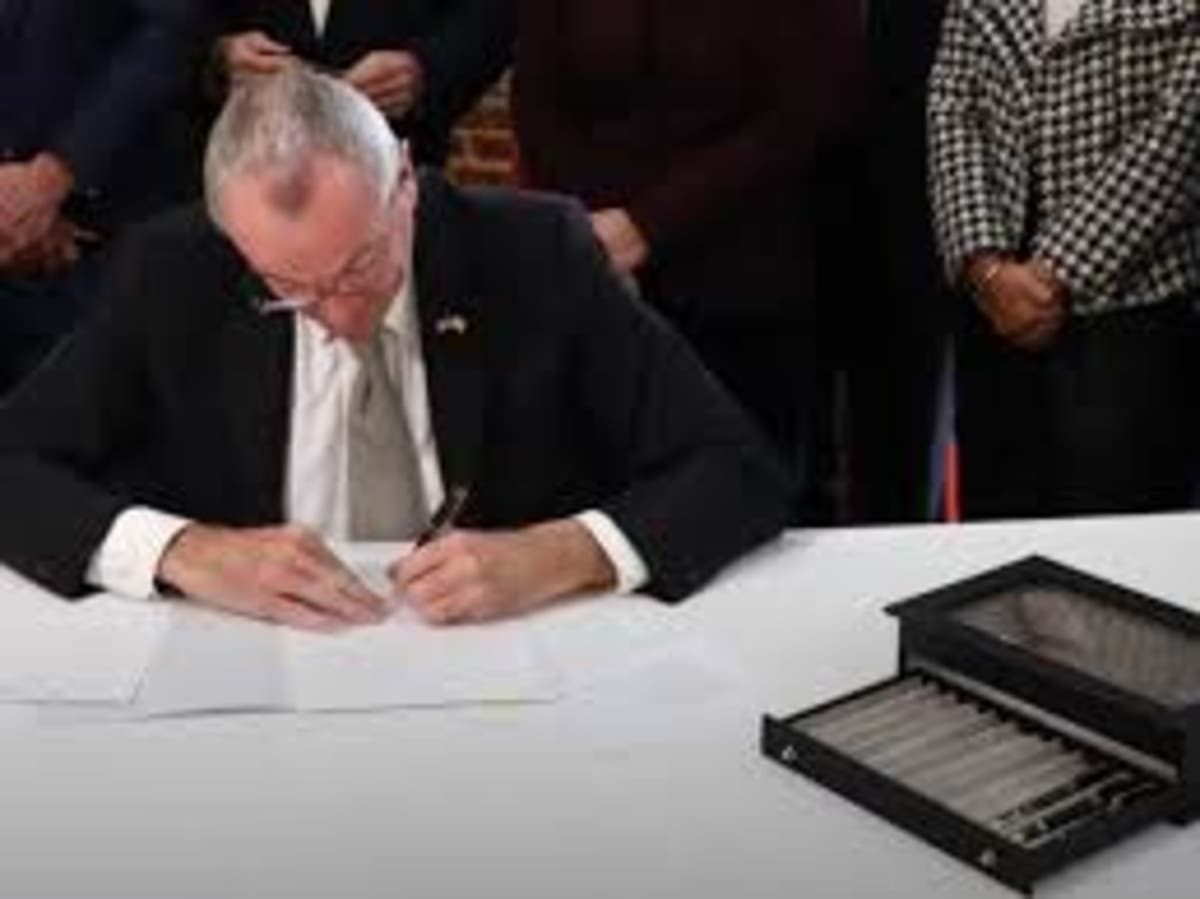
Gov. Phil Murphy could soon sign two bills that may have a big impact on your life – especially the quality of your electric service and how you use your sick days at work.
The state Senate Economic Growth Committee passed legislation this past week to hold utility companies accountable for failing to provide reliable service, and fine them $25,000 a day if they fail to do so.
The bill, sponsored by Sen. Joe Pennacchio, R-Morris, has bipartisan support, and Murphy himself said he was "mad as heck" when hundreds of thousands were left without power following the recent nor'easters that hit New Jersey.
Find out what's happening in Westfieldfor free with the latest updates from Patch.
Meanwhile, a bill from state Assembly Democrats that would require employers to provide earned sick leave to workers in New Jersey passed the Senate Budget and Appropriations Committee Thursday.
The Assembly approved the bill (A-1827) in March. Sponsored by Pamela Lampitt, Raj Mukherji, Jerry Green, Shavonda Sumter and Benjie Wimberley, it would allow workers to accrue one hour of earned sick leave for every 30 hours worked.
Find out what's happening in Westfieldfor free with the latest updates from Patch.
“Workers should not have to choose between caring for their health and keeping their paychecks or jobs,” said Lampitt, D-Camden/Burlington. “Guaranteeing workers the ability to earn paid sick days would help ensure workers do not have to choose between their health and their economic security. New Jersey should be a leader in the fight for this common sense, pro-worker policy.”
Pennacchio’s bipartisan bill is intended to hold utility companies accountable for failing to provide reliable service, noting that a "negligent utility" only pays $100 a day in fines right now.
“That penalty is not only completely ineffective, it is an insult to the thousands of families who have suffered for days, or even weeks without power," he said. "How much money have they lost because of these outages? Probably a lot more than $100 a day. We must hold these companies accountable for getting the lights back on as quickly as possible.”
Pennacchio’s legislation was first introduced October 1, 2012, nearly a month before Superstorm Sandy, in response to extended power outages following Hurricane Irene and an October snowstorm in 2011.
Ron Morano, a spokesman for JCP&L, said the company is reviewing the bill and would not comment further.
The legislation would also require the Board of Public Utilities to develop and enforce performance benchmarks for service reliability and communications for electric utilities. Additionally, the bill requires public utilities to file a service reliability plan and an emergency communications strategic plan for review and approval by the BPU.
If the BPU finds that a utility has failed to meet standards in its service reliability or communications plan, or that the utility’s performance is less than effective, the bill allows for the imposition of civil penalties of up to $25,000 per day for each violation and up to $2 million for any series or related event.
The legislation would also bar utilities from passing on the cost of these penalties on to ratepayers, in order to ensure that power companies are held fully accountable for lack of action in the wake of a storm.
“Although I’ve advocated for these changes since the days of Hurricane Irene and Snowtober back in 2011, the recent nor’easters in our area really emphasized the critical need for us to take action,” Pennachio added.
Democrats promoted the "earned sick leave" bill, saying employers need to develop a sensible workplace policy "that is good for business and will prove crucial to New Jersey’s economic future, stability and strength,” said Mukherji, D-Hudson.
“Workers who can properly take care of themselves and their families will feel secure in their jobs and be better employees," he said. "In addition to improving morale and reducing the spread of illness in the workplace, this legislation will also help employers with compliance and predictability.”
An estimated 1.1 million New Jerseyans are unable to earn sick leave, and nearly one-quarter of American adults report that they have lost a job or had their job threatened for taking time off due to illness or to care for a sick child or relative, the sponsors noted.
The bill would require each employer to provide earned sick leave to each person it employs in the state. Employees accrue one hour of earned sick leave for every 30 hours worked. The bill will cap annual yearly accrual, use and carryover of earned sick leave at 40 hours per week.
The employer is required to pay employees for earned sick leave at the same rate and with the same benefits as the employee normally earns.
Earned sick leave may be used for:
- Time needed for diagnosis, care, or treatment of, or recovery from, an employee’s mental or physical illness, injury or other adverse health condition, or for preventive medical care for the employee;
- Time needed for the employee to care for a family member during diagnosis, care, or treatment of, or recovery from, the family member’s mental or physical illness, injury or other adverse health condition, or preventive medical care for the family member;
- Absence needed due to circumstances resulting from the employee or a family member being a victim of domestic violence, if the leave is to obtain medical attention, counseling, relocation, legal or other services;
- Time during which the employee is not able to work because of a closure of the employee’s workplace, or the school or place of care of a child of the employee as a result of a determination that the presence in the community of the employee, or a member of the employee’s family in need of care by the employee, would jeopardize the health of others, or;
- Time needed by the employee in connection with a child of the employee to attend a school related conference, meeting, function or other event or required by a school professional staff member.
- The bill prohibits retaliatory personnel actions against an employee for the use or requested use of earned sick leave or for filing of a complaint for an employer violation.
Gov. Murphy photo
Get more local news delivered straight to your inbox. Sign up for free Patch newsletters and alerts.