Health & Fitness
I Knew Ketamine as an Anesthesiologist — Then It Helped Me Break Free From Depression
From a Brand Partner: By Dr. Jim Ellwood

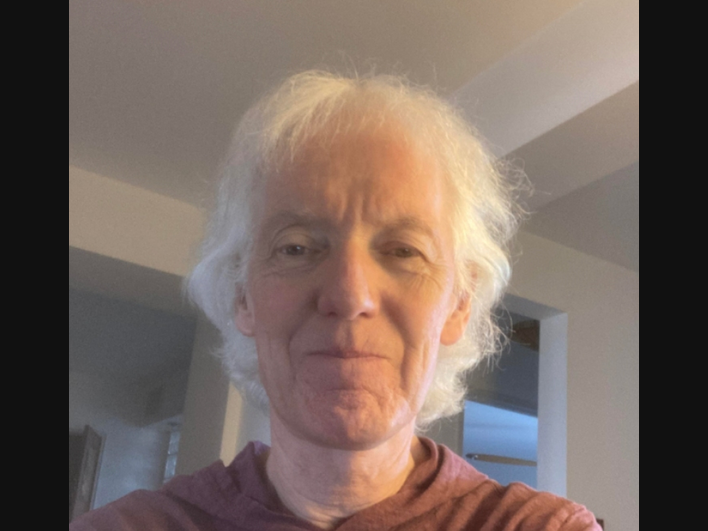
On paper, my life looked pretty good. Professionally, I’m a retired anesthesiologist. Outside of medicine, I’m an amateur rock musician and an avid music lover with hundreds of vinyl records and CDs. I’m also fascinated by quantum physics and the ongoing attempt to understand consciousness. I have a wonderful family and a strong connection with my only daughter.
But despite my achievements, relationships, and diverse interests, depression has been a part of most of my adult life. I’ve had good times and bad times. Often, I felt hopeless and would withdraw, convinced that something was wrong with me that couldn’t be fixed. Even my accomplishments seemed, ultimately, not to matter.
Over the years, I worked with many helpful therapists and tried nine different medications. Sometimes I made progress, but it wouldn’t last. The medications would either stop working or come with intolerable side effects.
During a recent downturn, I knew I needed help again. I found a therapist who suggested trying a newer medication to enhance our talk therapy. With the help of a great psychiatrist, we tested everything we could think of, to no avail. He had no experience with ketamine, but he told me I owed it to myself to try it.
I was open to it, because I knew that the drug was not inherently dangerous. As an anesthesiologist, I had spent decades safely using it as an anesthetic in controlled clinical settings.
We are all too familiar with the tragic headlines, such as that of Matthew Perry, whose cause of death was ketamine overdose. But in cases like his, the drug was used irresponsibly or outside proper medical standards – with devastating consequences. The difference is context. A knife can be a kitchen tool or a weapon. The same is true here. In the hospital, everything is monitored, measured, and intentional.
Despite my knowledge and decades of experience as a medical professional, I still had a healthy respect for the power of ketamine and the need to use it carefully. Though I was fascinated by all the talk about ketamine for mental health, I was also wary, because many of the options out there seemed questionable. I remember thinking: How on earth could this be used to treat depression? And then I thought, well, let’s find out.
So I began searching for the monitored, measured and intentional setting I knew was essential. Eventually, I found Keta Medical Center, a physician-run practice following FDA-approved, evidence-based protocols.
Nevertheless, my first session felt like Alice in Wonderland. I wasn’t really sure where that left me. During my second session, I experienced what could be called ego dissolution. It was frightening at first, but then I realized I was still conscious. My awareness felt expanded, almost as if I could step outside my usual patterns of thinking. With the support of ketamine-assisted psychotherapy, I was able to navigate this “brave new world.”
I started seeing new possibilities for myself. Suddenly, I wasn’t bound to the fixed, distorted visions of myself I had carried for so long. Maybe I wasn't broken after all. We can all see the moon, but not its dark side — which is just as much a part of it as the side bathed in light. For a long time, it felt like the other way around for me. The dark side of the moon was all I could see.
The results were noticeable so quickly that I feared they wouldn’t last. But here I am, almost exactly one year later, more hopeful than I can ever remember. I’m more willing to take chances and trust myself. I’m still working on my PTSD and social anxiety, things I avoided confronting for years. But I have hope.
Last month, I stood on stage with my School of Rock band, singing lead vocals and playing guitar. (Trust me, it was about the experience, not the musicianship.) A year ago, I never would have thought that possible.
I also never would have imagined that I’d be openly talking about my mental health, or advocating for ketamine treatment. It has given me a new perspective on myself and has had a profound positive impact on my life.
Sometimes healing requires us to shift our perspective to see what has been there all along, just hidden from view. If you are struggling, I would encourage you to explore that other side. You may just find a healthier version of yourself waiting there.
Keta Medical Center, where Dr. Ellwood received treatment, recently opened a new clinic in Westfield, NJ.
This is a paid post contributed by a Patch Community Partner, a local brand partner. The views expressed in this post are the author's own, and the information presented has not been verified by Patch. To learn more, click here.