Community Corner
Russ's Ravings: Confessions Of A Reformed Bully
Suffering at the hands of bullies turned me into one. And it took me years to realize it.


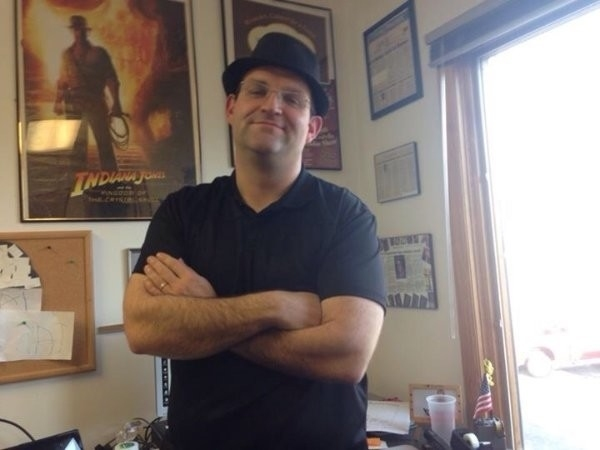
Editor's note: The following is Patch Field Editor Russ Crespolini's, hopefully, weekly column. It is reflective of his opinion alone.
My story is a pretty typical one. I was different because I was overweight. When I turned 10, and entered the fourth grade, I gained a lot of mass that made me stand out. They couldn't order soccer uniforms large enough for me. I had a hard time squeezing in and out of my desk.
And my classmates definitely took notice.
Find out what's happening in Westfieldfor free with the latest updates from Patch.
I was different because I was overweight and I was mocked for my difference. Kids used to do all of the common and typical things you might expect. They would call me names. They would mock my clothes, insisting that even though I had the "in" clothing they had to be imitations because I my clothes were more suited for making a circus tent then for wearing.
On rainy days kids used to surreptitiously wring their umbrellas out on my seat on the bus so I would enter homeroom with a huge wet stain on my backside. Some kids escalated to shoving, and slapping. One kid down the block boxed the side of my face and gave me a cauliflower ear.
Find out what's happening in Westfieldfor free with the latest updates from Patch.
I was pathetic.
I tried to make the best of the situation and tried to engage with my tormentors, hoping I could come up with something that would make them like me. Or at least, cut me some slack for the afternoon.
Gym teachers hated me in elementary school. They wanted all the students to get their "Presidential Physical Fitness" awards and I knew I couldn't do it. I couldn't run the mile. I couldn't do a pull up. And the teacher would mock me. At one point I frustrated him so much he launched a kickball at my head.
No, fourth and fifth grade were not great.
My parents tried to help. My mother took me to Weight Watchers. My father told me no girls would ever like me despite the fact that I had a good personality.
So I would go in the basement of a bank on a random Thursday night and sat with a bunch of middle-aged housewives where everyone focused on the scale and how to make it tick downward.
That process made me feel like everything the kids were saying in school, that there was something wrong with me, was true.
In the sixth grade was when it all changed.
One of my regular tormentors, who we'll call Bud for our purposes, was being particularly awful that day. And he was doing it in front of a girl who I had a relentless crush on.
And then something clicked.
I noticed Bud was wearing a Miller Beer t-shirt that was given at a NASCAR race as a gate prize. And he had worn it before. In fact, he seemed to wear it every Tuesday. And come to think of it, he only seemed to have five total shirts to wear, and most of them were freebies.
Bud was poor.
And I could use it.
I asked another kid at the lunch table what day it was, mentioning that I was confused because I thought it was Wednesday, but Bud was wearing his Tuesday shirt so I wasn't sure.
It stopped him cold.
So I got good at using my observation skills for defense. I noticed the kid who was didn't bathe and had half moons of dirt under his fingernails.
The kid who stuttered, the one whose parents were divorced. I found their weaknesses and when they dared open a mouth to me I obliterated them.
And by the time I got to middle school, my tormentors receded into the background.
Winning.
Except, I wasn't.
I didn't have the emotional band-width to realize what I had done and what I had become. Just like Bud and so many other had become the people that stalked my dreams and made me nauseous on the walk down to the bus stop, I had now become the villain in someone else's story.
I had become the bully.
It wasn't until years later that I realized what I had done. I didn't have the ability to understand that childhood wasn't just hard for me, it was hard for everyone. That what these classmates of mine were experiencing, the trauma in their lives, was spilling over in these acts of cruelty directed at anyone and everyone.
I was low-hanging fruit and an easy target.
Until suddenly I wasn't.
As we sit here in October of 2019 and we talk about bullying and suicide prevention it stands out that we didn't have things like the Week of Respect when I was a kid. We didn't talk about suicide. None of those resources and enlightened points of view were presented.
I had a guidance counselor who asked if I considered exercising more.
Statistics vary, but an aggregate of 80 different studies on bullying suggests one in five American students between 12 and 18 is bullied at some point during their middle or high school years. Traditional bullying — name calling, public humiliation, isolation, physical violence and that sort of thing — occurs most often, with 35 percent of kids reporting they’ve been targeted in one of those ways. The studies cited by the PACER Center, which established National Bullying Prevention Month, show that 15 percent of kids surveyed report being cyberbullied.
But the world in many ways is also a darker and scarier place. Because we have the anonymity and long reach of the internet.
When I left school, the bullies were in my rear view mirror and I was unreachable for large swaths of time. Now, we have the internet. And in our hyper-connected world it has allowed for bullying to become pervasive, overwhelming and relentless.
And though it occurs less often, cyberbullying — which has resulted in a disturbing string of suicides by adolescents and teenagers — is especially hard to stop. While experts say most cyberbullied kids don’t kill themselves, the long-tailed internet makes a taunt live longer than one flung on the schoolyard. Kids can escape traditional bullying in the safety of their homes, but because social media is so intertwined with how kids communicate, they never really escape it.
And because cyberbullies have the stealth of anonymity, “empathy tends to fade to zero,” NoBully.org founder Nicholas Carlisle told Patch.
He was knocked around 40 or so years ago as an awkward 12-year-old. The torment persisted through high school, but as tough as it was, his experience was markedly different from the torture kids endure today, he says — and it’s not just that he was attacked in a physical as opposed to online space.
“Online, you can’t see the whites of their eyes,” Carlisle said. “If you can see someone, that’s often a break upon people’s aggression — not always, but it does seem to have some break upon crossing the line.”
The full consequences of bullying on the brain aren’t fully understood, but kids who are targeted by bullies in childhood and adolescence are at increased risk for psychological problems that can stretch into adulthood, according to experts. In the moment, bullied kids may be unable to sleep or suffer a range of stomach issues and headaches. Later on, they’re at risk for depression, anxiety, and alcohol and drug use.
So what is there to do? Certainly availing ourselves of all the resources we have available is a good start. But it also might not be enough. Because those of us who were bullied have the natural instinct to bully back.
In my own home I try to talk to my daughter about her experiences and her classmates. If she says someone isn't very nice or is in a bad mood or is mean all the time I try to talk it out with her.
Usually we can figure out the classmate has something going on and maybe we can try to cut them some slack or do something nice for them to make them feel better. Use the observation skills that I used to defend myself to help rather than hurt.
It takes time, and effort and patience. And sometimes it doesn't work at all. But it is better than the alternative.
I am a reformed bully. And I think we can all do more to promote kindness and empathy if we try.
Russ Crespolini is a Field Editor for Patch Media, adjunct professor and college newspaper advisor. His columns have won awards from the National Newspaper Association and the New Jersey Press Association.
He writes them in hopes of connecting with readers and engaging with them. And because it is cheaper than therapy. He can be reached at russ.crespolini@patch.com
Get more local news delivered straight to your inbox. Sign up for free Patch newsletters and alerts.