Politics & Government
350,000 Ex-Cons In New Jersey Regain Their Jury Duty Rights
Supporters say that everyone deserves a second chance. Critics argue that Phil Murphy has overstepped his powers as governor.


Dameon Stackhouse spent more than a decade in prison for robbery. Since then, the New Jersey resident has taken responsibility for his actions and dedicated himself to giving back to his community. Now – after 22 years – he is ready to take part in one of the most important civic responsibilities in American society, advocates say: jury duty.
Stackhouse is among an estimated 350,000 people with criminal convictions on their records who are eligible for jury duty again in New Jersey under a new executive order from Gov. Phil Murphy.
According to the ACLU of New Jersey, state law prevents people who have been convicted of indictable offenses from serving on juries for their entire lives – making it one of the “most extreme jury exclusion laws in the nation.”
Find out what's happening in West Orangefor free with the latest updates from Patch.
Murphy’s executive order restores eligibility to all New Jerseyans who have completed their sentences for offenses that took place on or before Jan. 10, 2026. The person must have fully completed their terms of incarceration, probation or parole, and may still be barred from participating in certain cases, including those related to their own criminal record.
The order also doesn’t impact people who will complete their sentences after Jan. 10 – something that is beyond the clemency powers of a governor.
Find out what's happening in West Orangefor free with the latest updates from Patch.
People with disqualifying indictable convictions under federal law or the law of another state remain ineligible to serve on juries in New Jersey, as does anyone with a disqualifying conviction in a case of impeachment or treason.
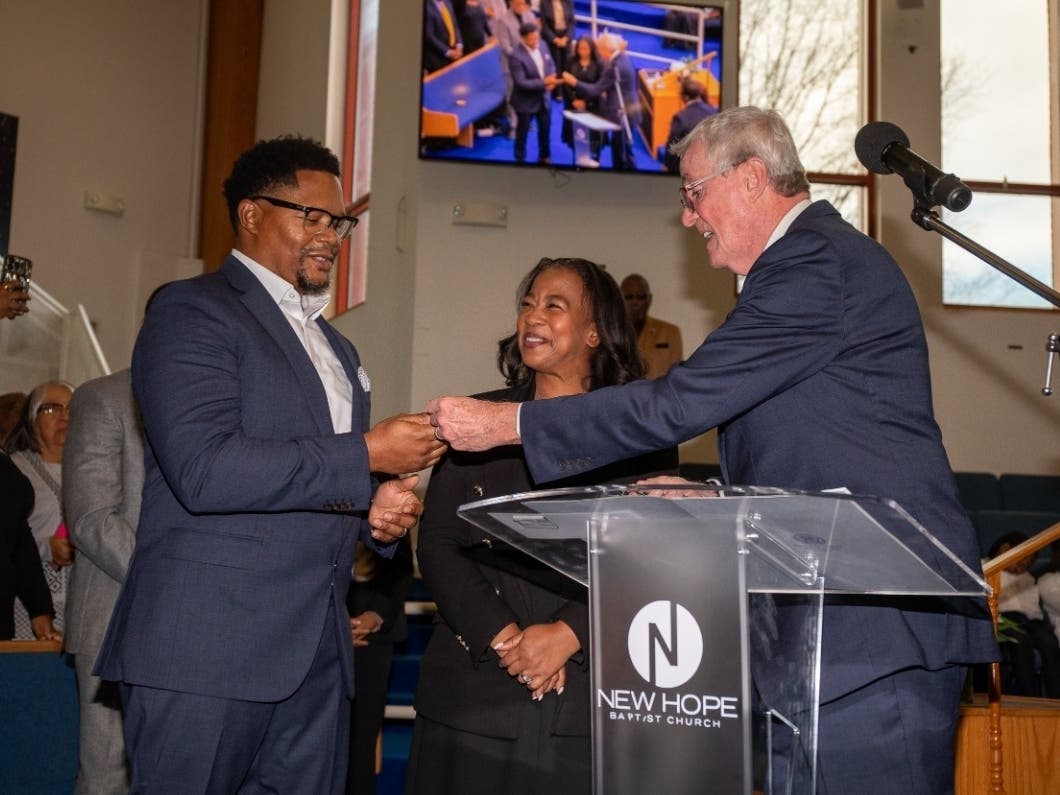
Murphy signed the executive order earlier this week during a ceremony at New Hope Baptist Church of East Orange (watch video footage below).
“Serving on a jury is a defining expression of United States citizenship and, for many, the most significant opportunity—outside of voting—to share in the responsibilities of democratic self-government,” Murphy said.
Stackhouse, a fellow at the New Jersey Institute for Social Justice in Newark, said he is overwhelmed with gratitude.
“This is a pivotal moment for all of us who have faced the stigma of conviction, affirming that our contributions matter and that we are an integral part of the democratic process,” Stackhouse said.
“Serving on a jury is not only a responsibility; it is a chance to participate actively in shaping the future of our communities, ensuring that justice is served and every perspective is valued,” he added.
Not everyone is thrilled with the governor’s flexing of his clemency powers, however.
Sen. Michael Testa, a Republican from New Jersey’s 1st district, pointed to a proposed state law that would have removed the ban permanently – which didn’t make it through the Senate after passing an Assembly vote.
Testa accused Murphy of trying to make an end zone run around state lawmakers with his latest executive order.
“Once again, Gov. Murphy is attempting to impose his personal agenda by executive fiat after the people’s representatives clearly said no,” Testa said last week.
“This proposal was debated and rejected by the Legislature, yet the governor now appears determined to circumvent that decision in the final days of his administration,” Testa added.
The state senator argued that people convicted of serious crimes have “broken the social contract that binds our society together.”
“Serving on a jury is not a right, privilege, or entitlement,” Testa said. “Rather, it is a profound civic duty – and one that is not to be conferred lightly. The solemn power to sit in judgment of others under the law should not be entrusted to those who have shown a willingness to violate it.”
Advocates including the ACLU-NJ have repudiated this stance, however, saying that everyone deserves a second chance.
“People with criminal convictions who have served their sentences are as capable of serving as jurors as anyone else,” ACLU-NJ executive director Amol Sinha said.
“Representation makes our juries stronger, not weaker, and all New Jerseyans who are active, full members of society deserve to be considered for the foundational civil right of serving on a jury,” Sinha said.
The governor’s executive order also got a thumbs-up from two U.S. Congress members from New Jersey.
“I applaud [Murphy] for restoring these rights to over 350,000 of New Jersey’s returning citizens who have paid their debt to society and who have been denied full citizenship for too long,” Rep. Bonnie Watson Coleman said.
Sen. Cory Booker said the justice system is supposed to be about “fairness,” not permanent punishment.
“When people have served their time, they deserve a full chance to participate in our democracy, including serving on a jury of their peers,” Booker said.
Murphy has been issuing a wave of clemency orders over the last few months of his time as governor, including hundreds of pardons and commutations.
Incoming Governor-elect Mikie Sherrill is scheduled to be inaugurated on Jan. 20.
- See Related: Murphy Issues More Prisoner Pardons (See Governor's Latest List)
- See Related: NJ Gov Pardons 11 Convicted Military Service Members On Veterans Day
- See Related: NJ Man Gets Fresh Start After Spending 2 Decades In Jail On Weed Conviction
Send local news tips and correction requests to eric.kiefer@patch.com. Learn more about advertising on Patch here. Find out how to post announcements or events to your local Patch site.
Get more local news delivered straight to your inbox. Sign up for free Patch newsletters and alerts.