Community Corner
After Nearly a Century, Duke Farms Opens to Public
Visitors will be able to explore 'living habitats' and experience environmental stewardship.




It's an easy day trip from Essex County.
Saturday’s grand opening of Duke Farms marks the first time in nearly 100 years that the public will have access to almost 1,000 acres of the historic Hillsborough property.
Changes to the 2,740-acre tract have been made at a cost of more than $45 million and are in keeping with the Duke Farms Foundation’s mission of “being a model of environmental stewardship in the 21st century and to inspire visitors to become informed stewards of the land.”
Find out what's happening in West Orangefor free with the latest updates from Patch.
Once the home of renowned tobacco heiress and recluse, Doris Duke, the estate on Duke Parkway West was the vision of her father James Buchanan “Buck” Duke, a life-long conservationist who wanted to create a haven for native flora and fauna and purchased about 40 farmsteads to create the Duke estate.
Other than occasionally opening for tours, the property has been closed to the public since 1915.
Find out what's happening in West Orangefor free with the latest updates from Patch.
Beginning Saturday, visitors will be able to explore the heart of the former estate as they travel along 18 miles of walking trails, 12 miles of paved and gravel biking trails and 4 miles of paved roads that are wheelchair- and stroller-accessible. Interpretive informational signs and new street signs mark the way.
In 2008, the foundation began the project to make “living habitats” the focus of the property, with an emphasis on habitat regeneration and sustainable design.
“We hope that people will come to Duke Farms to enjoy nature and, along the way, become more aware of issues and solutions that impact the health of our ecosystem,” said Timothy M. Taylor, executive director of the Duke Farms Foundation. “And we hope that they will take what they learn here and apply it to their home environment, where seemingly small changes can have an aggregated huge impact on our environment.”
Among the many features Duke Farms visitors will notice are:
A new Orientation Center: The 22,000-square-foot Farm Barn (a former horse and dairy barn dating to 1906) that meets LEED (Leadership in Energy and Environmental Design) Platinum standards has been adapted to welcome visitors. It includes maps, audio tours, interactive exhibits about the property’s history and green initiatives, a nine-minute film overview, a café (with compostable utensils), classroom and offices. Nearby are several cottages that are being used for a data center, volunteers, safety and security operations, New Jersey Audubon and the New Jersey Organic Farming Association. It is also the site of a Community Garden, with 420 plots or organic gardening. Location: Duke Parkway West, between Route 206 and Roycefield Road.
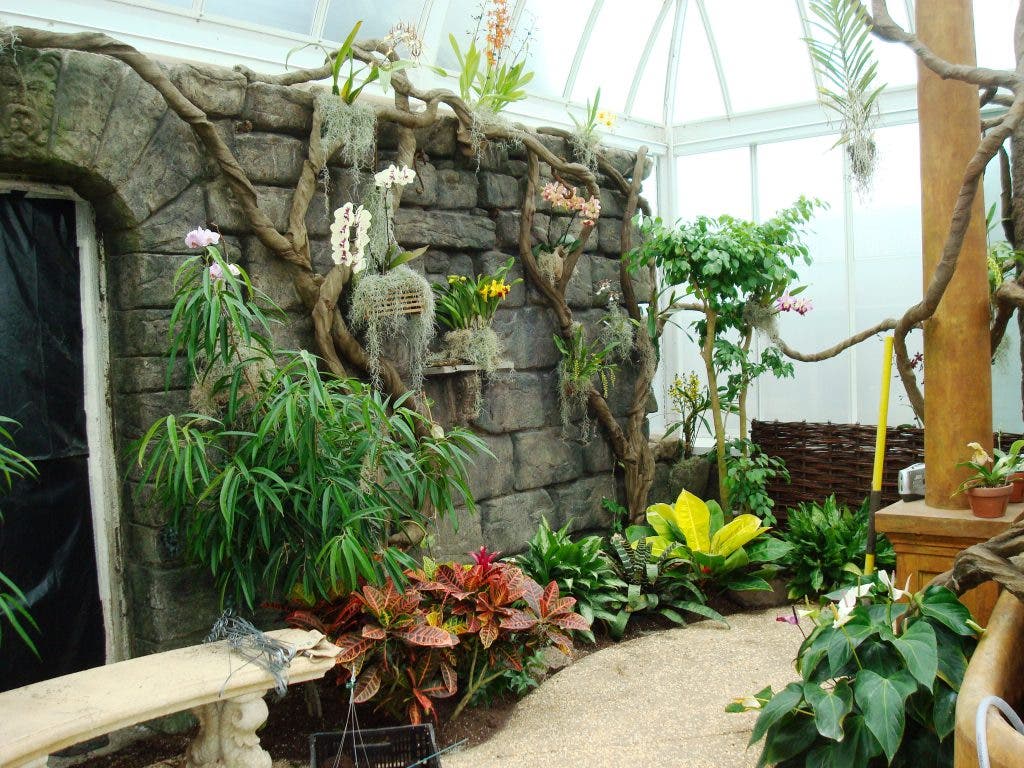
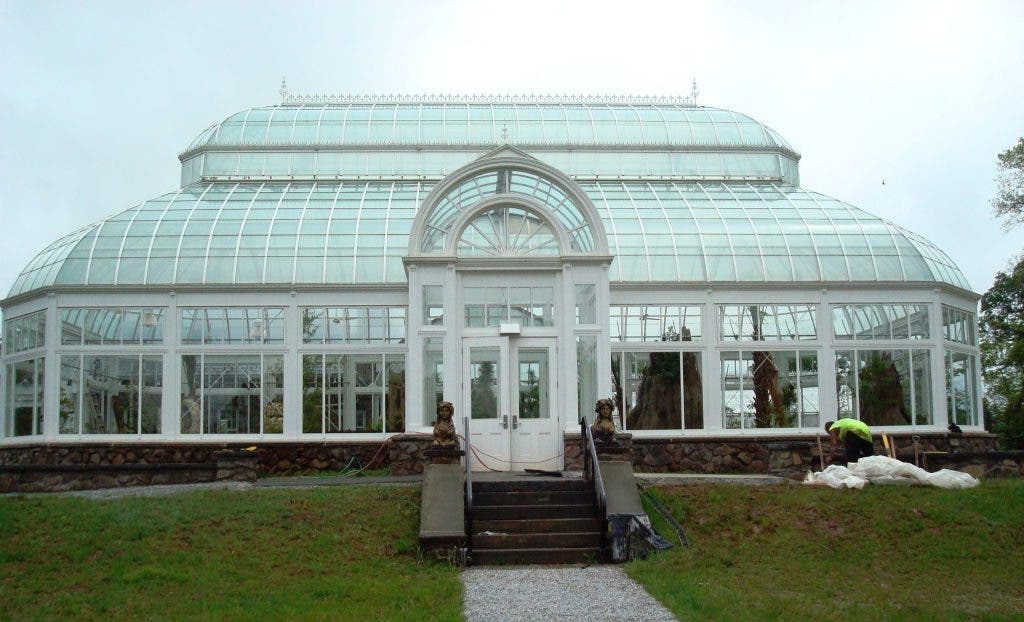
Transportation: A tram takes visitors from the Orientation Center to the heart of the estate, where they can embark/disembark at any of three stops: the Old Foundation, the unfinished site of what was to be the family mansion; The Orchid Range, a conservatory renovated to LEED gold standards and housing tropical orchid (there are more than 1,500 varieties) and semi-tropical coastal floral displays; and the Great Meadow, an expanse of lawn that is now a native wildflower meadow that will attract butterflies. Duke Farms restricts the use of cars (bus tours are no longer allowed); employees use electric vehicles, golf carts or bicycles.
Water features: “Buck Duke loved water,” said Holly Dunbar, head of communications and marketing, noting that he was a proponent of hydropower. As a result, he created nine man-made lakes (with water from the Raritan River) and numerous waterfalls and bridges on the property. The largest waterfall is on a timer run by solar power in order to not deplete the lake.
Environmental initiatives: Among the many environmentally friendly aspects are a 2.6-acre solar array that provides 100 percent of the power used on the property and numerous bioswales that catch runoff and clean the water before returning it to the ecosystem.
Native plants: Many areas of non-native plants have been removed and 325 acres of meadows have been restored. More than 200,000 native plants have been propagated and used to replace non-native species. The property is also the home to several state champion trees.
Animal life: Duke Farms is one of the first sites the New Jersey Audubon declared an “Important Bird Area,” making it ideal for watching some of the 231 species of birds (including Bald Eagles). In addition, the property is home to 89 types of turtles and other animal life such as river otters and foxes.
Educational offerings: Duke Farms has an expanded offering of educational programs, including beginner, family and advanced programs.
A few things to note:
- Admission is free, although there are charges for some of the educational programs. Funding has come from the Doris Duke Charitable Foundation.
- Visitors are invited to stop at any of the several picnic tables but should be aware that there are no trash cans. There is a carry-in, carry-out policy so visitors should bring along trash bags to carry out refuse or bring it to the Orientation Center. Alcoholic beverages and pets are not allowed. There are also several composting toilets along the trails.
- Duke Farms has a full slate of activities planned for its grand opening weekend; some may require pre-registration.
- Duke Farms will be open 8:30 a.m.-6 p.m. throughout the summer (closed Wednesdays) and 8:30 a.m.-4 p.m. the remainder of the year.
Duke Farms
1112 Duke Parkway West
Hillsborough, N.J. 08844
DIRECTIONS BY CAR OR TRAIN
Phone
(908) 722-3700