Health & Fitness
Tech Talk: Don't Be a Victim of Cyber Crime
A weak economy provides for an environment for increased criminal activity. Being an educated consumer and computer user is the best strategy to combat being a victim of cyber crime.
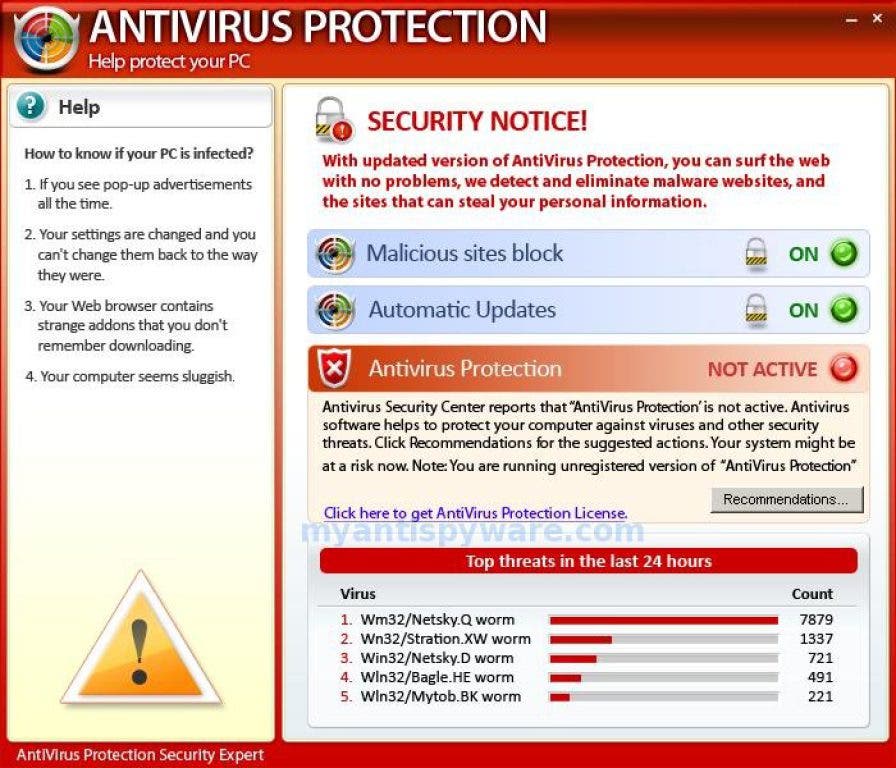
Unfortunately, a weak economy provides for an environment for increased criminal activity. Newly devised, socially-engineered actions of crime have been growing to defraud unsuspecting consumers and businesses. Being an educated consumer is the best strategy to combat being a victim of cyber crime. There are many traditional ploys that cyber criminals have historically engaged in. But, now we are seeing a trend of even more clever uses through the use of multiple techniques and approaches to yield similar results. The key is trying to stay one step ahead of the criminal to elude being victimized. This is best done through being aware and educated in the ways of cyber criminals.
According to “The Register,” “Last year the FBI announced that revenues from cyber-crime, for the first time ever, exceeded drug trafficking as the most lucrative illegal global business, estimated at reaping more than $1 trillion annually in illicit profits.”
Increasingly, cyber criminals are continuously coming up with clever new tactics and maneuvers, including the use of a multi-pronged approach, where a caller may pose as a technical service representative, and tricks unsuspecting computer users into paying and downloading what is purported to be a “repair” to a problem that the perpetrator put there themselves in the first place. In one variation, a cyber criminal may call people randomly and claim they are from, for example Microsoft, offering to check that their computer system is okay. This is being called the “anti-virus cold-calling scam.”
Find out what's happening in West Orangefor free with the latest updates from Patch.
I own a computer repair and tech company in West Orange and I see the many kinds of problems or issues that computer users experience repeatedly with their computers. One case, for example, involved a laptop that did not boot properly. The customer described the symptom being where his laptop was continuously going through a restarting loop at boot-up. When I asked this customer what anti-virus or security software they were using, he wasn’t sure. Well, from my experience, when a customer response in that way, either they don’t have anything for malware protection, or they downloaded something free and don’t remember the name of the program, or worse, they succumbed to victimization of a cyber attack. And, now may have fake antivirus software on their computer that is really acting as spyware which the customer may have even paid for—now, that’s a slap in the face!
Some of these cyber criminals are using or even setting up their own call-centers in places like India to perpetrate this anti-virus cold-calling scam further and on a larger scale. The callers contact computer users to offer free assistance in checking computer systems for potential malware. They walk the targeted victim over the phone to check in MS Windows the Event Viewer or the Registry. Upon reading some of the cryptic messages there, the caller says the messages are existing computer problems but not to worry, they all can be remedied with our help. This is when they ambush the victim into now paying them to conduct the repair or fix that the same criminal party planted in the first place.
Find out what's happening in West Orangefor free with the latest updates from Patch.
The good news is that with more improved security software and a growing number of computer users having better awareness, web-based attacks are less likely to succeed. They must resort to more devious ways and clever strategies to continue their attack, such as the above mentioned multi-pronged, human contact approach. We all must try to stay one step ahead and constantly keep our wits about us to defend ourselves against these morphed-type of attacks. For one thing, you MUST keep your antivirus or security software UP-TO-DATE. Despite this advice, I see a number of computers with expired anti-virus protection. If I had to venture to say, why this might be the case, it could be a combination of either users not wanting to spend the $50 for anti-virus software or just thinking it won’t ever happen to them.
Money Saving Tip: Always check with your ISP first before purchasing anti-virus or security software. Many, like Comcast, entitle you to free or low-cost, name-brand software, like Norton Internet Security, as a part of your customer service package.
A future blog will include 10 steps and procedures that can help you protect yourself from cyber crime.
John Mitrano is the owner and founder of Techdesigno, a tech services company based in West Orange. He is also an adjunct college professor at Essex County College. For questions contact him at john@techdesigno.com