Neighbor News
From Ghana to New Jersey, from Death to New Life, a Family's Journey Toward a Cure for Sickle Cell
On World Sickle Cell Day, We Celebrate the First Child in New Jersey to Undergo New Curative Gene Treatment For Sickle Cell Disease
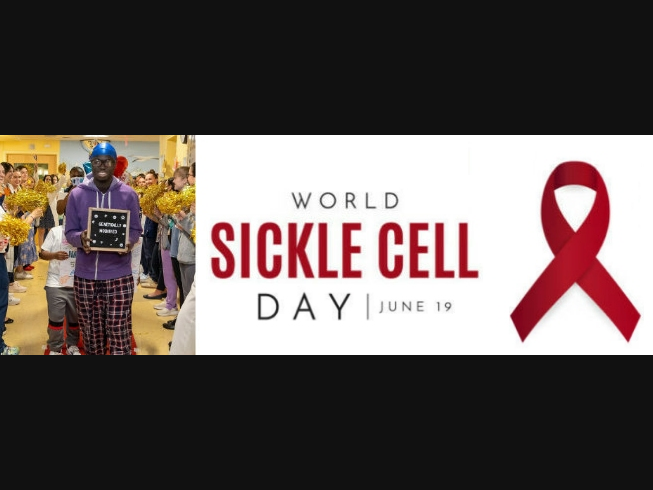
Evelyn's son Gerald's patient journey begins, in part, after the death of a sibling, and climaxes in a cutting edge medical treatment that came as a gift ahead of Mother’s Day, as well as today's observance of the UN-designated World Sickle Cell Day. Gerald, who hopes to be a nurse one day, received curative gene therapy treatment for his sickle cell disease at Joseph M. Sanzari Children’s Hospital at Hackensack University Medical Center.
“All I have ever wanted is for my son to live and to be normal like other children, to not live such a hard life, not have so much pain,” says Evelyn, speaking of the curative treatment her 18-year-old son - the only of her children to have survived sickle cell disease.
“We’ve been praying for so long, and before he went into the hospital, we went to our church and the whole congregation prayed with us," the Hamilton resident continues. “I have faith, so I think it is going to be OK, and I cannot say enough how thankful I am for everything everyone at the hospital has done to care for my son.”
Find out what's happening in West Orangefor free with the latest updates from Patch.
Gerald, a graduate of Bordentown High School, rang the bell surrounded by his mom and brothers, and the doctors and nurses who treated him, signaling the end of this phase of his treatment. He is home now, resting following the second stage of treatment - the most grueling. Gerald is the first patient in New Jersey to undergo the potentially curative Lyfgenia gene therapy treatment. Hackensack Meridian Joseph M. Sanzari Children’s Hospital is the only facility in New Jersey currently offering Lyfgenia treatment to children. Hackensack University Medical Center is the only hospital in the state offering treatment to children and adults, at the Children’s Cancer Institute and the John Theurer Cancer Center, both located on the hospital’s Hackensack city campus. While Gerald was the first treated for sickle cell outside of a clinical trial, the first child treated with curative gene therapy treatment this spring was for beta thalassemia, another inherited a blood disorder.
Evelyn said the second phase of the treatment was tough. "I would cry sometimes when I left the hospital because I was nervous about the treatment," she says, remembering how the treatment caused her son to start losing weight and stop eating. "But I knew it was going to be OK because I have faith in God, and then something happened that made me feel that it would definitely be ok. He asked me for his favorite dishes from Ghana about a week and a few days before he was discharged." Mom obliged by cooking the okra vegetable dishes Gerald has eaten since he was a little boy.
Find out what's happening in West Orangefor free with the latest updates from Patch.
The U.S. Food and Drug Administration approved Lyfgenia in December 2023 for patients with sickle cell disease aged 12 years and older. Gerald’s treatment actually began last year when his cells, which would undergo modification, were harvested. For the treatment, a patient’s own blood stem cells are retrieved, and modified and given back to the patient as a single dose infusion.During this gene therapy, the patient undergoes high-dose chemotherapy to remove cells from the bone marrow, which are then replaced with genetically modified cells. Lyfgenia modifies a patient’s blood stem cells to produce a gene therapy derived hemoglobin that functions similarly to normal hemoglobin in people not affected by sickle cell disease.
Sickle cell is a group of inherited blood disorders where abnormal hemoglobin makes red blood cells misshapen, resulting in debilitating pain, fatigue and organ damage. Sickle cell disease affects more than 100,000 Americans, predominantly Black people - 1 in 365 Black babies are born with the disease nationally.
“The journey of a thousand miles begins with one step,” said Gerald, repeating one of his favorite sayings after he rang a bell that signaled the end of treatment and he had walked through the line of health care team members who clapped him out of Sanzari. “I am really happy to be home, and I want to let the care team know that I am so grateful for them and everything that they have done to help me through this process. I will miss them and cherish them forever. They will be in my heart forever.”
Gerald is Evelyn’s second oldest child. Her oldest son, Emmanuel, died at age 7 of sickle cell in Ghana.
The family had decided to move Emmanuel and Gerald to Ghana, the family’s ancestral home because, Evelyn says, the family hoped the weather would hopefully make it easier for her sons to cope with the painful life of living with sickle cell. Painful crises, also known as sickle cell crises, or vaso-occlusive crises, are a major symptom of sickle cell disease, causing intense pain due to blocked blood flow in the body. Children and adults living with the disease frequently visit Emergency Departments during these episodes. These crises can last for days, weeks, or months, sometimes requiring hospitalization.
“Emmanuel came home from school with severe pain in his chest and back, and he died on the way to the hospital,” Evelyn remembers. Gerald was 2.
By the time Gerald turned 3, Evelyn and Gerald’s father had decided to bring him back to the United States. Gerald, who had been born in New York City, left Ghana for Maryland. He grew up always needing medical care and unable to play sports which is prohibitive for many children with sickle cell. In addition to the death of his brother and coping with sickle cell, Gerald suffered the loss of his father, Emmanuel, during the COVID-19 epidemic.
The Hematology-Oncology team at Saint Peter’s University Hospital recommended the family seek out the specialists at Sanzari, who for more than 20 years have been at the forefront of curative sickle cell treatment, first via the first technology available - bone marrow transplantation of cells donated by a match for the patient - and most recently, as of 2019, gene therapy, as a result of clinical trials where Stacey Rifkin-Zenenberg, D.O., served as a principal investigator. Gerald is the first patient treated using gene therapy technology following FDA approval of Lyfgenia.
“I am looking forward to playing basketball someday,” Gerald said quietly on the day a month ago when his genetically modified cells were arriving on the Pediatric Unit at Joseph M. Sanzari, one of the two hospitals that make up the Hackensack Meridian Children’s Health network.
Inspired by his mother who says she became a home health aide because she has been moved by her son's own need for care, and the importance of helping people, Gerald looks forward to becoming a nurse. He does not rule out studying psychiatry also because he says the death of his father had a profound effect on his mental health.
“I have always wanted to be in health care, and I definitely want to help people, too,” he says.
Earlier this year, first patient treated with Zynteglo was discharged from Joseph M. Sanzari Children's Hospital at Hackensack University Medical Center. The 14-year-old was the first patient to undergo and complete gene therapy outside of a clinical trial for an inherited blood disorder. The second was an 18-year-old high school graduate who completed Lyfgenia curative gene therapy treatment for sickle cell disease.
Treatment with Lyfgenia and Zynteglo is only available at Qualified Treatment Centers (QTC). Hackensack University Medical Center campus was the first to become qualified. The technology used by Zynteglo and Lyfgenia is called gene addition. (Casgevy/CRISPR technology is described as gene editing.)
Beta thalassemia and sickle cell are both inherited blood disorders. Like Lyfgenia for sickle cell, patients treated with the Zynteglo protocol do not need a donor to undergo curative treatment. The blood cells of the patient are used. The patient’s own blood cells are collected and sent to a lab for manufacturing by Bluebird Bio.