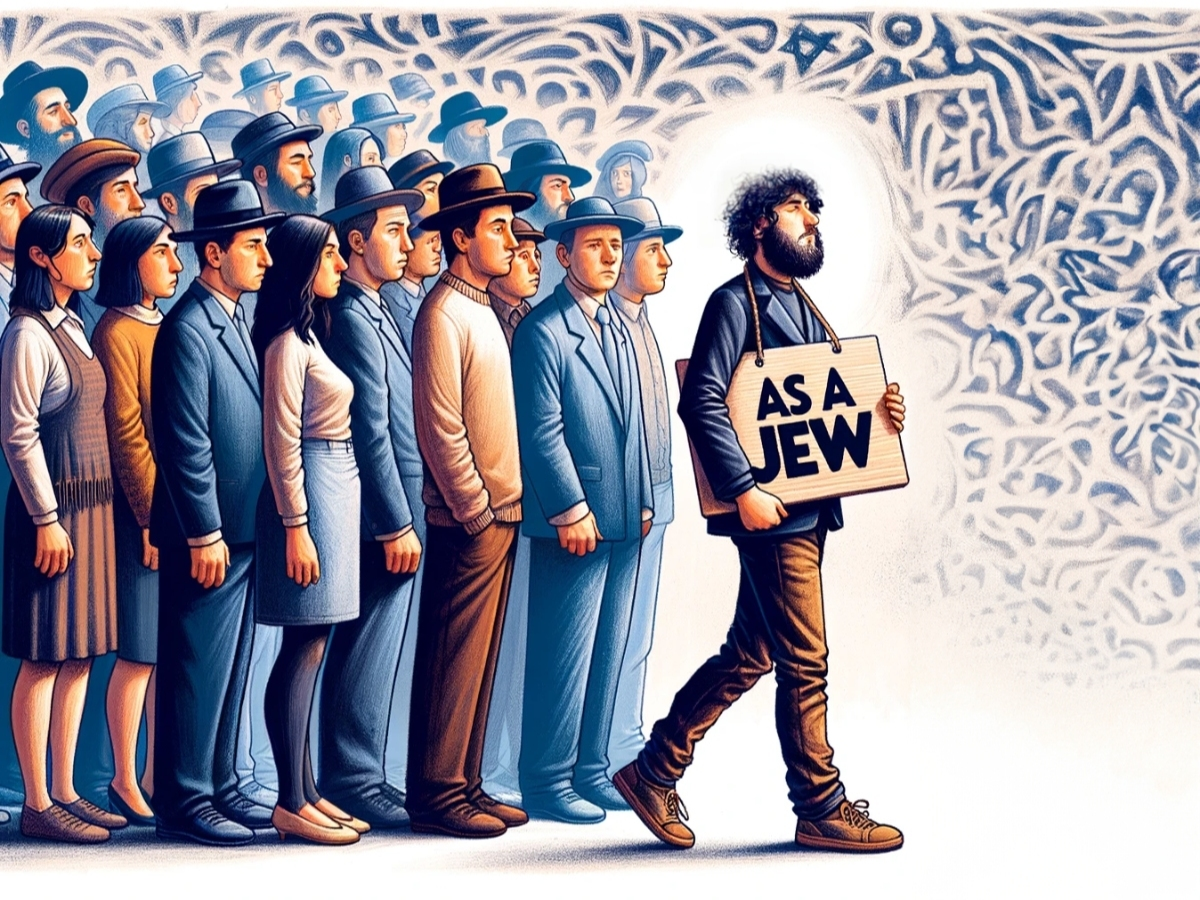
In recent times, a peculiar phenomenon has emerged within segments of the Jewish community, often encapsulated by the preface "as a Jew" when voicing opinions that diverge from the broader Jewish consensus. This phrase has morphed into a controversial shorthand, signaling a detachment from Jewish communal life and a discomfort with being associated with it. For some, declaring "as a Jew" seems to underscore an attempt to assimilate fully into broader society, shedding visible ties to Jewish identity in pursuit of acceptance.
This trend is particularly stark when individuals use their Jewish heritage, even citing family history of Holocaust survival, to legitimize critiques of the Jewish community or Israel. Such positions suggest a desperate yearning for approval from those who harbor antisemitic views, naively believing this might shield them from hatred. They fail to recognize that to antisemites, the nuances of Jewish identity and belief are irrelevant; Jews are monolithically othered, regardless of their individual stances or degrees of assimilation.
Invoking the term "as a Jew" in such contexts can unwittingly play into the dangerous concept of the "useful idiot," a term historically used to describe individuals whose naive political or ideological stances are exploited by more powerful forces to their own ends. When Jews adopt this stance to give more weight to criticisms that align with antisemitic narratives or those against the Jewish community, they risk becoming inadvertent tools for those agendas. This not only exacerbates the alienation from their own heritage but also contributes to the perpetuation of antisemitic stereotypes and agendas, under the false belief that their Jewish identity could exempt them from the repercussions of such ideologies.
Find out what's happening in West Orangefor free with the latest updates from Patch.
Professor Achva Benzinberg Stein — my mother-in-law — poignantly observed once that the rationale of intellectual or ideological distinction holds no water with those driven by blind hatred: "They wouldn't kill you because you're an intellectual; they would kill you because you're a Jew."
Antisemites do not discriminate based on the content of a Jew's character or their contributions to society. Instead, Jews are targeted solely for their identity. This harsh reality underscores the fallacy of believing that distancing oneself from Jewish collective identity or Israel provides a safe harbor from antisemitism.
Find out what's happening in West Orangefor free with the latest updates from Patch.
Yet, this distancing allows some to cavalierly advocate for policies or actions that could have devastating consequences for those more directly connected to the Jewish community or Israel. Such stances are taken without having to bear the direct impact of these advocacies, reflecting a troubling disconnection from the very real threats and challenges faced by the Jewish people globally.
This "as a Jew" syndrome — this phenomenon of prefacing criticisms of Jews with "as a Jew" — has notably permeated local politics, echoing through the town council meetings of West Orange, Livingston, Montclair, and South Orange-Maplewood. In these settings, individuals have employed the phrase to lend weight to their arguments, often in debates over issues with implications for the Jewish community or Israel. This local manifestation of a broader trend underscores the geographic spread of this rhetoric and stresses its impact at the grassroots level. In such contexts, the phrase can serve to alienate members of the local Jewish community, creating rifts and diminishing the sense of unity and support that communal structures strive to foster.
As it becomes a common refrain in public discourse, not only highlights a painful internal struggle with identity and belonging but also serves as a reminder of the dangers of attempting to placate or earnestly find common ground with those who fundamentally reject Jewish existence. It is a stark illustration of the complexities of Jewish identity in the modern world, where the desire to blend in can sometimes lead to the erasure of the very essence of what it means to be Jewish.