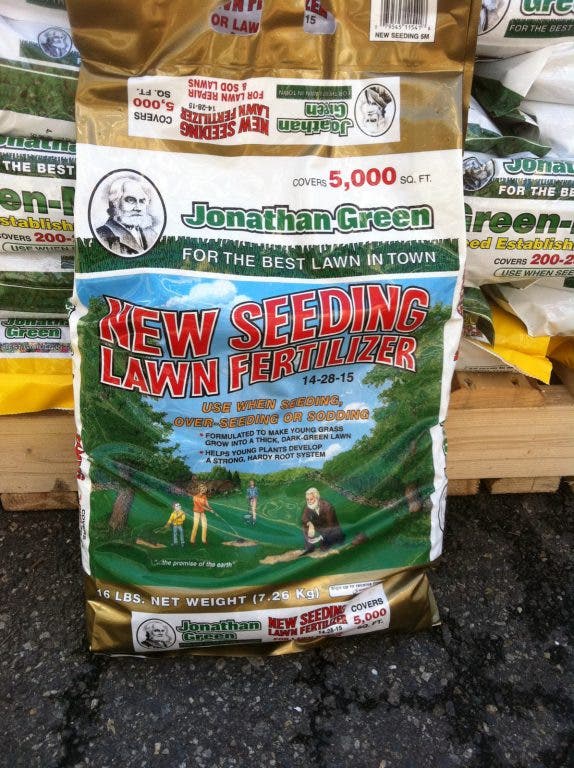
New Jersey is living up to its name as the Garden State with a January 2011 law that regulates fertilizer use by both homeowners and professionals to protect the environment.
By controlling the amount and types of fertilizers applied to greens state-wide, the law will protect the ecological health of our state's inland and coastal waters in general and Barnegat Bay in particular.
West Orange assemblyman and township resident John F. McKeon was one of the bill's prime sponsors, now the New Jersey Fertilizer Law. I'm looking forward to hearing McKeon talk more about it at the April 4 event.
Find out what's happening in West Orangefor free with the latest updates from Patch.
Here's why the law is needed: the overuse of nitrogen and phosphorus in chemical lawn care fertilizers is fast food for grass but toxic for river and oceans.
The run-off of these chemicals into water sources causes algae overgrowth — known as eutrophication — to the detriment of the rest of the eco-system. In essence, Barnegat Bay is slowing choking to death on the chemical-fueled algae growth.
Find out what's happening in West Orangefor free with the latest updates from Patch.
The law creates a statewide standard — the toughest in the nation — for what kinds of fertilizer applications are permitted, by whom and when. This should help homeowners and professionals alike comply with sensible guidelines for more sensible use.
Rutgers Cooperative Extension has posted a helpful fact sheet on the new law that explains what's changing and when.
I'm in favor of this law because it raises awareness of how individual actions affect us all. Lawn care chemicals don't stay put. They drift and flow into our shared resources.
For homeowners, the new law's requirements will go into effect in stages.
Effective now, the law prohibits fertilizer applications when it's raining, on impervious surfaces (like your sidewalk), before March 1st or after December 1st, or any time ground is frozen. These guidelines will help ensure that, properly applied, fertilizer stays where it's put rather than being washed down the gutter and into our streams, rivers, lakes and the ocean.
One year from now, consumers will have to obey limits on how much and what kinds of fertilizer are allowed.
Manufacturers have two years from the law's January 2011 signing date to phase in reformulated fertilizers to meet the law's 20 percent slow-release nitrogen mandate.
Professionals will be required to take training and be certified to prove they know how to comply with the law's requirements.
Sound complicated? A simpler option is to opt out from the chemical fertilizers all together. Animal manure and organic compost are already exempted from this law. A beautiful green lawn is not only possible without chemical fertilizers, it's cheaper and safer as well. Here are some resources:
- A new article from "Harvard Magazine" does a nice job of surveying the greener grass movement. Read it here.
- Paul Tukey's Safe Lawns site has terrific videos on the steps to a healthy, green chemical-free lawn.
- I covered some steps for "greener" lawncare in a , including the importance of soil testing to determine what your lawn actually needs before you feed it.
- If you want some help "greening" up your lawncare, there are professional services available that offer eco-friendly services without chemical fertilizers. One local business is Montclair-based Green Harmony Now.
Whatever options you choose, try to consider ways to grow your beautiful lawn that are easier on the environment for everyone's benefit.
Upcoming "Green" Events
1. The Redwood Elementary School is starting an organic garden with the involvement and help of the community. Coordinator and art teacher Lisa Schustak is looking for a volunteer to help start and run a website for the program. If you are willing to assist in any way, please contact Schustak at lschustak@woboe.org.
2. Attend the South Mountain Reservation Conservancy annual meeting on Wednesday, Mar. 30 at 7 p.m., Maplewood Memorial Library, 51 Baker St., Maplewood. All are invited to hear a guest speaker and learn about conservancy efforts, volunteer opportunities, hikes and more.
3. Don't miss the April 4 event with New Jersey Assemblyman John F. McKeon, chairman of the Environment and Solid Waste Committee. McKeon is scheduled to present an update on what the committee is working on this session, with a special focus on the reduction of energy and water consumption. Township municipal building, 7 p.m. to 9 p.m.