Politics & Government
Murphy Vetoes Fellow NJ Democrats' Bill On Flood Disclosures
Gov. Murphy conditionally vetoed a bill that would force landlords to notify buyers and sellers about flood risks – here's why.


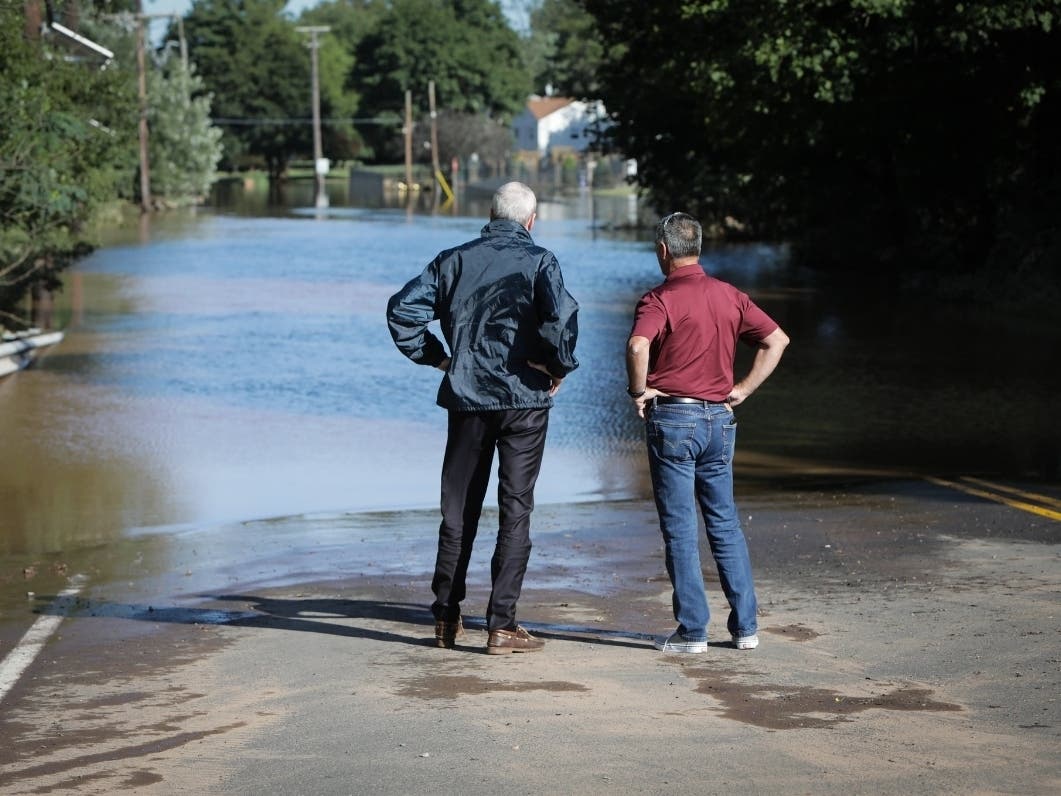
NEW JERSEY — New Jersey Gov. Phil Murphy conditionally vetoed a Democrat-led bill on Monday that would force home sellers and landlords to notify prospective buyers and renters if a property is at risk from flooding. But the governor said he supports the proposed legislation in general, and is asking for changes that would leave its “main features” intact, including stiffer penalties for companies that flaunt the law.
New Jersey’s disclosure laws do not explicitly require that a seller tell a home buyer about past flood damages, an attorney with the Natural Resources Defense Council said in an August report.
In New Jersey, 7,944 homes were purchased in 2021 that were estimated to have been previously flooded. The expected annual flood damages for these sold homes were estimated to be over $18 million, the report said.
Find out what's happening in West Orangefor free with the latest updates from Patch.
In an effort to give homeowners and renters more notice about flood risks, Sen. Richard Codey and Sen. Bob Smith introduced a proposed law in the Senate, and John McKeon, James Kennedy and Annette Chaparro introduced a version in the Assembly. Read More: NJ Homebuyers, Renters Deserve To Know About Flood Risks, Senator Says
Here’s what it would have done:
Find out what's happening in West Orangefor free with the latest updates from Patch.
“The bill would require the Department of Community Affairs to create a model notice used by realtors and landlords to notify prospective buyers or renters of flooding risks to the property before they become obligated under any contract. The form would indicate if any of the property is located in a Federal Emergency Management Agency designated floodplain, a Special Flood Hazard Area or a Risk Flood Hazard Area and if the property has ever experienced any flood damage in the past.”
The Senate and Assembly both voted to clear the legislation, sending the proposed law to the desk of Gov. Murphy. The governor declined to sign it on Monday – but left the door open for another version.
“I applaud the sponsors of this bill for their efforts to protect New Jersey residents from flooding,” Murphy wrote, adding that climate change is causing more severe rain storms in the region.
“New Jersey remains one of less than half of the states in the country that does not require any flood disclosures for real estate transactions, leaving our residents vulnerable to unknowingly putting themselves at risk of losing their homes and businesses to flooding,” the governor continued.
But according to Murphy, there needs to be “real consequences” for landlords who fail to comply with the bill’s requirements. He wrote:
“I cannot support the provision of the bill that would require a tenant to suffer damage to their personal property equal to five times the amount of their monthly rent before they could terminate a lease based on a landlord’s failure to make required disclosures. I am concerned that this threshold is so high that it could effectively insulate landlords from suffering any consequence for failure to comply with the bill’s requirements -- particularly in circumstances involving low-income tenants who may have less high-value personal property. I am therefore recommending amendments to provide that a tenant whose landlord fails to provide the required notifications after the effective date of the bill may terminate the lease without penalty at any time after the tenant becomes aware that the property is located in a flood plain.”
Other reasons why the governor said he conditionally vetoed S-3110/A-4783 included:
LEASE LANGUAGE – “Certain language in the bill would require that the flood disclosure information be provided as a separate rider to the lease that is individually signed. While this is appropriate for residential leases, commercial leases typically include all notifications within the lease itself. Commercial leases are also typically carefully scrutinized and negotiated by the parties. To conform with existing practice, I am recommending that the requirement that the disclosure be provided in a separate rider only apply to residential leases.”
FLOOD INSURANCE – “I am recommending that the notice of the availability of federally-backed flood insurance, that is required to be included in residential leases, state that such insurance may be available to renters, rather than stating that insurance is available to renters. I am recommending this change because the availability of such insurance depends on a municipality’s decision to participate in FEMA’s National Flood Insurance Program, and while nearly all New Jersey municipalities participate, there are a few that do not.”
WETLANDS – “Because the property condition disclosure statement already contains a question about the presence of wetlands on the property in very similar terms, I am recommending that question be removed from the list of questions to be added to the disclosure statement to avoid duplication.”
RULEMAKING, DATE CHANGES – “I am recommending certain changes to the rulemaking and effective date provisions of the bill to better align with the specific procedures the various departments responsible for implementing the bill will need to follow, and to ensure that each distinct portion of the bill can take effect as soon as possible.”
Read Murphy’s full conditional veto statement here.
Send local news tips and correction requests to eric.kiefer@patch.com. Learn more about advertising on Patch here. Find out how to post announcements or events to your local Patch site.
Get more local news delivered straight to your inbox. Sign up for free Patch newsletters and alerts.