Politics & Government
Trump Impeachment Inquiry: How Rep. Donald Payne Voted
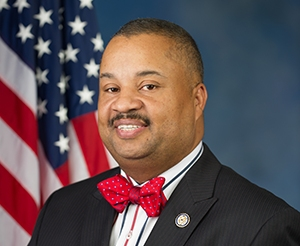
Donald Payne Jr., a Democrat, represents several towns in Essex, Hudson and Union counties.


ESSEX COUNTY, NJ — The U.S. House of Representatives approved eight pages of procedures on Thursday to take the impeachment inquiry against President Donald Trump to nationally broadcast public hearings.
The resolution defining the scope of the next phase of the inquiry was approved mainly along party lines, 232-196.
In New Jersey’s 10th congressional district, Rep. Donald Payne Jr. voted yes on the resolution, not a big surprise considering his previous support of the impeachment inquiry.
Find out what's happening in West Orangefor free with the latest updates from Patch.
After House Speaker Nancy Pelosi requested that the House launch its inquiry in September, Payne, a Democratic Party member, said that his office received dozens of calls in favor of Trump's impeachment.
"I am a strong supporter of Speaker Pelosi's courageous act to launch an inquiry," Payne wrote. "It is time we held our president accountable for his vile actions and behavior in office. No one is above the law!"
Find out what's happening in West Orangefor free with the latest updates from Patch.
Payne represents the following municipalities in Essex, Hudson and Union counties: Bloomfield (part), East Orange, Glen Ridge, Irvington, Maplewood, Montclair (part), Newark (part), Orange, South Orange, West Orange (part), Bayonne (part), Jersey City (part), Hillside, Linden, Rahway, Roselle, Roselle Park, Union Township (part).
- See related article: Rep. Payne Supports Trump Impeachment Probe
- See related article: Rep. Payne Will Boycott Trump Inauguration
Experts at the Eagleton Institute of Politics at Rutgers University offered commentary about what the impeachment inquiry means for U.S. politics.
"Presidential impeachment has been viewed for much of our history as a measure of last resort, because removal of a sitting president through the impeachment process represents a frustration of the electoral process," said John J. Farmer Jr., director of the Eagleton Institute.
"The fact that three presidents in the past fifty years have faced impeachment, however, tells us much about the divided state of our politics... I worry that impeachment will become the new political normal," Farmer said. "Nevertheless, it is Congress's duty is to investigate instances of presidential misconduct and, where it believes that misconduct is severe enough to warrant removal, to act."
Assistant Research Professor Ashley Koning said Americans are still "somewhat split" when it comes to impeaching President Trump.
"Support varies drastically by party and is also heavily impacted by how the question is worded given the inherent complexities of explaining the impeachment process," Koning said.
The Impeachment Hoax is hurting our Stock Market. The Do Nothing Democrats don’t care!
— Donald J. Trump (@realDonaldTrump) October 31, 2019
IMPEACHMENT INQUIRY: BACKGROUND INFO
The House will move ahead with impeachment proceedings against Trump after a government whistleblower’s claims the president used the power of his office to solicit a foreign government to influence the 2020 U.S. election. Much of the testimony and documents released after the claim have supported the whistleblower’s account.
The impeachment effort has focused on three panels — Foreign Affairs, Intelligence, and Oversight and Reform. In closed-door hearings that included Republicans on the committees, investigations have centered on how Trump urged Ukraine to investigate former Vice President Joe Biden, now running for president, while withholding nearly $400 million in military aid.
An investigation by the Judiciary Committee has focused on possible obstruction of justice by the president, based on episodes described in special counsel Robert Mueller's report on Russian interference in the 2016 election.
Provisions in the resolution allow Democratic U.S. Rep. Adam Schiff of California, the Intelligence committee’s chairman, and Rep. Devin Nunes of California, the panel's top Republican, to each question witnesses for up to 90 minutes or delegate their time to staffers before rank-and-file lawmakers each ask questions for five minutes.
Republicans on the Intelligence and Judiciary committees could subpoena witnesses and documents, subject to the chairman’s approval, and Republicans could ask for a committee vote.
The vote came as Tim Morrison, Trump's former top adviser for Russian and European affairs, arrived on Capitol Hill to testify before the House. Morrison, who left his job Wednesday, served on the National Security Council and is the first White House political appointee to testify.
His testimony was scheduled behind closed doors, but he could provide information that is central to the push to remove Trump from office. Specifically, he will be asked to explain the "sinking feeling" he said he got when Trump demanded Ukraine's president investigate former Biden and his son over business dealings in Ukraine.
The resolution approved Thursday directs the House Intelligence Committee to hold the public hearings and write a report that will be handed off to the House Judiciary Committee, which would then draft articles of impeachment.
If the House moves forward, the Republican-controlled Senate would decide whether to remove Trump from office.
This article contains reporting from the Patch national desk.
Learn more about posting announcements or events to your local Patch site. Send local news tips and correction requests to eric.kiefer@patch.com
Get more local news delivered straight to your inbox. Sign up for free Patch newsletters and alerts.


