What is Sukkot?
If you live in a neighborhood with any Jews, you will start to see huts, or booths, popping up on front yards, back decks and on synagogue properties. These are called sukkot, or singularly, a sukkah.
The holiday of Sukkot, or Tabernacles in English, is the only Jewish holiday that does not commemorate a specific event. It is mentioned in the Bible both as Chag Ha’Sukkot (Feast of Sukkot) and as Chag Ha’Aseef (Festival of gathering).
Find out what's happening in West Orangefor free with the latest updates from Patch.
In Israel crops grow in the winter and are harvested in the spring. Some of those crops remain in the field and are ready to be harvested in the early fall. Chag Ha’Aseef celebrates this time of gathering. The name Chag Ha’Sukkot commemorates the temporary dwellings that G-d built for the Jews during their 40 years of wandering in the desert after being taken out of Egypt (for more on that you will need to wait for my article on Passover).
Sukkot is celebrated by erecting and dwelling in a sukkah, which consists of at least three walls and a roof made from foliage, most commonly bamboo. One must be able to see the sky through the roof to remember the days in the desert. Many families will decorate their sukkah with pictures and other festive decorations, often made by the children. Most people just eat their meals in the sukkah, while some more devout people literally dwell by sleeping in it.
Find out what's happening in West Orangefor free with the latest updates from Patch.
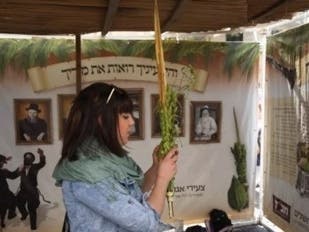
Another act of celebrating is shaking of the four species, consisting of a palm branch (lulav), willow (aravot), myrtle (hadasim) and a citron (etrog), holding them together and shaking it in four directions (up, down, east, west, north, south). One interpretation of this act is that the four very different species held together represent the unity of different types of people.
Since the Jewish calendar follows a lunar cycle, with a leap month every four years, the holiday will always fall out five days after Yom Kippur but will fluctuate on the English calendar. This year Sukkot will begin on the night of October 16 and will culminate on the evening of October 23.
The first two days (one day in Israel) are considered ‘holier’, when more devout Jews will refrain from work, including use of electronic equipment. Families will go to synagogue and will often invite family and friends to share a meal in their sukkah.
The intermediate days are quasi-holidays where one is permitted to work, but often families will spend the days together on outings or other fun things (you might notice South Mountain Reservation has more people than is normal for a weekday).
Sukkot is followed by two additional holier days: Shemini Atzeret (the Eighth Day of Solemn Assembly), and Simchat Torah (celebration of the Torah). The Torah consists of the five books of Moses and each week a chapter is read in synagogue. On Simchat Torah Jews complete reading the last chapter (Vezot Habracha, the 34th chapter in Deuteronomy), and start again from Genesis, starting the cycle anew. People gather in synagogue to sing and dance and partake in completing a reading. In Israel these two days are combined into one day.
This year the holiday of Shemini Atzeret/Simchat Torah will be bittersweet, as, according to the Jewish calendar, it was one year ago on that day that barbaric terrorists invaded Israel, infiltrating the Nova music festival and private homes on several kibbutzim, where they brutally raped, burned alive, shot and tortured 1,200 innocent lives and took 251 as hostages into the dungeons of Gaza. Let us all pray for peace.
Author’s note: This is the second in a yearlong series about Jewish holidays (we have a lot!) in an effort for neighbors to get to know each other and break down barriers. I encourage you to submit articles on your cultures, holidays and customs. Previous articles: