Schools
Tax Cut Proposed by Local School Board
Draft budget shows reduction in debt load offsetting increased costs, giving residents a tax break.
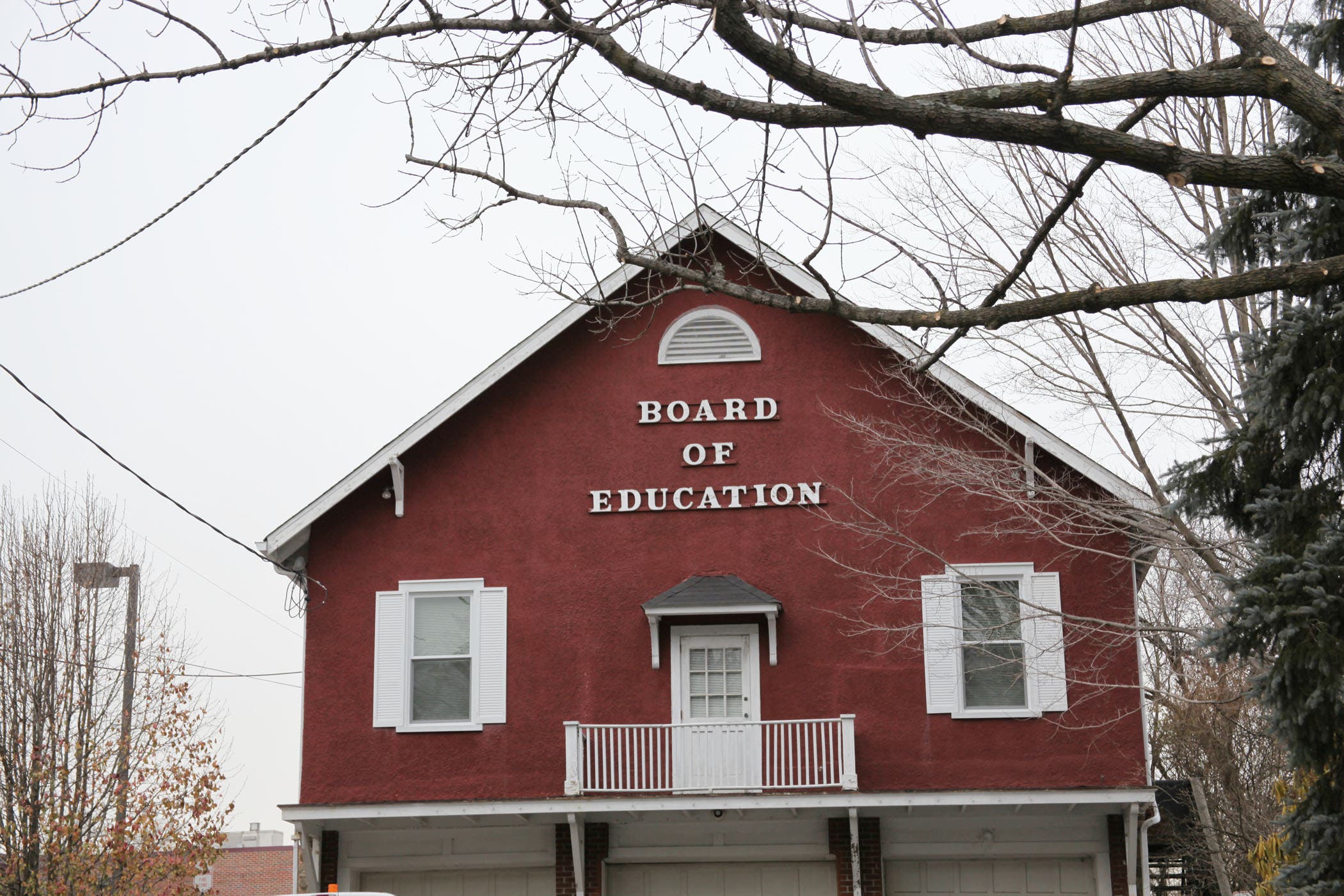
"We have a rare opportunity to invest in ourselves and prepare for the famine to come," Superintendent of Schools Dr. Frank Romano told the Franklin Lakes Board of Education Tuesday night.
The board drafted a budget for the 2011-12 school year highlighting some key areas the district will focus on to keep school performance high while "preparing for the future."
The proposed expense summary shows a reduced budget of 2.7 percent for the 2011-12 year at $27,458,823 or a difference of $750,963 from the current 2010-11 year.
Find out what's happening in Wyckofffor free with the latest updates from Patch.
The summary includes current expenses, state and federal projects, capital reserve, and debt service as part of a 20-year loan, which started in 2002.
Proposed revenues include tuition, transportation fees, state and federal aid, local current expense tax levy, and miscellaneous revenues, including interest earnings and rental fees.
Find out what's happening in Wyckofffor free with the latest updates from Patch.
Expenditures cover instruction, special education, student body activities, tuition, attendance, instructional support services, staff development, library/media, school and general admission, operation of plant, transportation, benefits, and capital outlay.
Past and Current Budget Issues
Some issues the board faced in putting together the budget for the 2011-12 school year included a loss in state aid for the past two years, as a result of the struggling economy. Taxpayers made up for one-third of the loss in state aid from last year's budget.
But with a 2 percent cap on what can be taxed, Romano said, “we’re headed for a famine.”
However, it was not all doom and gloom. Romano announced some of the money came back as a result of preparing for a 25 percent increase for health benefits.
As it happened, the district paid just 8.5 percent more, leaving a difference of $182,000 that could be used for projects. Also, the special education program brings in approximately $1.6 million in revenue and cost savings.
Thanks to the "wisdom of prior boards," the district started investing in facilities years ago,which has helped keep them ahead of the curve, Romano noted. But now, the current board "needs to continue to invest in projects" Romano said, and "invest in our future."
The biggest changes occurred in the debt service tax levy and the local current expense tax levy. Both are taxes Franklin Lakes residents pay to the district.
For the 2011-12 school year, residents will be asked to pay 2 percent more for the local current expense tax levy, a difference of $460,586 compared with the 2010-11 school year levy.
The debt service tax levy was reduced by 51.5 percent after the district paid a final payment of $1,151,014 for prior building projects, reducing the debt service tax to $1,082,007.
As a result, the district had a total tax reduction of $690,428. Between the changes in debt service and local current expense levy, residents would pay 2.7 percent less than the 2010-11 school year. (See below for chart).
Investments
Romano told the board that investment in enrichment programs will keep the district in good standing.
"The Franklin Lakes Education Foundation, for instance has gone as far as to invest directly in our programs, paying for one half of a teacher for our Discovery Program," he said. The Parent Teacher Associations will also "continue to invest in these programs."
The Discovery program is an inquiry-based instructional program with the goal to enable “learners to think beyond the boundaries of their classroom,” as stated on the district Web site.
Also, Romano said that higher degrees of specialization and consistency will be utilized in the district, including a Discovery Room Teacher, and Library Media Specialist.
The district added a Language Arts Staff Developer to “bring consistency at the elementary school levels,” and to “bring teachers to where they ought to be in terms of balanced literacy, reading and writing workshop.”
Romano added that they need to find “where the traditional parts of the language arts education naturally fit into that.”
Though he said that sustainability may not last, the “bottom line is that we have the opportunity” to bring in levels of subject expertise.
Romano added that the district will "invest in itself by expanding current programs” that bring in substantial revenue and in turn, would better educate and serve students.
"We are currently in the process of expanding our preschool Bright Horizons Program," he told Patch. "Our special education programs continue to serve our population and out-of-town populations well. In addition to the revenue, programs like these save hundreds of thousands of dollars more in potential expenses saved."
Romano said he plans to continue partnering with FLOW district schools, and partnering with colleges and universities such as Montclair State University through its Network for Educational Renewal.
The district also seeks to negotiate "sustainable contracts," where in recent agreement with the administrators, they will contribute roughly 25 percent to their health benefits packages, said Romano.
Romano has encouraged investment in long range planning, such as the strategic plan and the technology Evergreen Plan and their current status of planning and implementation. The District is also engaged in a full-blown district efficiency study, with updates presented on the districts website.
At this early point in time, budget numbers are subject to change, as the Board will continue to make changes before submitting a final budget proposal to the voters.
Tax Reduction Chart
2010-11 2011-12 (draft proposal) change in dollars change in percentage Local $23,129,335* $23,589,921 $460,586 2.0% Debt $2,233,021** $1,082,007*** -$1,151,014 -51.5%
Total Tax Reduction: Change ($ between Debt and Local) $690,428 or Change (%) 2.7
*Local Current Expense Tax Levy
**Debt Service Tax Levy
***Reduction as result of final payment for prior building projects (paid $1,151,014)