It’s not surprising that this year’s NJ State Department of Education School Report Card indicated that Wyckoff schools should be proud. But upon further examination the financial stress facing the state could eventually cause concern within the community.
“It just affirms the excellence of our school and our district. I’m very proud of our school and district,” said Ramapo High School Principal Louis Moore.
The annual School Report Card tracks No Child Left Behind requirements and requires accountability in everything from student-to-teacher ratios, to drop out rates, to testing scores and salaries statewide, disrictwide and in individual schools. According to the state DOE site, the purpose of report is to guarantee accountability and to track progress or lack thereof within schools.
Ramapo, which has about 1,200 students from Wyckoff, Franklin Lakes, and Oakland boasts a long list of accomplishments including the Academic Decathlon, all-state chorus, American Invitational Math Exam and American Scholastic Press Association. However, the high school, which has good graduation rates with 90.5 percent of graduates planning to attend a four-year college, did not meet Adequate Yearly Progress under No Child Left Behind for the year of 2009.
Every school is expected to make a certain amount of progress each year in moving towards the goal of having every student meet No Child Left Behind standards. Ramapo was the only school in the district not to pass AYP for 2009, the most recent numbers available which appeared in the state School Report Card.
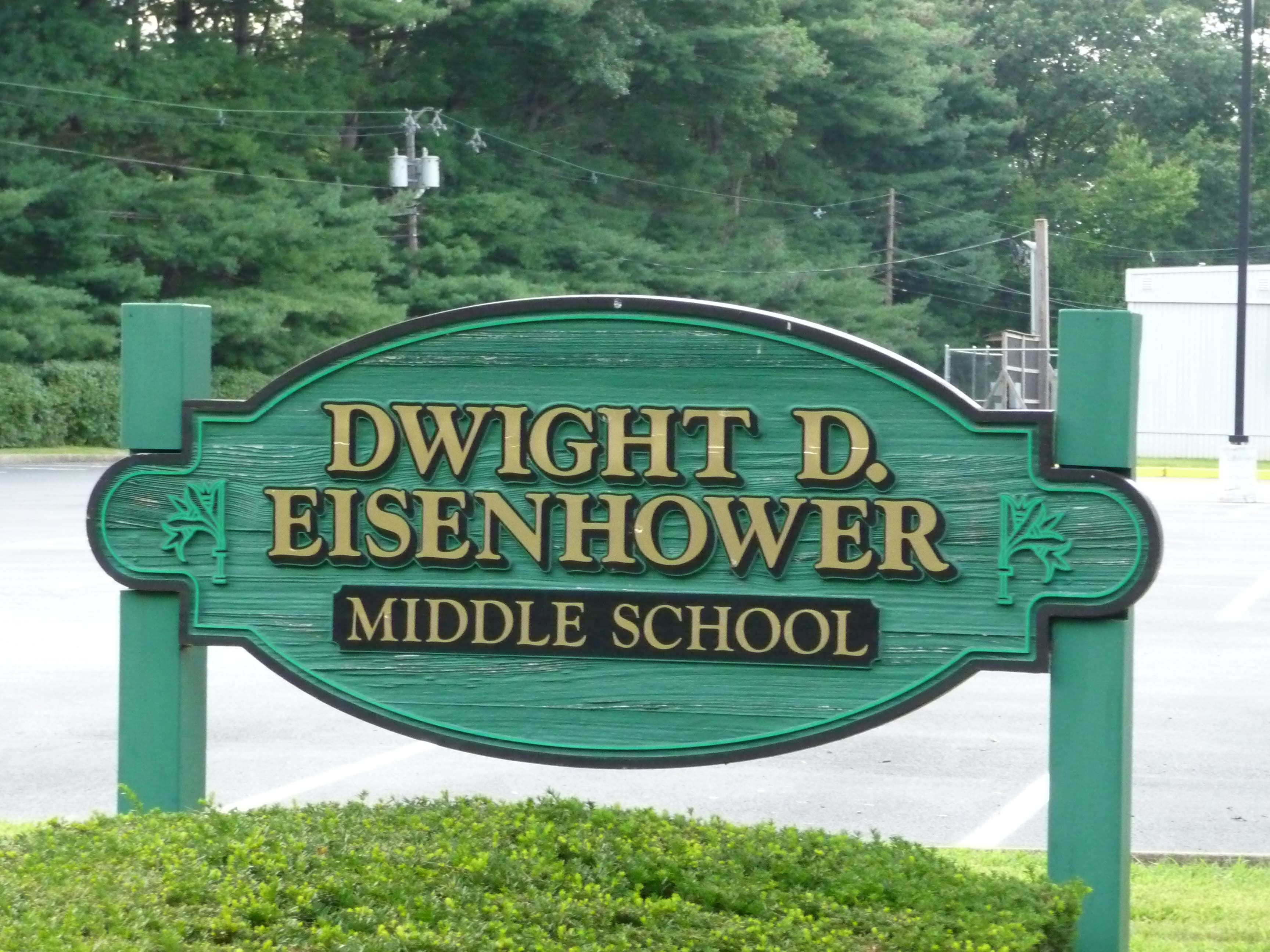
Indian Hills High School made AYP and has a similarly impressive makeup. The Dwight D. Eisenhower Middle School did not make AYP for 2009, but the rest of the district elementary schools did pass.
"We did very well. We improved in lots of areas and held our own in others," said Cheryl Best, the Director of Curriculum and Instruction for the local K-8 district.
Best said she was looking forward to when the state moves to a gross model in 2014-2015 rather than basing their scores on grade levels.
"Right now we're looking at snapshot data. Yes, we went up but it's with a whole different group of students," said Best, adding that once the requirements are tracked with the same students as they progress to the next grade level better data will be made available. "The data will be much more informative, it will say much more of what people think it is saying now."
The school improved in both language arts and math in certain groups and exceeded the socioeconomic trends and state averages.
"The greatest challenge is really having your curriculum become more transparent, communicating with our community and maintaining our scores," said Best. "When you are at the top it is hard to make gains. You have to make people understand that you don't have to make giant gains all the time, but that you have to maintain what you are doing."
"They're wonderful challenges to have. I think that people need to understand that this is only one measure of success," Best added. "There is also the students joy of learning, culture of a district, the quality of communication in a community."
While the district as a whole has done well, Moore admits that keeping schools headed in the right direction becomes harder because the current financial climate.
“I don’t want to panic anybody and we are confident we are going to get our budget through, but I don’t think I am speaking out of turn when I say that is a challenge facing everyone when your budgets are remaining flat at best,” said Moore.
At Ramapo and Indian Hills both, $19,061 is spent per pupil as compared to the $16,937 state average.
“I think it’s the common challenge that we are all facing and that is in the current economic environment and in light of the state facing such financial problems we have to be especially diligent where we are doing absolutely the best we can to keep our districts going," Moore said. “We are trying to keep our district not just where we are, but moving forward, and that’s a challenge.”