Schools
Tech Advancements a Boon, Challenge for Teachers
Retiring Ramapo librarian reflects on integrating technology with education
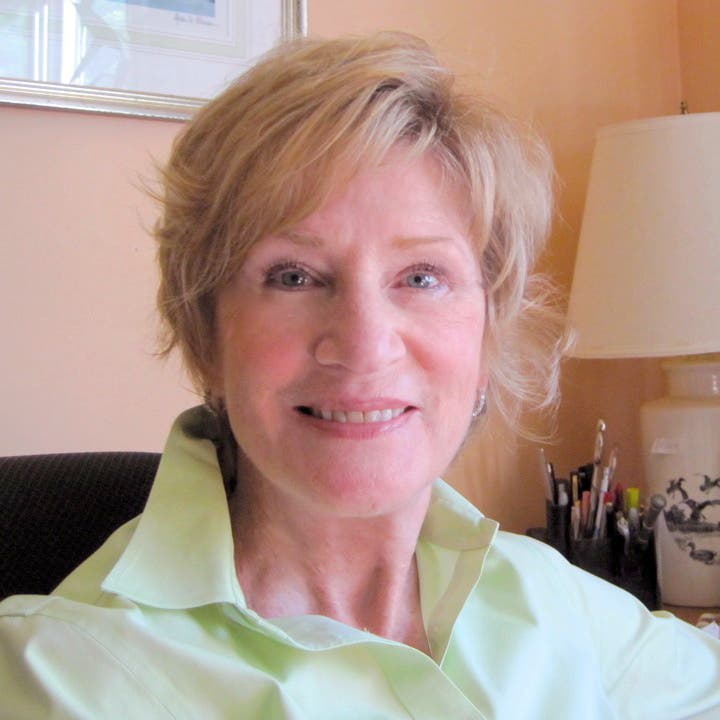
"Every day I think 'I don't have to wake up at this hour anymore,' " Amy Smith said with a laugh from her Media Center office.
After 25 years as an educator at Ramapo High School, Smith—along with 10 other teachers and employees in the district—is retiring at the end of the 2009-10 school year.
Looking back, it's been quite a ride for someone who's seen the changing of the lockers for more than two decades. "We're very fortunate to be at Ramapo. The caliber of teacher is excellent here—I've always felt that," she said.
Find out what's happening in Wyckofffor free with the latest updates from Patch.
With technology often a friend and foe in education, Smith sees each day the balance that must be struck between progressivism in using ever-changing technology—with today's kids being "digital natives," Smith said—and the traditional elements of teaching that must be stressed, along with enforcing the boundaries of when technology is appropriate to use.
"I see the gamut," she said. "Education as a whole is in a very transitional period. We have just burgeoned onto this technological world. And education is notoriously slow to catch up to what's really happening in the outside world. It's a constant struggle.
Find out what's happening in Wyckofffor free with the latest updates from Patch.
"You always want to improve and improve very quickly, but it's just not the personality of the school system. It moves more slowly."
She does, however, see the ever-closing technological bridge between educators and the pupils. "I see the people who are trying to be innovative, who are trying to incorporate the technology that is available to kids that they use in their own lives all the time."
Because that technology is available to both students and faculty alike, Smith is well-acquainted with how instructors are utilizing the mediums with which students are most familiar. She observes how open many are to discussing making approaches more enlightening; she sees the evolution of the lesson plans to producing outcomes the teachers are seeking.
While she says plenty of teachers in her age bracket have embraced technology and even utilize it in their own lives, not all seamlessly made the transition. "Some said 'I can't do this, it doesn't make any sense to me,' " she said. "Many of them have retired."
'Age of Instant'
With the fluidity of technology, it's certainly not easy to stay current on changing trends. Many become overwhelmed as "digital immigrants." For Smith, it wasn't as challenging. Having caught the early wave of the technological revolution in the early '90s, she was able to build on a base of understanding naturally and gradually, receiving a masters in technology in 1992.
"Once you have a base for something, it's not like learning the entire concept at once."
According to Smith, most of the teachers at Ramapo are of a newer generation, so adapting to the tech curve isn't as daunting, though that also brings about other challenges. "We've undergone a tremendous changeover in the last 10 years of the 'old guard' having retired and new ones in," she said.
"The young teachers who are here don't even remember not having a website up," she said.
Despite the advent of new technology so firmly integrated into daily life at the high school, it's merely a step toward understanding. For technology is not the end-all be-all, she said.
"The use of technology certainly has to be a part of what occurs, but the design of the curriculum, the design of the assignment, is where you get innovation. That's what makes it a meaningful assignment for kids," said Smith, who's been the librarian at Ramapo since 1996 after completing her master's in Media Studies and previously working as an English teacher on George Street for nearly a decade.
Striking the balance between opening new doors with podcasts, iMovie and other modern components of learning, and by the same token closing doors by controlling the students' usage of their own personal devices, is one of the more challenging aspects in the "Age of Instant."
"Schools are constantly fighting what to allow and what not to allow," she said. "The phones can take pictures of tests, and they can be transmitted to anybody, anywhere. So you try to come up with rules like making it available to kids only in the cafeteria during lunch, nowhere else.
"Students cannot be without some kind of communication," she said. "They can take a phone with a keyboard, and through the pockets of their sweatshirts, without even looking, text away."
Even so, policing isn't always effective. And there are points in which the ink bleeds to other areas. Smith often sees students transferring their informal tech lingo into formal settings, on essays and other papers.
There's a fundamental issue with how to impart knowledge now, too. "The reality is you still have to get across knowledge and information, no matter how you look at it," Smith said.
"But that is not the only thing now because information is so ubiquitous—information can be had at the touch of a button. Now I think the point of education has to go further and say, 'well now that you have all this knowledge at your fingertips, what are you going to do with it?' "
As a school, educators must start to make certain kids know how to discern good information from bad, but to also provide the avenues for children to apply it to their own lives, to better develop relationships between what they're learning and what the world is looking for, she said.
'Education has to change'
Although the librarian in Smith is pleased to see a younger group of teachers who integrate technology on a level never seen before, she has concerns that they themselves often lack in other fundamental areas, specifically in English proficiency. Perhaps that's the English teacher in her.
As the newer generations are coming out of colleges and becoming teachers, you see even the parallels of modern language in young teachers falling closer to that of the student than previous teaching generations had. "I see a lack of English, not even in the spoken word, but in the written word, as well. I see it in the teachers that they haven't had strict grammatical input. I would like to see more of it."
On the one hand, she says part of her is divided. "Language is changing, roll with it," she said. "But I can't. There's something about me that is just a traditionalist."
Perhaps channeling her experience as an English teacher, she believes there's a systemic problem. "When I was in the classroom, I taught grammar as a subject. I felt it was extremely important for these students to understand English grammar. I don't think it's taught at all, ever, in any grade."
"In school, teachers do not teach grammar separately. They may cross out a few mistakes on paper, but the kids don't know why. And unless they know why, they'll never be able to take that correction and apply it. I hear more and more adults that just don't speak correctly.
"It's absolutely non-existent in education," she said. "It's very discouraging."
Because the information age has broken so many barriers to information accessibility, there may be an even greater responsibility on the part of schools to educate the children beyond just a springboard for college, but to teach them fundamental problem-solving skills that are transferable beyond the reach of mere data retrieval.
"The curriculum has to change. The concept of education has to change."
Smith stressed that students and the schools constantly have to look at what the workplace is asking them to do.
"One of the things we are hearing is that there's a need for people that can solve problems—people who have initiative, people who can problem-solve, and people who work well with others." The arena can be anywhere, she said, but it must start in grammar school and continue through high school.
It's important to put students in scenarios that test their ability to rationalize, analyze and solve. "The learning is there, but now they have to do something with the learning. They have to develop outcomes," she believes.
With her alarm clock soon to be pushed back a few hours, Smith will certainly have time to smile and reflect back on her decades of teaching, watching the triad of students, faculty and administrators amalgamate unprecedented technologies into a future that's anything but clear, from afar.
But for now, she is going to take it easy. She plans to travel but, "I'm just going to ease into this retirement thing."