Community Corner
Fishkill Tries To Preserve Its Revolutionary Past
Saving the Fishkill Supply Depot And Griffin's Tavern are priorities for local groups.

Since the first guns of the American Revolution were fired, West Point has been considered the country's most significant military installation on the Hudson River north of New York City. Defending the post was critical to achieve America’s independence. Farther north but forgotten over time, the Fishkill Supply Depot also was critical for the survival of the Continental Army and the birth of the United States.
The Fishkill military depot occupied 70 acres about 23 miles north of West Point. Mostly gone due to development during the 1960s and 1970s, the plight of the Fishkill Supply Depot site in Dutchess County, along with the uncertainty of remnants of a nearby tavern, has rallied a regiment of people to support the preservation of these properties as tributes to America's first patriots.
The depot was a key strategic supply center established and visited often by General George Washington. It protected the Hudson Highlands and prevented the British from dividing New England from the middle and southern colonies. Scouted and selected early in the war as a natural protective location (three miles east of the Hudson River) for the Continental Army’s military supplies, the depot operated from the beginning (1775) until the end (1783) of the conflict.
Find out what's happening in Across New Yorkfor free with the latest updates from Patch.
A Bustling Community
At the time of the war, the Village of Fishkill consisted of about 50 houses. The nearby depot featured large barracks and huts, magazines and an armory, artillery placements, a hospital, a blacksmith shop, a prison, stables and storehouses. About 2,000 troops were stationed at this location at any one time. Some families accompanied the soldiers and settled in the area. The military installation actually became a small town with the addition of a wigmaker, baker, tent maker and wheelwright. Nearby Dutch and Episcopal churches served as additional military hospitals and prisons.
Find out what's happening in Across New Yorkfor free with the latest updates from Patch.
Almost all traces of the Fishkill Supply Depot have been obliterated over recent time. Despite the area’s designation on the National Register of Historical Places, the large footprint of the depot that featured the barracks and parade grounds was covered by the Dutchess Mall during the early 1970s. The mall was demolished during 2006, but several commercial buildings remain on the property.
Continental Army HQ
The Van Wyck Homestead is the one structure on the site that witnessed the military depot. It was built years earlier and includes the original three-room house that became the east wing of the homestead that was expanded prior to 1757 with a west wing. As the war commenced, the homestead was requisitioned by the Continental Army as officers’ headquarters under the command of General Israel Putnam. General Washington, Marquis de Lafayette, Baron von Steuben, Henry Knox, Horatio Gates, Alexander Hamilton and John Jay frequently conducted military business at the homestead. The home also witnessed military trials, the outfitting of troops by the quartermaster department and the dispatch of orders.
Following the war, the house was reoccupied by the original owners and it remained in the family for the next 150 years. Structures associated with the military gradually were razed as the area returned to its bucolic state close to the river.
Despite the significant military history within the greater Fishkill area and specifically in and around the Van Wyck Homestead, the house almost was lost during the 1960s. Interstate 84 was built immediately behind the home. Original blueprints for the highway included razing the house to install a cloverleaf for the new road. The roadwork propelled local residents to create The Fishkill Historical Society, with its patrons rallying to save the structure. Nearby, where the cloverleaf was relocated, archeologists discovered the remains of the depot’s blacksmith shop.
Saving Griffin’s Tavern
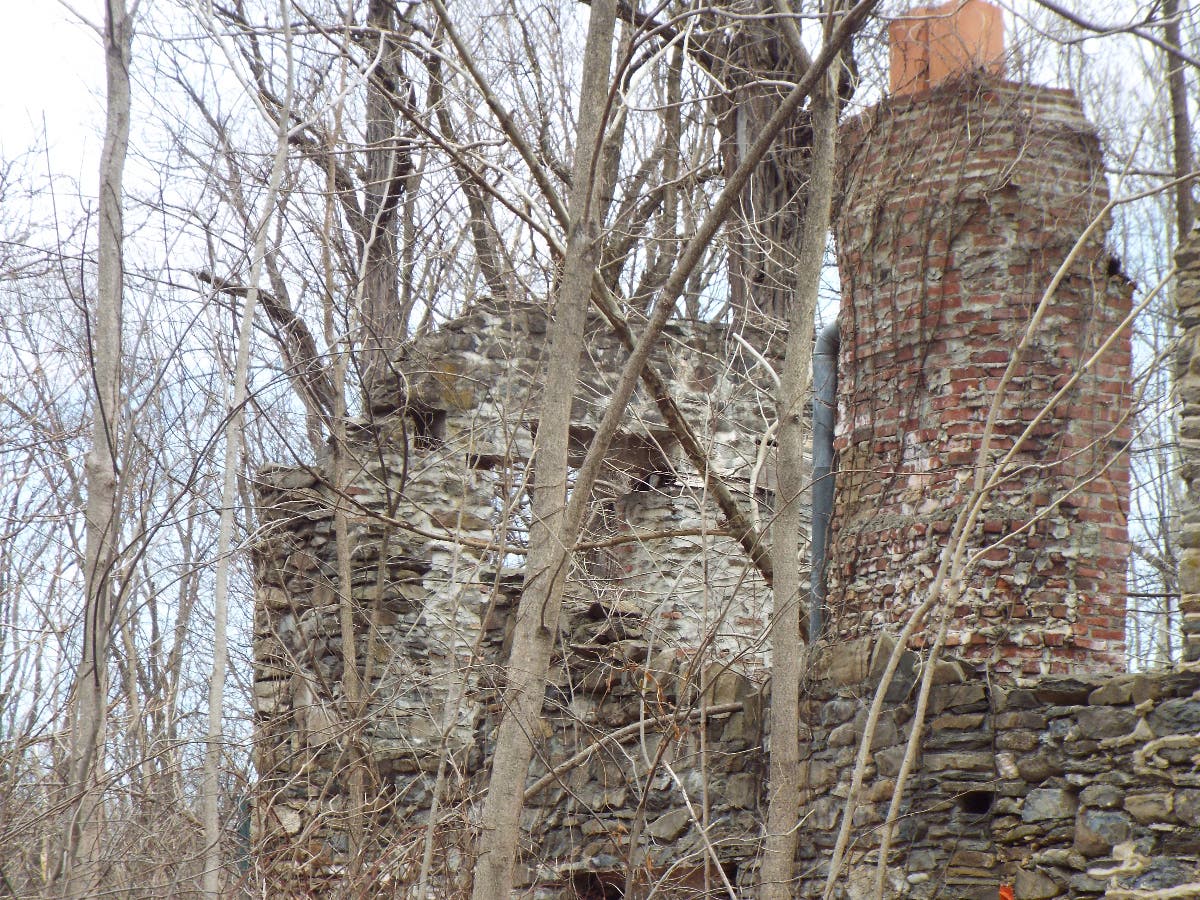
A short distance from the depot site in the hamlet of Hopewell Junction that is in East Fishkill, the remnants of an 18th-century house also stand in tribute to the war’s patriots. Owned by Colonel Jacob Griffin, the private residence was known as Griffin's Tavern, or “The Rendez-vous.” Among the high-ranking Continental Army officers to visit the property were Washington, Lafayette, Putnam and von Steuben.
The historic structure was destroyed during a 1995 electrical fire. Only brick and stone walls remain on the property that subsequently was purchased by a company that owns the adjacent waste removal business. Preservationists led by Julie Diddell have been concerned for the site’s future, hoping the structure would not be neglected or razed by the property owners. According to Diddell, a plan has been created to preserve the site as a ruin in tribute to its role during the American Revolution. A plaque on the roadway was dedicated by the Daughters of the American Revolution during 1928.
_______
Updated April 8, 2020: The tavern was destroyed without notice during early April 2020. See East Fishkill Government, Royal Carting Destroy Local History.
_______
Information about the efforts to protect the site can be located on the Friends of Griffin’s Tavern Facebook page or by sending an email to fogt1776@gmail.com .
Preserving Open Space At The Depot
Returning to the depot site, a battle has raged for several years over the remaining 20 acres of open space within the National Register-designated area. Preservationists have been challenging plans for a retail development known as Continental Commons.
The Friends of the Fishkill Supply Depot claim the development will destroy archaeological features and artifacts documented in studies of the undeveloped land. The property, they claim, includes the military burial ground associated with the depot.
Ongoing verbal and written sparring, including accusations of deceit, have been traded between the developer and preservationists. Court hearings have been held and a solution remains unsettled as of early 2020.
Preservationists have outlined several goals for their so-called hallowed ground that include preventing further disturbance and development of properties within the depot site, finding a private or government entity to purchase and preserve the open space (a national battlefield preservation organization, such as the American Battlefield Trust, has not become involved to study the property or provide funds to acquire the land as successfully accomplished in other parts of the country for sites related to the American Revolution, War of 1812 and the Civil War), and developing a plan to preserve, restore and maintain the depot site. The claim of a burial ground at the depot, however, has been disputed with research while the preservationists don't appear to acknowledge an important detail -- military installations such as forts and depots, historically, interred personnel beyond a facility's boundaries, especially if the deaths were associated with disease. A colonial cemetery about a mile east of the Fishkill Depot site possibly is more likely the final resting place for Americans who died at the installation.
The battles remain fluid to save the properties within the Fishkill Supply Depot and the remnants of Giffin’s Tavern. Updates about the issues can be obtained by accessing the records of town hearings, locating media articles and from the information disseminated by the organizations that support preservation of the depot and the tavern.
_______
Mike Virgintino is the author of Freedomland U.S.A.: The Definitive History, the story about America's theme park located in The Bronx. Published by Theme Park Press, it can be found on Amazon, eBay, Goodreads and other retailers.