Business & Tech
Bay Shore Hospital Performs Its First Stroke Recovery Device Procedures
The FDA-approved Vivistim device pairs vagus nerve stimulation with rehab therapy to help improve arm and hand function.


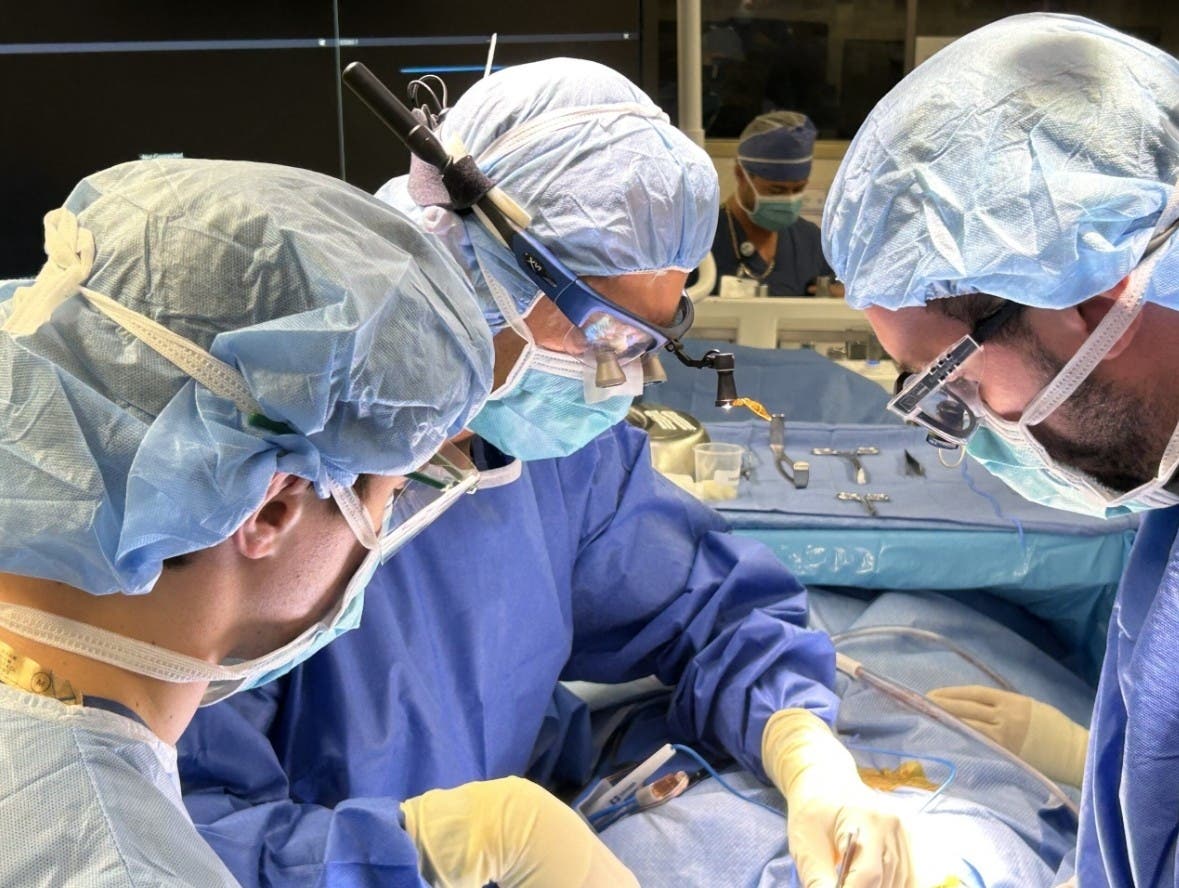
BAY SHORE, NY — South Shore University Hospital has performed its first two Vivistim procedures, marking a milestone in stroke recovery care for Northwell Health’s Eastern Market, the hospital said.
The procedures were performed by neurosurgeon Dr. Mohsen Nouri on patients under the care of neurologist Dr. Boris Chulpayev. Hospital officials said the treatment offers a new option for chronic ischemic stroke survivors who have lingering arm and hand impairment.
Vivistim is an FDA-approved medical device that pairs vagus nerve stimulation with rehabilitation therapy. The system delivers mild pulses to the vagus nerve during specific, task-based exercises, which hospital officials said is designed to boost neuroplasticity and help the brain relearn motor skills.
Find out what's happening in Bay Shorefor free with the latest updates from Patch.
The vagus nerve is the longest of the 12 cranial nerves that emerge from the brainstem and extend to parts of the head, neck, face and torso, according to Northwell. It helps send electrical and chemical messages between the brain and the body, playing a role in functions such as speech, swallowing, breathing, digestion and heart activity.
The nerve splits into two strands at the base of the brain and travels down the left and right sides of the neck. Those strands connect to organs in the chest and abdomen, including the heart, lungs and digestive system, Northwell officials said.
Find out what's happening in Bay Shorefor free with the latest updates from Patch.
According to Northwell, clinical studies have shown that pairing vagus nerve stimulation with rehabilitation can help patients achieve two to three times more functional improvement than traditional therapy alone.
“This is the latest and most advanced device on the market to improve arm and hand function after stroke,” Nouri said. “For many survivors with chronic upper limb deficits, Vivistim offers the best chance we can give them for meaningful recovery. While every recovery journey is unique, we’re seeing that this technology can amplify the benefits of therapy, helping patients regain function that once seemed out of reach. It’s an exciting advancement for our patients, their families and our rehabilitation partners.”
The procedure is performed under general anesthesia and typically takes about an hour, hospital officials said. During surgery, a thin wire is placed around the vagus nerve in the neck and connected to a small stimulator implanted in the chest.
The device’s battery lasts about five to seven years and can be replaced through a minor procedure if patients continue to benefit, according to Northwell. Vivistim is currently approved for improving arm and hand function.
“Vivistim is most effective when it’s paired with structured, task-specific rehabilitation,” Chulpayev said. “The stimulation is timed to meaningful movements during therapy like grasping, reaching and other everyday tasks to reinforce the brain’s relearning process. It often takes several weeks of consistent practice to see measurable gains, which is why close collaboration between surgeons, therapists, and patients is essential.”
South Shore University Hospital’s team works closely with device specialists, and patients can see and handle a sample device as part of their preoperative education, hospital officials said.
Northwell Health’s clinical Center for Bioelectronic Medicine provides patients with access to FDA-approved bioelectronic medicine therapies, including Vivistim, as well as opportunities to participate in clinical trials. The center also offers comprehensive consultations with specialized health care providers, dedicated care navigators and vagus nerve stimulation treatment for rheumatoid arthritis.
South Shore University Hospital is seeking candidates with persistent upper extremity weakness from a chronic ischemic stroke who may benefit from the therapy.
“These first cases are an important step in expanding access to bioelectronic medicine across our communities,” said Irene Macyk, president of South Shore University Hospital. “We’re proud to bring innovative treatments like Vivistim to stroke survivors in our hospital.”
Get more local news delivered straight to your inbox. Sign up for free Patch newsletters and alerts.