Health & Fitness
The Conservation Conversation: How to Reduce Your Carbon Footprint Without Really Trying
Our "carbon footprint" is the measure of all the greenhouse gas emissions attributable to what we do and how we live. There are easy and inexpensive ways to reduce that footprint.
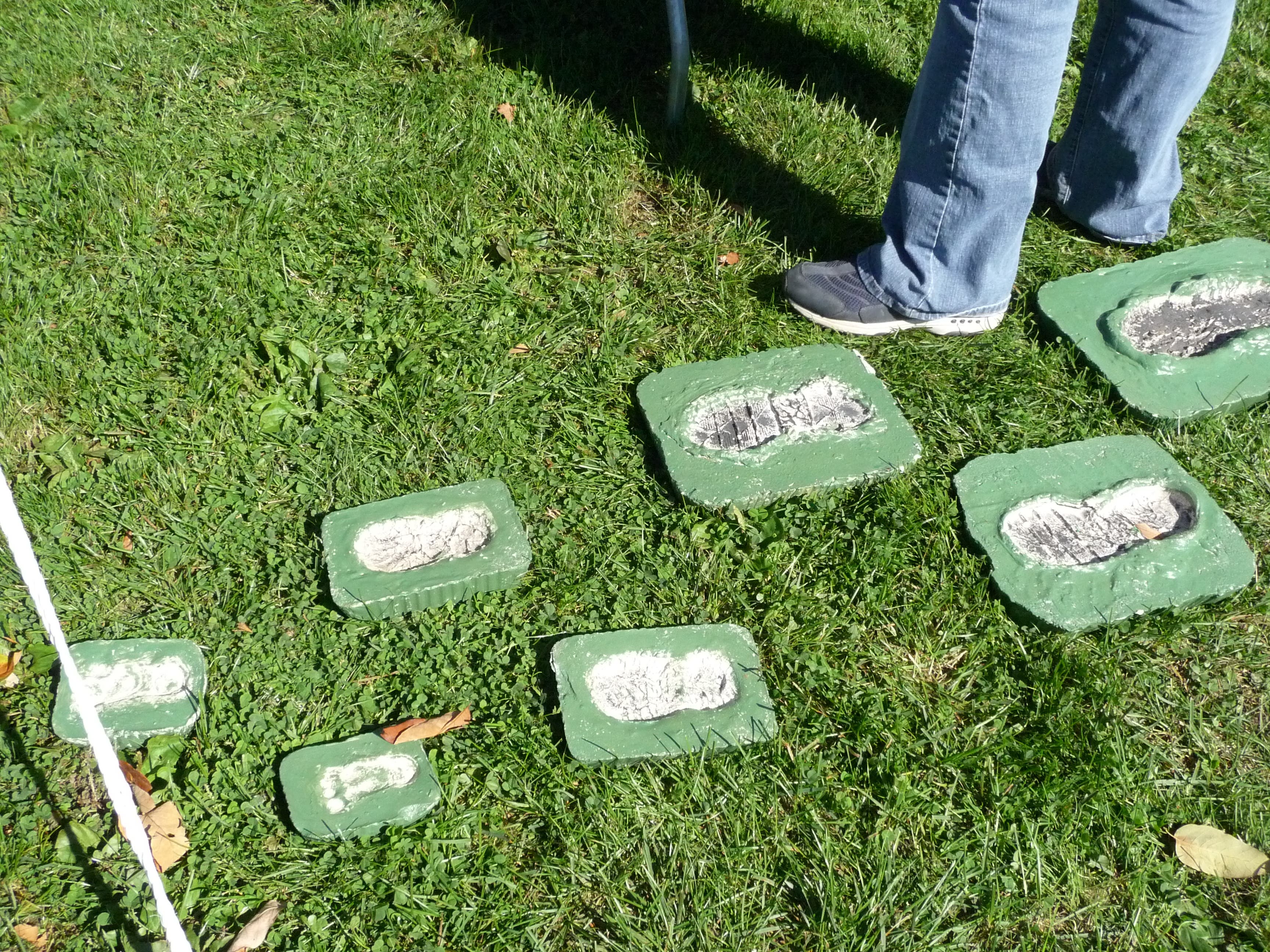
A couple of columns ago, I noted that, by now, there is essentially no scientific doubt that anthropogenic (human-caused) emissions of greenhouse gases - primarily carbon dioxide from burning coal, oil and gas - are causing the overall climate of the earth to warm significantly.
I explained that the occasional cold snap or snowstorm doesn't mean the earth isn't getting warmer. On the contrary, such fluctuations are entirely expected, while the long-term warming trend is readily apparent through the "noise" of daily, monthly and annual variability.
Perhaps, like me, you are disappointed at the slow pace of government action to reduce greenhouse gases (GHGs). And, perhaps, you also think you’re powerless to do anything about it. Not so. You can start by reducing your own carbon footprint and you can do it with virtually no change at all in your lifestyle.
Find out what's happening in Bayside-Douglastonfor free with the latest updates from Patch.
Your carbon footprint is the amount of GHGs you produce or for which you are indirectly responsible. It is made up of two parts: your primary and your secondary footprint.
Your primary carbon footprint is the measure of your direct emissions of carbon dioxide (CO2) from burning fossil fuels for cooking, heating your home and running your car as well as the fuel burned to generate the electricity you use.
Find out what's happening in Bayside-Douglastonfor free with the latest updates from Patch.
Your secondary carbon footprint is a measure of your indirect CO2 emissions attributable to the entire “cradle-to-grave” lifecycle of products and services that you use – from the production and delivery of the food you buy in grocery stores and restaurants to the manufacture and transport of the clothes you wear, the furniture you buy and the iPhone you use.
We have some measure of control over our primary carbon footprint. We can use energy-efficient appliances and lights, dial down the thermostat, use a fuel-efficient vehicle and drive less. On the other hand, the only way to reduce our secondary carbon footprint is to consume less and to choose carefully the products that we buy. For example, you can rely more on locally raised food, available in farmers markets and food co-ops.
Should you feel compelled to buy bottled water, consider the carbon footprint of that bottle from Fiji compared to the bottle of Aquafina, which is made locally from municipal tap water. Better not to buy bottled water at all. It costs more per gallon than gasoline and the plastic bottles - made from oil - too often end up as litter. And, anyway, you live in New York City where the tap water is some of the best in the world.
Similarly, for us here in the New York metropolitan area, a bottle of wine from Australia or New Zealand has a higher carbon footprint than a bottle from Long Island. A note of caution: it is sometimes difficult to intuit these relationships. The highest carbon footprint among vintages a New Yorker is likely to buy will be for California wines.
The Australian and New Zealand wines reach New York by boa, as do European wines. This is a relatively fuel-efficient means of transport. Those Napa Valley bottles arrive here by truck, which is much less efficient on a pound-for-pound basis.
All other things being equal, folks who live in Manhattan and use mostly public transit have a lower carbon footprint than those who live in suburbia or a rural area and have to use the car to go anywhere. And all other things being equal, those who live in large apartment buildings have a lower carbon footprint than those who live in private houses.
But regardless where you live, there are many simple and painless ways to reduce your carbon footprint. Some are entirely free: turn off lights, computers and electronic devices when not in use, turn down the setting on your thermostat and water heater by a few degrees, run the dishwasher and washing machine only with a full load, hang your laundry on a line instead of using the dryer, walk or ride a bike instead of using the car and so on.
Other steps require minimal investment, but have a good payback: replace normal lightbulbs with compact fluorescents, insulate hot water tanks and exposed steam pipes, install wall and ceiling insulation in your home, weatherize your windows and doors, use a ceiling fan instead of the air conditioner on nights that are warm but not hot and replace old and inefficient appliances with Energy Star-labeled ones.
These steps will reduce your electric and fuel bills as well as your carbon footprint. Important as they are, however, they will never come close to erasing that footprint or even reducing it by the large percentages society needs to achieve if we are to avoid the worst effects of global climate change. Given that inescapable reality, there is another way to atone for your GHG sins. You can do it the old-fashioned way - buy indulgences.
Just kidding. Although the idea is, in fact, similar, as you'll see. In my next column, I'll present for your consideration two simple and reasonably inexpensive steps that will dramatically reduce your personal carbon footprint. And I'll also mention a more complicated but increasingly attractive step that may prove to be attractive.