Community Corner
Railroad crossing changes a mixed bag for neighborhood
Sounding off on Little Neck's new "quiet zone"
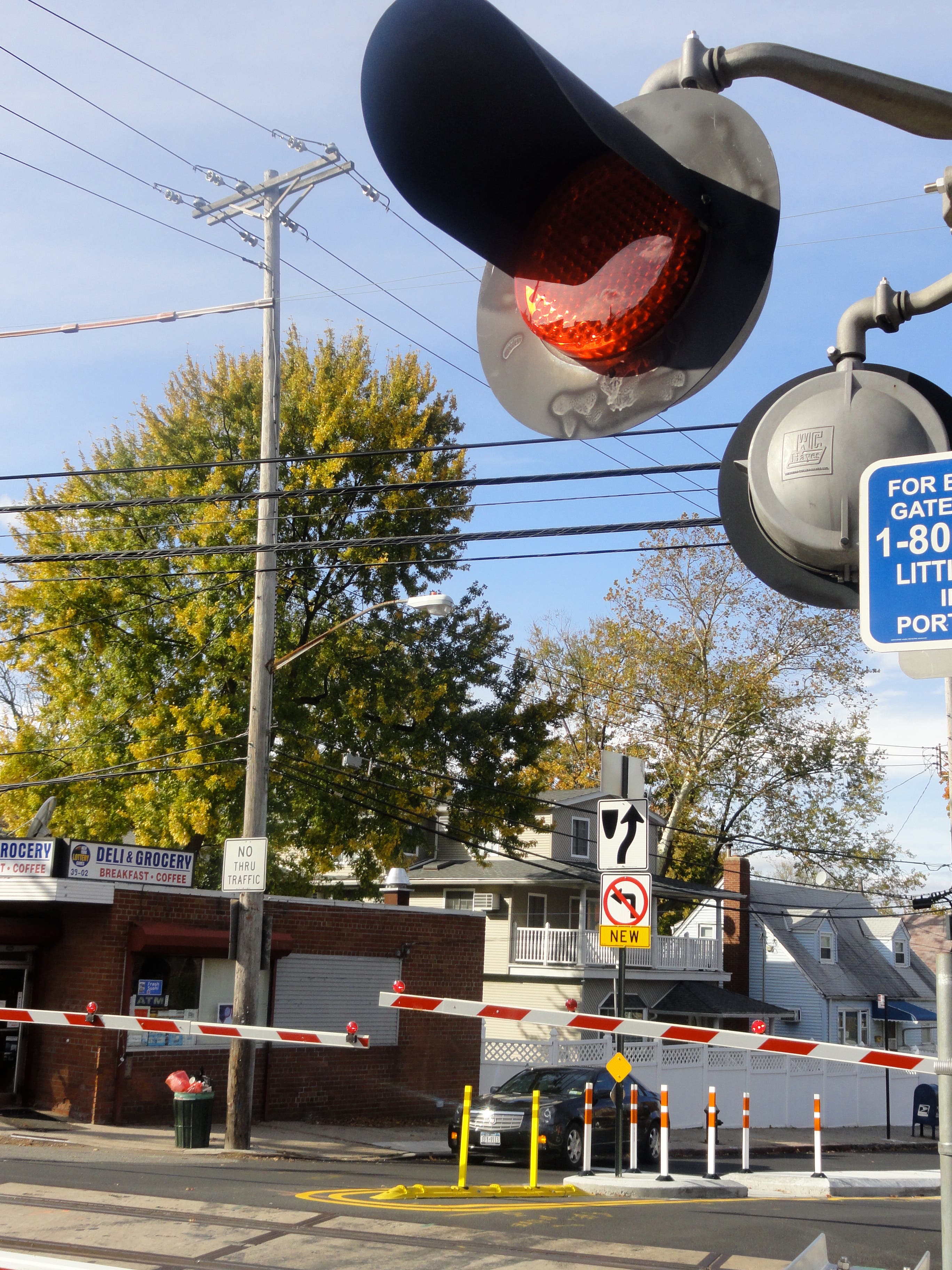

There's good news and bad news at the Long Island Railroad at-grade crossing in Little Neck.
First, the good news. A "quiet zone" was finally established, and those blaring train whistles have been eliminated.
Here's the background: A few years ago, new federal safety regulations required trains to blow their whistles much louder and longer when nearing a crossing. The new rules also said a "quiet zone" could be established if the cars and pedestrians are prevented from crossing the tracks while the gates are down.
Find out what's happening in Bayside-Douglastonfor free with the latest updates from Patch.
Our old gates didn't meet this requirement. On each side there was one long and one short gate. The gates didn't meet in the middle, so there was a space through which a vehicle could drive across the tracks, even when the gates were down.
To prevent this, "quad gates" were installed. When they are down they meet in the center, blocking the entire crossing. Now trains don't blow their whistles at all, which makes it even quieter than before the new rules went into effect.
Find out what's happening in Bayside-Douglastonfor free with the latest updates from Patch.
Now for the bad news. At the same time, a new traffic pattern was established at the crossing. This change is incredibly irritating to many Little Neck and Douglaston residents; it may even be dangerous.
Here's what happened: the city Department of Transportation decided it would be safer to make it physically impossible for drivers northbound on Little Neck Parkway to turn left into Sand Hill Road (known locally as the "Back Road"); and for drivers eastbound on Sand Hill Road to turn left onto Little Neck Parkway.
To accomplish this, city DOT installed a barrier island in the middle of Little Neck Parkway on the north side extending south almost all the way to the tracks.
Sand Hill Road is one of only two thoroughfares between Little Neck and Douglaston north of the LIRR tracks. Therefore, the road is heavily used (despite being, as far as we know, the only one-lane, two-way street in the city).
Consequently, there are lots of folks who have been heavily inconvenienced by this change.
Many drivers now make illegal U-turns after crossing the tracks in order to be able to head in the direction they want; this is NOT a safety improvement.
Residents also worry that emergency vehicles will have difficulty getting around, leading to delays in response time. And if the traffic lane on either side of the median island is blocked for some reason, drivers will have to go around illegally and use the oncoming traffic lane.
State Sen. Frank Padavan, R-Bellerose, brought these concerns to the attention of city DOT Queens Borough Commissioner Maura McCarthy in letters dated October 5 and 13, but we are unaware of any answer to date.
Walter Mugdan is the president of Westmoreland Association, Inc. and the founder of The Udalls Cove Preservation Committee.