Arts & Entertainment
Ewe: An Ancient Tradition Reborn in Bed-Stuy
Percussion ensemble, BedStuy Ewe, helps carry on a rare West African art form
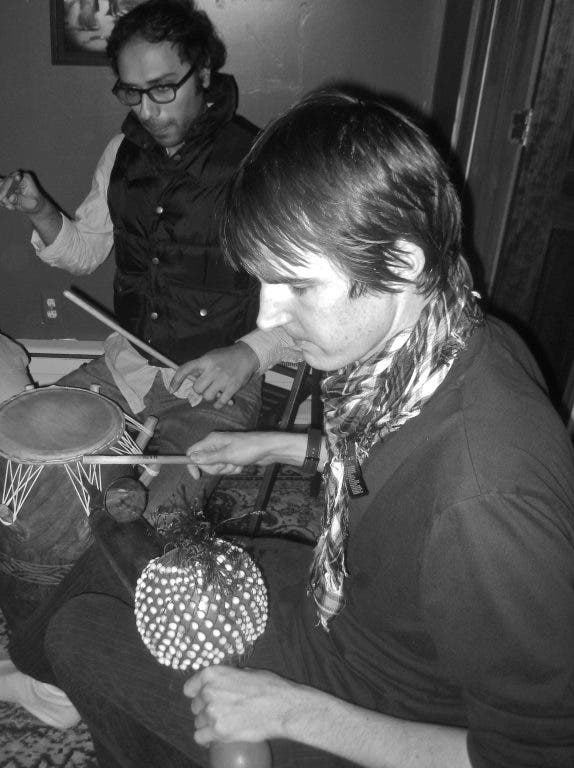


Six percussionists who met during college at California’s Institute of the Arts (CalArts) now practice a West African style of music called Ewe in a tiny basement room in Bed-Stuy.
They've discovered a common ground in their passion for Ewe. Despite its long, rich history, Ewe is relatively unknown in the Western world—even New York.
Led by Amino Belyamani, 26, who lives with his girlfriend and fellow drummer, Shelly Thomas, 26, the band meets regularly in their apartment on Jefferson Avenue. They’ve been playing together as "BedStuy Ewe" for over a year.
Find out what's happening in Bed-Stuyfor free with the latest updates from Patch.
The group's inspiration is Ghanaian drummer Alfred Kwashi Ladzkepo, who’s been teaching at CalArts since the 1970’s. Thomas, who also moonlights as a folk and world singer, explained Ladzkepo’s importance to the group as both teacher and mentor. Having a connection with an elder from Ghana taught her about the music’s passion and traditionalism.
“I had a lot of intimate conversations with him, crying in his room. He talked to me like a father figure, basically,” said Thomas.
Find out what's happening in Bed-Stuyfor free with the latest updates from Patch.
“There are only maybe three people in the West who teach this style of music,” added Belyamani.
In many ways, they’re Ewe’s East Coast ambassadors.
Interestingly, with the exception of Belyamani, who was born in Morocco, none of the members are of African descent. Does this ever present problems at their live shows?
“We’re white and we’re playing African music,” Thomas said bluntly. “People still think in racial terms, through a racial lens. What it comes down to is your love for the music and how authentically you’re presenting it.”
“This whole question of racial tension—white, black—only arises in America,” Corideo opined. “People in Ghana are willing to teach you no matter what your race is. They don’t have the history that America has with racial stigmas.”
Already, venues throughout Manhattan and Brooklyn, such as The Shrine in Harlem and Rose Live Music in Williamsburg, have invited them to perform. They have not yet performed in Bed-Stuy.
Ewe is both a language and a people who are scattered throughout Togo, Ghana, and Nigeria. Written history has mostly left them unnoticed and undocumented.
“You can’t really find information,” Belyamani said. “Was it lost and destroyed during colonization? Was it just that it was purely an oral culture?”
Students of Ewe music must learn it entirely aurally, without the use of music notation. The songs BedStuy Ewe learned from Ladzkepo were taught to him by his father, his father’s father, and so on.
“We perform the songs exactly as they were performed over 200 years ago,” Andrew Munsey, 24, said.
Each member of the group is determined to maintain Ewe’s authenticity, but that allows little room for creative evolution. However, they’re planning a trip to Ghana, where at least one member, Damion Corideo, 30, has visited.
There, they plan to again study under Ladzkepo, who will be joining them upon retiring in 2012, and increase their repertoire of traditional drum patterns.
As a group, their goal is nothing less than introducing the Western world to Ewe music. They’re currently in the recording process and planning an official release in April 2011.

