Politics & Government
Bedford Budget-Cutters Search for Economies
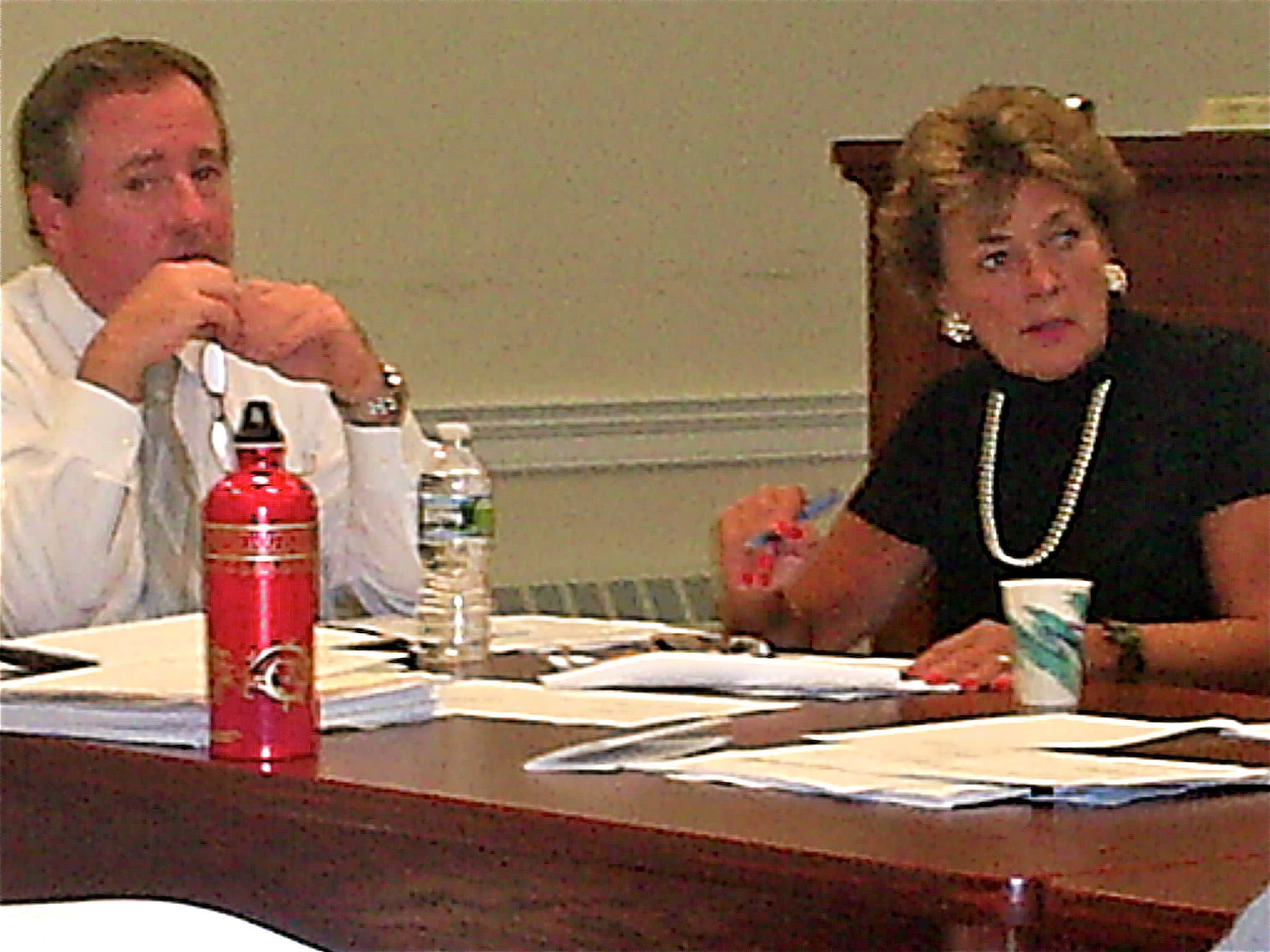
Officials gather at an overtime meeting to address town spending in a period of declining revenue and increasing costs.
It's a situation familiar to many American families: everything costs more while the money coming in, for any number of reasons, just isn't what it used to be.
Bedford's official family confronted that unhappy calculus this week, gathering around a town hall table to identify every dime and dollar they could reasonably pare from their spending or coax into a revenue stream.
The 14 officials—Supervisor Lee V.A. Roberts, the four councilmen and nine department heads—worked deep into the evening examining a series of separate belt-tightening scenarios. Comptroller Ed Ritter had asked each department head to submit escalating economies that cut spending by 5, 10 and, finally, 15 percent.
Find out what's happening in Bedford-Katonahfor free with the latest updates from Patch.
The proposals aired Tuesday—which varied in the likelihood of their implementation from serious recommendations to seeming trial balloons—ranged from cutting back on copier usage and overtime to instituting layoffs and sharply reducing services.
Assessor Thomas Polzella, for example, claimed a reduction in his budget of more than 13 percent simply by shrinking overtime (from $500 to $100) and printing and copier costs (from $11,800 to $9,500).
Find out what's happening in Bedford-Katonahfor free with the latest updates from Patch.
In departments like public works, with larger budgets and regular interaction with residents, the suggested cuts were likewise larger—and more dramatic. Among the sure-to-be-noticed considerations:
- Creating a Dirt Road District, with a separate taxing structure that reflects the steeper cost of maintaining unpaved roads (generating $300,000 in additional tax revenue).
- An end to bulk leaf pickup and imposition of a $2 charge for each bag of leaves collected, saving some $40,000.
- Requiring homeowners to keep their sidewalks open and snow-free, saving another $30,000 but possibly incurring the wrath of the electorate.
Even less-visible functions could face sharp cutbacks. Under the most modest—5 percent—reduction, for example, planning board meetings for the rest of the year would go from twice monthly to just once and be conducted without the aid of recording and department secretaries.
Moreover, and perhaps exemplifying the unlikely-to-happen nature of some proposed cuts, even the board members' $8,900 annual stipends would be on the chopping block. As Roberts, the town supervisor observed, "For the amount of money we would recoup [by eliminating the stipends], it's going to cause such ill will, it's just not worth it." Similarly, on the proposal to scrap leaf pickup, she noted residents' belief in their "God-given right" to such services.
Still, as Roberts said in opening the budget discussion, Bedford faces a "perfect storm" of falling revenue and rising expenses.
As costs continue to rise, the town is seeing sharp declines in the revenue it receives from such things as fines and forfeitures, mortgage taxes and even the tickets state troopers write.
To increase its income, or at the least recover the cost of services, the town will take a hard look at what it charges, for everything from a permit application to police presence at a special event. Councilman Peter A. Chryssos, who is also the deputy town supervisor, said Bedford needed to consider raising, when necessary, what it charges while at the same time notifying vendors that they'll have to reduce the fees they bill the town. "I think [adjusting the] user fees is a less painful way of shifting the burden," Chryssos said.
Fellow board member Chris Burdick agreed, saying, "I think it's a fair assumption that people would rather pay more to retain a service. . . . That's just my gut feeling." He acknowledged the likely outcry over higher fees but said they were preferable to a "Draconian reduction" in services.
Higher fees, of course, assume the ability to pay them. In Bedford, Roberts said, some $300,000 in property taxes remains uncollected. "They're just not paying it," she told the budget-cutters.