Politics & Government
Dog Control Officer Offers Insight on Coyote Attacks
Meet Ray Teetsel, Bedford's top dog in animal control and parking enforcement.
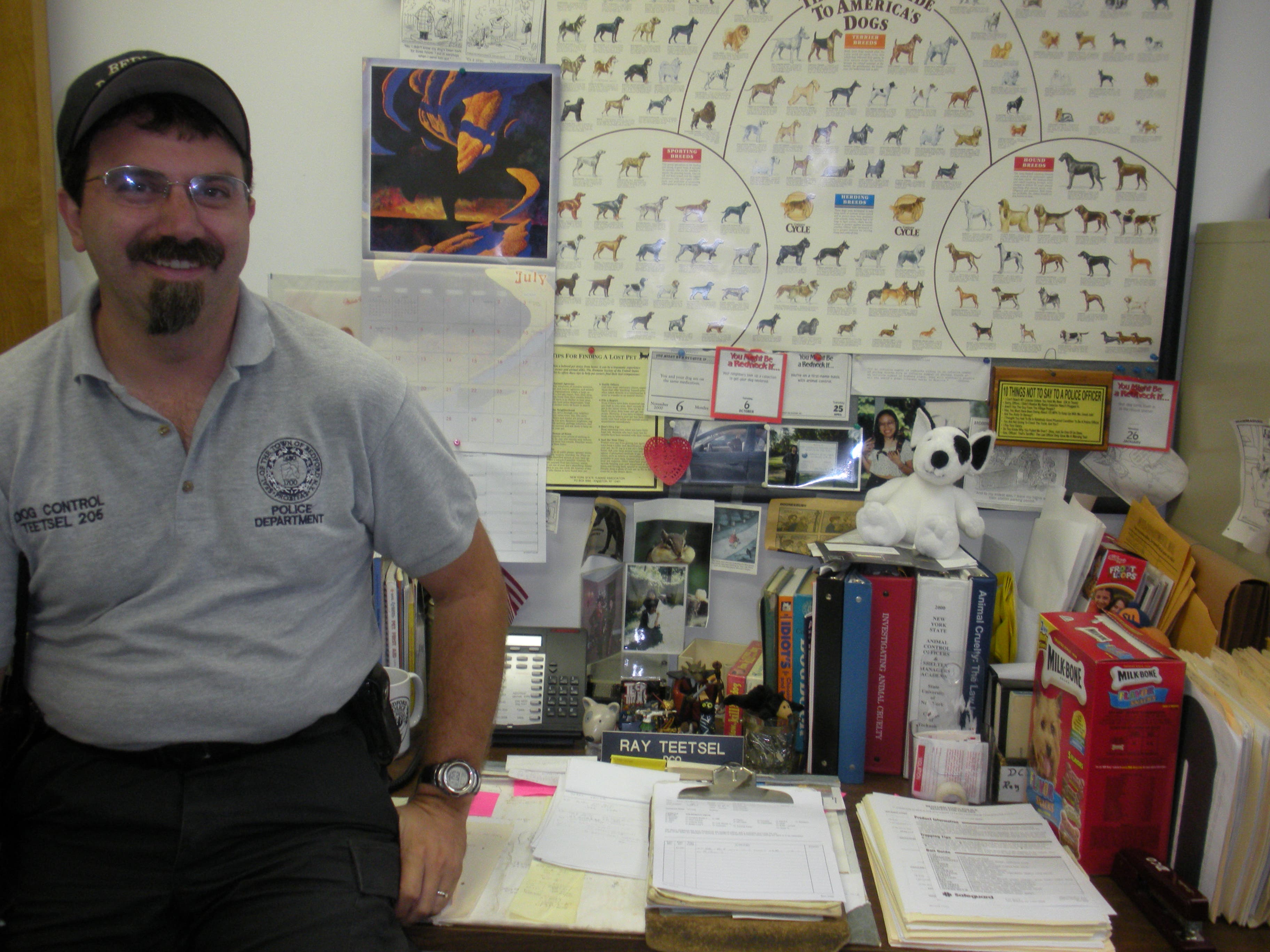

Ray Teetsel eats Milkbones. In fact, he doesn't think they taste half bad. It's how he wrangles in the dogs that get loose in the area.
He should know what works—he's held his dual posts of dog control officer and parking enforcement officer for 11 years.
"If an animal sees another animal eating something, they know it's safe to eat," he says of his Milkbone eating habit. "I've eaten crackers that taste the same—the real fancy wheat ones."
Find out what's happening in Bedford-Katonahfor free with the latest updates from Patch.
Though his family jokes that Teetsel is the guy that's in the white truck with a net on the end of the stick, his job is so much more. Among his responsibilities are picking up loose dogs, working with neighbors who bicker over each other's animals and the rare animal abuse case.
"This isn't like the cartoon, I'm not like the dog catcher in Marmaduke," Teetsel says.
Find out what's happening in Bedford-Katonahfor free with the latest updates from Patch.
And with the recent coyote attacks in Rye, Teetsel and his counterparts in other municipalities have experienced a heightened awareness of backyard predators.
Based on his experience in working with animals—from a childhood full of pets to a degree in Environmental Science and Forestry—he has some insights to share on the recent human-coyote interactions in Westchester.
"Rye has wooded areas, but not enough of them," he says. "Coyotes and foxes have really become edged species nowadays."
Edged species are those who can live in one-to-two acre wooded lots, like backyards, says Teetsel. This is enough space for them to live, but not enough to self-sustain an ecosystem. Because of the scare resources, edged species will eat anything to survive.
With deer and raccoons, their appetite might expand to cat food or garbage. But with coyotes, who are natural predators that eat small mammals such as field mice, they can become dangerous, he adds.
"As the coyote population has gotten bigger, they need more food," he explains, noting a recent increase in lost cats as an indicator.
"People tell me, 'I let my cat out for the night, and he never came back,'" he says.
Backyards with bird feeders also attract coyotes more frequently than those without, mainly because the fallen seed attract the small animals that the coyotes prey on. This—along with garbage and other food waste left outdoors—began to familiarize coyotes with humans, and remove their natural fear instinct, Teetsel theorizes.
Since the attacks in Rye, local officers have been given permission to shoot coyotes upon sighting. With no predators for the coyotes in Westchester County, and limited hunting, Teetsel believes this is a necessity.
In Bedford, Teetsel thinks coyote attacks on humans are less likely, given the community's more open spaces. But, if you did run into one, Teetsel suggests making noises and throwing rocks—this helps to reinstate their fear of humans.
For now, he's not had to throw rocks or round up coyotes, so his days are filled with issuing parking tickets and rounding up escaped dogs by nibbling on their treats.