Politics & Government
GOP Torches Dem Proposal for Town Oil Co-Op
A plan to cut heating costs this winter gets a cold shoulder in a battle of competing political creeds.
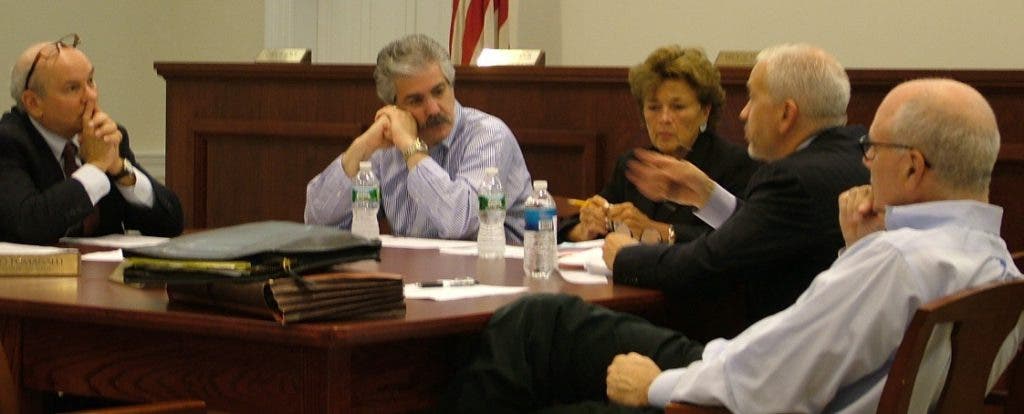
In a rare partisan split, pointing up their sharply different governing philosophies, town board members narrowly refused Tuesday to join the ranks of municipally sponsored home-heating-oil cooperatives.
While co-op proponents—in this case, the board’s Democratic minority—call it a proven way to cut home-heating costs, already saving neighboring homeowners money, the board’s Republican majority branded it an unwarranted and inevitably coercive incursion by government into free-market commerce.
Now under way in places like Somers , Yorktown and Cortlandt, the co-ops in those towns give residents the opportunity to buy heating oil from participating dealers at a price about 40 cents a gallon over wholesale. In exchange, co-op members agree to pay cash for deliveries with fixed minimums, say 150 gallons, for example, in Yorktown.
Find out what's happening in Bedford-Katonahfor free with the latest updates from Patch.
Democratic Councilman Chris Burdick championed the idea in a Tuesday work session before the board’s regularly scheduled meeting. Likening the program to the town’s seeking competitive bids on goods and services, he said, “In both cases you’re going out to the marketplace to find the lowest prices.”
In a brief, spirited debate, however—one that contrasted the core social and economic principles both parties bring to politics—an ultimate defeat for Burdick’s co-op proposal was clearly predictable.
Find out what's happening in Bedford-Katonahfor free with the latest updates from Patch.
Republican Councilman Peter Chryssos objected to putting a municipal thumb on the free-market economic scale. “Why don’t you [also] go to the auto dealers [in pursuit of better prices], and then go to the supermarkets?” he asked. “This is purely meddling in commerce, which is not our concern.”
Rejecting that characterization, Burdick said, “I don’t think this is meddling in the marketplace. It’s using the marketplace.”
He repeatedly underscored the freedom of residents and dealers to join the co-op only if they chose to do so. “It’s an entirely voluntary program,” Burdick said, with a “very limited role” for the town.
Still, while it’s up to fuel-oil dealers whether they want to join the co-op, they may do so only if they abide by the 40-cents-over-wholesale pricing guideline. As a result, Republican Supervisor Lee V.A. Roberts suggested, posting the co-op’s dealer roster on the town’s website is akin to creating a de facto list of “consumer-friendly” vendors vs. those who prefer to let market forces dictate prices. “I don’t know that it’s our role,” she said. “I think it is up to the individual homeowner to look for their opportunities.”
The board’s only other Democrat, Councilman David Gabrielson, noted “a long history of government protecting consumers. . . . It started with Teddy Roosevelt.” He backed Burdick’s proposal, saying, “I strongly support this idea of people coming together and creating buying power.”
Under the proposal, Bedford would identify dealers that wanted to join the co-op, then post their information on the town website. “That would be the sole role the town would play,” Burdick said. Residents would contact dealers directly.
Still, Chryssos predicted, any problems with oil deliveries eventually would likely land on the supervisor’s desk, or telephone.
Moreover, warned Republican Councilman Francis Corcoran, “We’re going to start endorsing companies, and that’s not what we ought to be doing.”
In the end, at the board’s regular meeting, Burdick’s proposal was defeated with virtually no discussion in a 3-2 party line vote, the first in years that longtime town hall observers could remember.
Does that signal the end of Bedford’s largely politics-free governance, perhaps even the start of the kind of partisan squabbling so familiar today in Washington?
Hardly. After the public meeting, as he headed to a late-night, closed-door session with fellow board members, a smiling Burdick predicted it would likely again be years before the board divided along partisan fault lines.