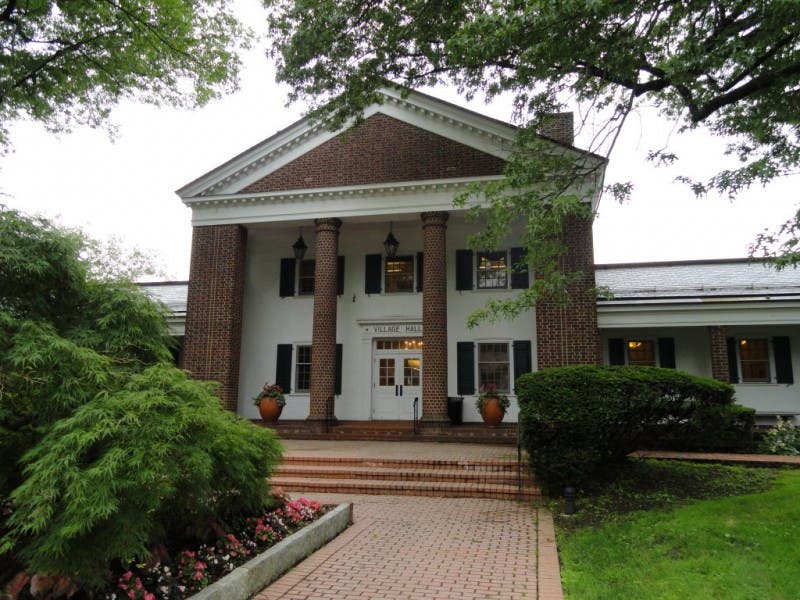
Written by Mayor Mary Marvin
The Village Trustees, in concert with the Village Planning Board, create a policy guide or community plan for the Village’s future development.
The most recent Community Plan was adopted in 2009 and since then much has changed necessitating a further review in 2016 – 2017. The plan provides historical and current data on the physical, economic and social conditions of the Village, discusses goals and objectives, identifies planning issues and serves as a guide for future development.
Find out what's happening in Bronxville-Eastchesterfor free with the latest updates from Patch.
Bronxville’s first planning efforts date from 1922 when the Village’s first Zoning Ordinance was adopted to guide land use and density. The code has been amended from time to time, most notably in 1958, 1971, 1980, 1985 and 1997. After a thorough review by the Department of Housing and Urban Development, as part of the Federal Housing Settlement Agreement, our code was found to meet muster per anti-discrimination laws. Our array of housing size and stock as well as no onerous minimum acreage requirements were a strong determinative.
The Community Plans of 2002 and 2009 prompted the Village to take action in many recommended areas including:
Find out what's happening in Bronxville-Eastchesterfor free with the latest updates from Patch.
- Adoption of floor area ratio (FAR) limits on residential buildings
- Adoption of zoning amendments limiting square footage for Central Business District (CBD) buildings, establishing regulations for dwelling units in Central Business A districts, extending the prohibition of street-level offices along Pondfield Road between Kraft Avenue and Cedar Street/Tanglewylde Avenue and on Palmer Avenue between Parkway Road and Paxton Avenue and prohibiting street-level personal service establishments along Pondfield Road between Kraft Avenue and Cedar Street/Tanglewylde Avenue.
- Completion of a Village-wide property reassessment to bring assessed property values in line with current real estate values and land uses.
Bronxville’s first real building boom that caused Village elders to review land use coincided with the opening of the Bronx River Parkway in 1925, making automobile traffic highly accessible. By the end of the 1920’s, most of the available land within the Village had been developed. We have been only tinkering at the edges ever since.
As we move forward to further analyze and perhaps modify the Community Plan and the complementary Zoning Code in light of 2016 realities, we are mindful of the underlying goals that were promulgated by very visionary forbearers.
The overall purpose of our Community Plan is to maintain Bronxville as a small scale, attractive community in which the pattern and quality of land uses reflect the needs of residents, businesses, institutions and other interest groups within the Village.
To achieve this overall goal, the community must:
- Preserve and promote the special architectural character and appearance of existing buildings and neighborhoods.
- Maintain the natural landscape of the Village.
- Retain the pedestrian scale of buildings, streets and open spaces that currently exist in the downtown area.
- Encourage development and land utilization that is appropriate to the existing pattern of development and which will help ensure the economic stability of the whole community.
- Control the impacts of flooding on residential and commercial properties within the Village.
Against this backdrop, the Village will be reviewing issues that have come to the fore, both positive and negative, since the 2009 review.
The following are examples of situations not existing and some not even imagined in 2009 that will need to be reviewed and analyzed in the coming months.
- Even with a floor area ratio are the home additions allowed in the Village still too big and/or out of character with neighboring homes?
- Given the recent flood issues, are our rules re: permeable vs non-permeable surface coverage adequate, i.e., the effect of black topped driveways or stone fencing that change water diversion?
- Should very invasive construction such as drilling and blasting be further limited than the normal construction hours of 8am to 6pm?
- Given the number of healthy trees removed to further property development, should the Village have a tree ordinance restricting removal?
- Are our Central Businesses District rules too restrictive thus deterring new businesses or are they in balance with other like communities who place emphasis on the aesthetics of their downtowns?
- Should merchandise be allowed on side-walks? If so, how can a code differentiate between “attractive” merchandise such as flowers vs. say snow shovels?
- Should more/less outdoor eating be allowed?
- Should the Village government have more of a role when a project has potential impact on busy commercial streets or significant parking demands?
- As an aside, there was much discussion about residential living as it related to the recently approved condominium project at 100 Pondfield Road. Every zoning code in our area allows/encourages residential living above the first floor of commercial establishments and will continue to do so as the mixed use promotes vibrancy/lights/safety in downtowns long after stores close. I can’t imagine the Village without the Towers on Tanglewylde as example. To do otherwise would constitute illegal “spot zoning.”
As times change, all of the Village Boards must remain proactive to ensure that our Village retain its character and with it property values. It is a delicate balancing act that requires constant monitoring.
I welcome any input from Villagers who may encounter situations we may potentially miss in our review.
Get more local news delivered straight to your inbox. Sign up for free Patch newsletters and alerts.