Politics & Government
Bronxville Should Weigh the Merits, Costs of Leaf Collection: Mayor
Other nearby communities have achieved savings through compostable bags and mulching.


Written by Mayor Mary Marvin:
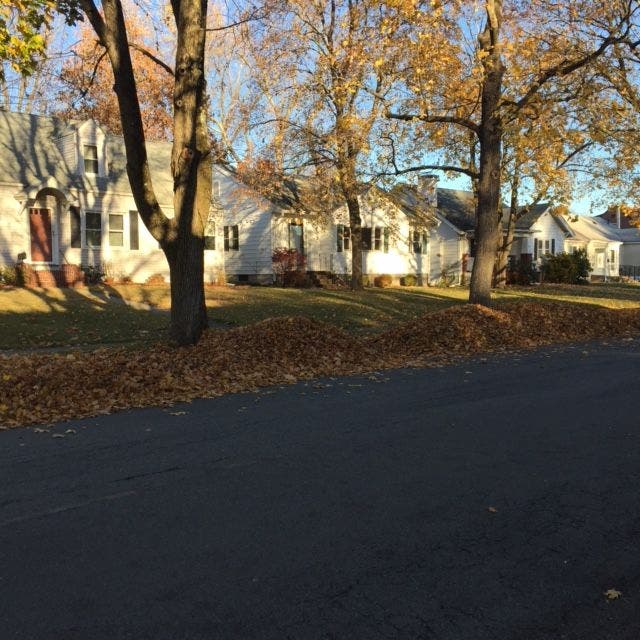
Snow is in the forecast and the Village still has not completed leaf pick-up due to a weather pattern that caused the leaves to simply not fall.
The late leaf collection will compound the challenges of the intersection of leaf removal and the snow season.
Find out what's happening in Bronxville-Eastchesterfor free with the latest updates from Patch.
The difficulty of this year’s timing has served as a positive as it compels the Trustees and me to review what is a labor intensive, expensive process that may not reflect the financial realities of 2016 and the goal of reducing onerous property tax burdens. House by house loose leaf collection has long been a staple of most Westchester communities though the trend is changing. Many of our neighbors are moving to alternative methods after economic, environmental and safety evaluation.
Bottom line, I agree with many of my colleagues that residents may not want to spend the taxpayer dollars we are on this one service per current practice when all the facts are weighed.
Find out what's happening in Bronxville-Eastchesterfor free with the latest updates from Patch.
In Bronxville, leaf pick up costs consistently top $100k per season and that does not even factor in the additional costs of cleaning clogged drains as rainstorms send the street piles directly into our storm sewer system. We spend $30k in dumping fees alone for the privilege of carting the vacuumed leaves to an Upstate location.
Curbside leaf collection is a significant cost, (translating into 1% and ¼% of your tax bill). Loose leaves can only be expeditiously removed by vacuum trunks whose initial costs are akin to snow plows and whose maintenance expenses are even greater. Loose leaves present real safety concerns as piles further narrow our tight streets and contribute to slippery surfaces and visual obstruction. They pose an environmental risk as leaves clog drains resulting in increased flooding and the piles leach so much nitrogen and phosphorus that our nearby waterways are permanently impacted.
If snow fall interrupts the leaf cycle, the added moisture disables the utility of the vacuum truck, thus requiring all leaves to be removed by hand rakes.
Added to this list is what I believe is the most important variable, that of the diversion of skilled manpower from other pressing Village needs including street light maintenance, road repair and sewer maintenance which have long lasting infrastructure consequences to the Village.
Empirical evidence is clear that the most cost effective solution to leaf collection is no collection, rather leaving the leaves on one’s lawn and mulching in place. The process is quite economical and basic as leaves are mowed over with an inexpensive mulching attachment thereby shredding into a fine layer of organic matter that provides a slow release of valuable nutrients for the soil.
An added benefit is the decrease in noise generated from leaf blowers as well as fuel savings in the cost of their operation. Leaf blowers also systematically remove the top layer of soil, leaving a yard pristine but unhealthy.
Mulched leaves are a low cost way to naturally fertilize one’s lawn and landscape beds. Mulched leaves increase the water holding capacity of soil, especially useful for absorbing rainwater run-off. Mulch increases the nutrients in the soil as well as the biological activity of earthworms, microbes and other beneficial organisms. Leaf mulch is more nutritious and safer than commercial products. Most commercial mulch is actually the by-product of dead trees which have often died from diseases.
Mulch as a natural fertilizer eliminates the need for commercial products which can prove dangerous to pets and the purity of our water systems.
Our neighbors in Hastings and Greenwich are in the forefront of this “Love ‘em and Leave ‘em” initiative and the savings, both economic and environmental, have been substantial.
The Village has employed the process for two years and Village Hall lawn has never looked better. I invite you to come by and inspect. The Bronxville School has enthusiastically joined us in our LELE campaign and mulches in place on school property.
If even 10% of our homeowners opted for this method, $10,000 to $15,000 would be saved yearly and lawns further enriched.
Even as an alternative, if Villagers agreed to place leaves in either compostable paper bags or in designated containers that can be emptied into sanitation trucks, costs would be reduced and many environmental impacts ameliorated.
Greenburgh and New Rochelle have gone the route of compostable bags and in the first year Greenburgh reaped a savings of $400,000.
These communities, after implemetation and then through the analysis, concluded that the bagging or containerizing of leaves produced significant cost savings, demonstrable environmental and road safety benefits all without resulting in a significant change to neighborhood attractiveness and municipal services expected by their residents.
I am convinced this is the way to go and want to bring the issue forwarded in a timely manner so deliberative and unhurried conversation can take place before any decisions are made.
Please tell me what you think mayor@vobny.com.
Photo credit: Michael Woyton/Patch staff.
Get more local news delivered straight to your inbox. Sign up for free Patch newsletters and alerts.