Community Corner
Bronxville's Beautiful History
In her latest column, Mayor Marvin recounts some of the rich history of the village.


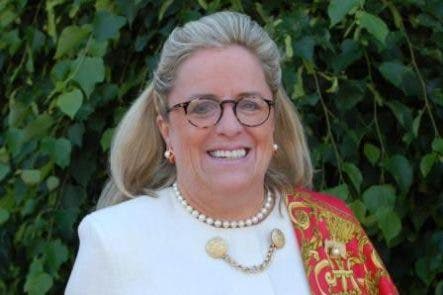
Written by Bronxville Mayor Mary Marvin
In my new found and glorious role as first time grandmother, I find myself spending more and more time on the southbound side of our train station as I head for a visit or a babysit to Brooklyn.
Always too early even for the on time trains, I have taken to really studying the surrounding environment and I continue to be in awe of the beauty, gravitas and history of our Village.
Find out what's happening in Bronxville-Eastchesterfor free with the latest updates from Patch.
The train system I wait to catch first arrived in the Village in 1844, over 50 years before we were indeed the Village of Bronxville. Our first petition attempt to incorporate was invalidated by the Eastchester Town Supervisor who declared the vote illegal because women had signed it! Now 53% of our Village population is female, and I dare say Bronxville women can move mountains when called upon.
In fact, the Village was a hot bed of the suffrage movement and it has been chronicled that in 1911, Village women clapped so vociferously for their right to vote that they, “split from thumb to wrist their arm length suede gloves.”
Find out what's happening in Bronxville-Eastchesterfor free with the latest updates from Patch.
The actual first Village government was formed at “Dogwoods” the home of Frances Bacon, newly installed Village President, at 61 Sagamore Road. Still familiar names: Bacon, Kraft, Ken Chambers were our first governing body.
Suffrage was not high on the agenda; rather our first ordinances concerned the fear of the establishment of saloons and brothels. Gambling and the use of profane language was outlawed as well. One of the first official acts was also to create a Village Seal. The motif chosen was a bumblebee, though we know not why.
Under the category of “history always repeats itself”, noise pollution was also an early priority. The same adage is true in reference to the neighborhood just to the back of me as I stand on the railroad platform. The Parkway Road residents formed a neighborhood association in the early 1900’s named Bronxville Manor Improvement Association with the goal of addressing, “public improvements long neglected.” As early as 1905, residents asked Village government to address the decayed bridges on Parkway Road, soon to be followed by a petition to increase the inadequate street lighting.
Minutes of these old meetings also include the observation of the complete submersion of the old Girl Scout Cabin on Paxton Avenue due to catastrophic floods in 1910 and 1938.
The “Lowlands” neighborhood area near our present day school was also plagued by early flooding. In 1920 when the current site on Pondfield was chosen for the public school, a Village elder remarked that, “the only problem was that much of it was covered by water.”
Chief among the tall buildings on the downtown side of the railroad is Lawrence Hospital, now part of the New York Presbyterian network.
Its inception was born of necessity as Dudley Lawrence, the son of the Village founder William Van Duzer Lawrence, was struck with acute appendicitis while his parents were vacationing in Europe. The local doctor advised that an immediate operation was required so a baggage car was outfitted with a bed and mattress from the family owned Gramatan Hotel and attached to the first train coming south from White Plains. Though enduring a near fatal 12 hour delay, Dudley’s life was saved and appreciating the tragedy averted, his parents donated the land and a $250,000 endowment to open a Village hospital on the present site.
The crown jewel in the Lawrence family holdings was indeed the Gramatan Hotel. With 300 guest rooms and 165 private baths, it was home for extended stays by such notable guests as Mrs. Ulysses S. Grant, Mrs. Jefferson Davis, Teddy Roosevelt and even Greta Garbo as well as many bachelors who were segregated to a separate wing for single gentlemen housing.
It is also recorded that President John F. Kennedy was a very reluctant ballroom dance student at the hotel as it was the first home of the venerable Miss Covington’s School of Dance.
A particular poignant story relating to the Gramatan Hotel surrounds the protracted death of a young fifteen year old visitor from Pittsburgh. Stricken with incurable influenza, Margaret Brown’s spiritual needs were tended to by the kind neighboring rector of Christ Church, Albert Wilson. To show their thanks, the Browns commissioned the very first stained glass window in Christ Church in gratitude to Rector Wilson and as a lasting Bronxville memory of their daughter.
The Hotel closed in 1972, again because of an all too recurring theme – the increasing cost of taxes, labor and maintenance. The entire structure was demolished in just two days.
The Gramatan Hotel was also the early home for the Village’s Catholic Community. Without a church to call home, but with a congregation growing too large to continue to meet in private living rooms, the Pastor of Tuckahoe’s Immaculate Conception Church rented space at the Hotel for Sunday services. The present home of St. Joseph’s was not built until 1928.
As I stand on the train platform in the quiet off hours now thrice weekly, my thoughts often revert to the prophetic words of famed architectural critic Paul Goldberger who spoke on the “Power of Place” at the Historical Conservancy’s First Annual Brendan Gill Lecture. He observed that Bronxville as a community has been “endlessly copied, but never matched.”
Note: Special thanks to the plethora of local historical books, lectures and journals and their esteemed authors from whom I have borrowed freely for this column.
Get more local news delivered straight to your inbox. Sign up for free Patch newsletters and alerts.