Politics & Government
Changes Coming to STAR Exemptions, Homeowner Beware
The deadline to apply for the exemption is Dec. 31 for the next taxable cycle.


Written by Mayor Mary Marvin
Residents have reached out to the Village upon reading of the recent major changes to the STAR program in the new State budget passed two weeks ago.
As a recap:
Find out what's happening in Bronxville-Eastchesterfor free with the latest updates from Patch.
The STAR or New York State School Tax Relief Program is a mechanism to reduce school district property taxes on primary residences of New York State residents.
Enacted in August of 1997, under the governorship of George Pataki, it is a very small version of Homestead Provisions in place in other states. It only affects school taxes and is not applicable to municipal tax obligations.
Find out what's happening in Bronxville-Eastchesterfor free with the latest updates from Patch.
To be eligible for the STAR exemption, one can live in any type of housing including single and multi-family houses, coops, condominiums and owner-occupied apartment buildings.
To receive what is called BASIC STAR:
- One must own their own “home” and declare it as a primary residence
- There is no age restriction, rather an income eligibility limitation of $500,000 or less of the combined incomes of the homeowners and owners’ spouses who reside at the property.
For Enhanced STAR:
- The residency rules are exactly the same, but the age and income provisions differ.
- One must be 65 years of age or older and have all owners’ incomes not to exceed $84,550.
Indices to determine a primary residence include voting, vehicle registration and days spent at the location.
Income eligibility in 2016 is based on income information from the 2014 tax year. Income is defined as federal “adjusted gross income” minus the “taxable amount” of total distributions from individual retirement accounts or IRAs.
The Basic STAR provides an exemption from the first $30,000 of the full value of a primary home and Enhanced STAR recipients receive an exemption on the first $65,300 of their home value.
An important difference is that Enhanced STAR eligibility must be applied for on a yearly basis whereas Regular STAR, once received, is granted in perpetuity.
Though the start date for the upcoming changes to the program is still uncertain as to whether it will affect the 2017 or 2018 tax rolls, anyone who believes they are eligible to take advantage of the STAR program should contact our Village Assessor and begin the paperwork and verification.
Regardless, the deadline is December 31st of every year for it to take effect for the next taxable cycle.
It is important to confirm your eligibility now under the more favorable payout system vs. to be caught off guard when the new rules come into effect.
Under the current regulation, New York State gives the homeowner the upfront “discount” on their tax bill and then pays the school districts the money exempted to their taxpayers.
Under the new regulation, a taxpayer must pay their tax bill in full and then wait for a rebate check mailed out in the following fall.
The real disadvantage will be to new homeowners or residents who change homes within the Village after the start date of the new law.
As example, if you are currently registered and have been registered for Basic STAR for years and then decide to move residences within the Village post 2017 or 2018 (whenever the new rules come into effect), you must start anew.
Your form of exemption will automatically change from the upfront exemption to a post payment rebate.
The same is true if you stay in your current home but do not file for a first time exemption prior to the implementation of the new system. That is why it is crucial not to wait on this.
Hopefully, the new version of the program will also be an improved version as our State Comptroller has noted it is a program easily gamed.
In a recent study by the Comptroller’s office, 6,500 STAR parcels in 46 random municipalities were sampled and 20% of them were found to be improper or duplicate filing, costing the state taxpayers $73 million in the budget year 2015-2016.
Most common among the erroneous payments given to New York homeowners are to those who also claim primary Florida residency and those who take the exemption on both their primary New York home and their New York vacation home.
The seminal weakness in the program is the lack of a requirement of demonstrable certifiable information that identifies the real property owner such as a social security number.
In addition, due to the limitations of the State computer systems, local assessors cannot track exemptions outside of their local jurisdictions, let alone those in neighboring states and/or Florida.
The state auditors also found that family members tend to keep the exemption long after the eligible homeowner has passed away.
In addition, a not insignificant amount of corporate- and bank-owned properties have been granted the exemption in error.
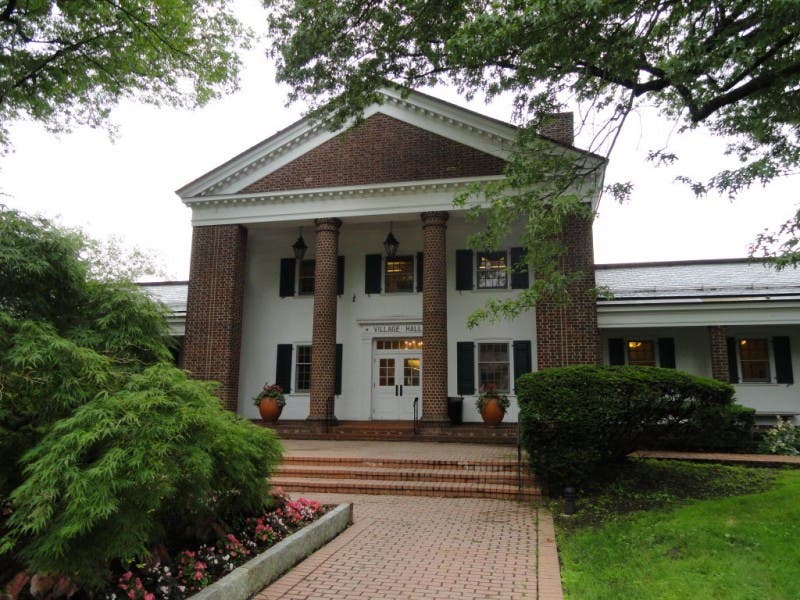
However, those eligible and deserving should not hesitate to reach out to Village Hall for assistance.
Get more local news delivered straight to your inbox. Sign up for free Patch newsletters and alerts.