Politics & Government
Local Westchester Leaders Hold Out Hope for Legislative Improvements
In her regular column, Bronxville Mayor Mary Marvin says that as the new legislative session begins, she hopes meaningful changes occur.


Written by Bronxville Mayor Mary Marvin
As is custom, now that a new session of the New York State Legislature has convened in Albany, the Mayors in Westchester draft a list of legislative priorities for our law makers to consider…truth be told, sadly much of the list is dusted off from the session prior as little was previously addressed on our list.
However, we remain undaunted as our ultimate goal is to have the New York State property tax payer be considered a “special interest group” and be treated not unlike the unions and corporations in terms of legislative attention.
Find out what's happening in Bronxville-Eastchesterfor free with the latest updates from Patch.
Local governments all across Westchester continue to struggle to provide essential services at a time of declining revenues, increased costs and the 2 percent Property Tax Cap, as we remain the highest taxed county in the highest taxed state in the nation.
In order to provide some relief to the Westchester property tax payer, many of our legislative initiatives focus on non property tax revenue measures and relief from current legislative mandates that place the financial costs on local governments.
Find out what's happening in Bronxville-Eastchesterfor free with the latest updates from Patch.
New York State ended the last budget cycle with a highly touted 2 billion dollar surplus. Instead of directing it to some large state-wide new initiatives, the Mayors believe it should be directed right back to the local municipalities to reduce the local tax burden. Currently, the state redirects monies to local governments through what is called AIM funding, however the enacted New York State budget holds these AIM payments flat in spite of the substantial surplus.
One of the most egregious omissions in the 2 percent Property Tax Cap legislation is the allowance for capital investments to be exempt from the cap for only school districts and not municipalities. This created a powerful disincentive to make needed infrastructure repairs be it to roads, sewers and sanitation systems.
Not amending the tax cap legislation will result in a continued lack of investment in these areas, which according to a recent report by the State Comptroller are already under funded by 70 percent. The Comptroller’s Report estimates that municipalities should be spending about $3.9 billion annually to keep up with deteriorating capital assets but are only spending roughly $1.2 billion, less than a third that is necessary.
Amending the legislation would put municipalities on a par with school districts, thereby facilitating needed upgrades in aging infrastructure that would also create jobs, improve the environment such as water quality and stimulate future development.
In a continued effort to relieve the property tax payers from the often sole burden of covering the costs of services used by the entire population, elected officials are looking toward making more costs based on a “user” scale rather that property ownership.
As example, the Village along with nine other Westchester communities, recently successfully petitioned the Public Service Commission to spread the cost of fire hydrant maintenance, (which in the Village last year was a $148,000 budget item), to all water uses and not just property tax payers.
On a more macro level, the MTA Platform Tax and MTA Payroll Tax are being paid again by only property owners through our Town and County Taxes. The dollar amount is quite staggering, equating to approximately 5 percent of the total of local budgets.
These two taxes have no relationship to use of the rail system, rather burden only property owners in the towns where the track passes. As example, Connecticut residents are a significant percentage of the MTA New Haven line ridership yet pay none of the taxes.
Other smaller but still onerous unfunded legislative mandates need to be amended in the upcoming legislative session.
As illustration, the State still requires that certain public notice items be published in printed newspapers costing municipalities tens of thousands of dollars per year. Newspaper publication costs have increased while circulation has dropped. Noticing via the electronic media would actually increase the distribution of the public information which was the rationale for the law in the first place.
The State of New York under General Municipal Law sets the local Municipal Court reimbursement rates. Contrary to popular perception, every speeding ticket actually is a money losing proposition for the community where it was issued. As example, on a $175 ticket our Village would receive approximately $15, which in no way covers the cost of issuance.
The above is just a sampling of the way, often inequitably, our state burden is shared. It is important that you, the tax payer, lend your voice to the discussion and become a special interest worth our legislators’ time and attention.
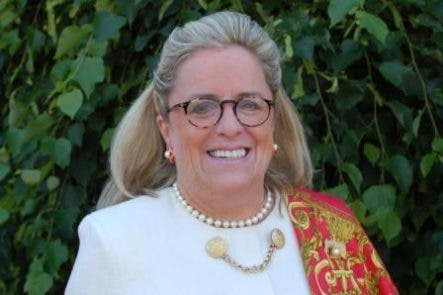
Photo: Bronxville Mayor Mary Marvin. Photo credit: Contributed
Get more local news delivered straight to your inbox. Sign up for free Patch newsletters and alerts.