Politics & Government
Street Lighting Changes Continuing in Bronxville: Mayor
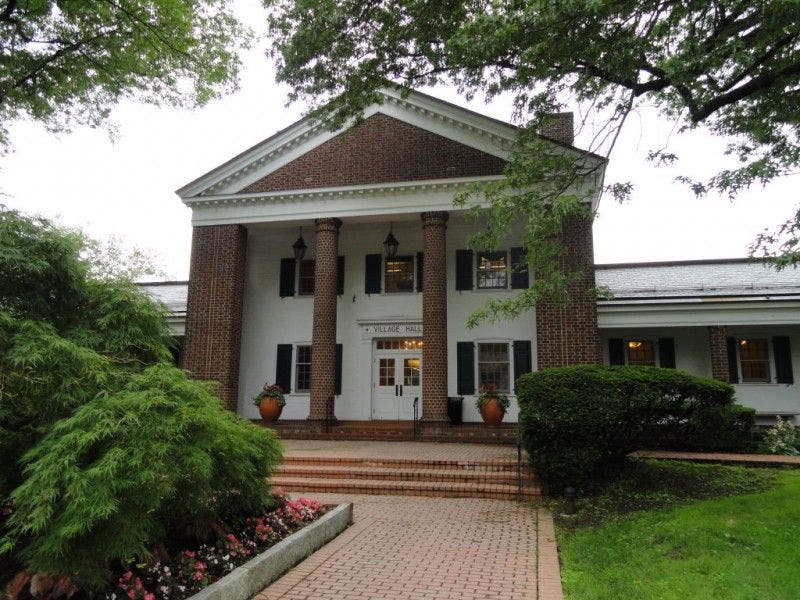
Contact Village Hall if you think your street lighting needs an adjustment.


Written by Mayor Mary Marvin:
After over three years of research on product and manufacturers with assistance from outside consultants and local experts and an additional calculated wait due to the advancing technology, we recently embarked on a street light change in the business district.
As background, our globe lights are/were powered by the most energy inefficient source, that of a 189-watt filament bulb. So inefficient, it is now banned in Europe and manufacturers are gradually phasing out production. In addition, rain, snow or even a gentle wind condition caused the filament to break, necessitating daily replacements and maintenance costs.
Find out what's happening in Bronxville-Eastchesterfor free with the latest updates from Patch.
Most important, the amount of light illuminating from the globe did not meet pedestrian and traffic “recommended practice.”
As illustration, a globe light at a corner had 0.4 foot candles of illumination vs. the prescribed standard of 1.50.
Find out what's happening in Bronxville-Eastchesterfor free with the latest updates from Patch.
Our initial goal of preserving the globe feature was not possible as the antiquated innards of the poles could not be retrofitted for LED lights. (We have saved the usable parts of the poles removed in order to repair all the broken ones throughout the Village.) Sadly, so many are marred, mismatched or held together with by electrical tape. Our neighbors in Briarcliff, White Plains, Chappaqua, Harrison, Scarsdale and Mamaroneck also changed over to LED lights due to their energy efficiency, long-life, and reduced maintenance. The payback on the energy conservation has an astonishingly short period of recoupment averaging only six to seven years.
The municipalities mentioned above as well as the majority of like communities nation-wide chose 4000k bulbs for their business districts. After intensive research, Bronxville chose the same. Though 3000k has a “warmer” feeling to some, it distorts natural color including that of autos involved in incidents or features of potential crime perpetrators. Bottom line for the safest vehicular traffic, 4000k light is recommended.
After installation, we expected various viewpoints from residents as lighting preferences are personal and thus subjective. We continue to ask for all feedback.
Given that our globe lights were at a lumen of only between 1500 and 2000, these new lights offered an immediate contrast that clearly takes getting accustomed to.
It is important to note that we are by no means finished perfecting the light levels and customizing poles with dimmers and shields. Our business district is unique in that fully commercial, high-volume areas coexist with beautiful residential co-ops. The amount, direction and dispersion of light needed at the Starbucks corner is vastly different from that needed near a bedroom at the Bronxville Towers. We ask that you reach out directly to Village Hall if your home or business needs a light adjustment.
Clearly the most positive result so far has been in the area of safety. Closely monitored by our Police Department, we have seen a decrease in pedestrian and vehicular incidents, and residents and commuters relate the decrease in “near misses” when people cross in dark clothes at the evening commute. Many of our shopkeepers also appreciate the increased illumination on their businesses when unoccupied.
Some residents have voiced concerns related to a June 16, 2016, American Medical Association report that cautioned about the relationship of high intensity LED lights and the disruption of the production of melatonin and circadian rhythms just to name a few of the topics addressed. The report is titled Human and Environmental Effects of Light Emitting Diode Community Lighting should you want a comprehensive read that I cannot distill properly in a brief column.
The report was written without any input from the Illumination Engineering Society, IES, the oldest and largest educational and scientific society in North America devoted to lighting. As a result, the IES has put together a group of researchers familiar with lighting issues representing different institutions and broad areas of practice to review the AMA report. The review is currently underway.
The AMA report does encourage attention to optimal design and engineering features when doing the conversion to LED. These include requiring properly shielded outdoor lighting and adaptive controls that can dim light at night.
Following the report’s recommendations, the Village has purchased the adaptive dimmers and shields.
When we look to extending the LED energy saving lights into the solely residential areas down the line, we anticipate forming an ad hoc committee of residents to review and assess lighting for the less pedestrian and vehicle trafficked areas which are governed by different “recommended practices.”
We ask for your continued patience, suggestions and feedback as we are making changes based on your specific living and working conditions. Like many initiatives in our small village, resident/Village collaboration will only serve to improve the end product.
Photo credit: Google Maps.
Get more local news delivered straight to your inbox. Sign up for free Patch newsletters and alerts.