Arts & Entertainment
Bad Bunny’s Spanish-Language Super Bowl Performance Sparks Pride, Emotion And Belonging For Latin New Yorkers
From packed bars to living rooms across the city, Latin New Yorkers described the halftime show as a rare moment of visibility and home.


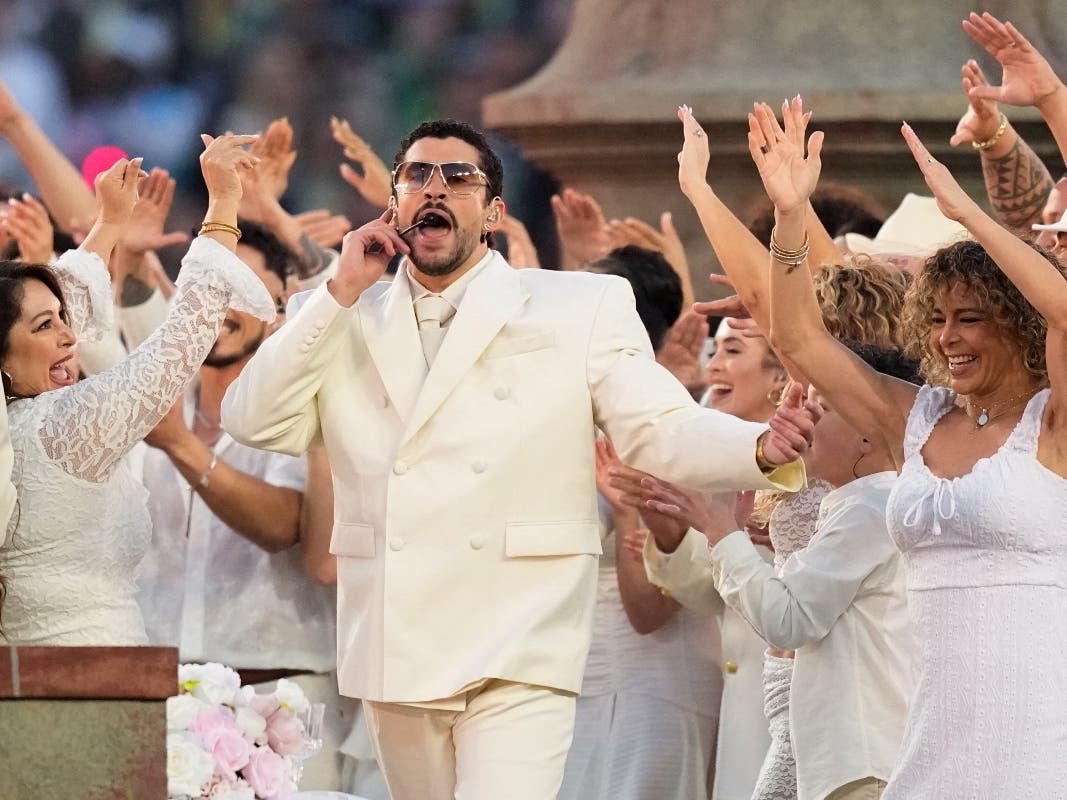
NEW YORK, NY— At Boxers on 20th Street, the televisions glowed over a packed bar as plates and drinks crowded the counter and Spanish bounced from table to table. Alejandro Moss, 35, stood shoulder to shoulder with strangers, eyes fixed on the screen as Benito Antonio Martínez Ocasio, known professionally as Bad Bunny, took the Super Bowl stage.
“I went to a bar just to see it, and it was crazy to see how everyone was so empowered,” said Moss, who lives in Washington Heights. “It was packed with Latinos.”
Moss said his connection to the artist built over time, but when he heard YHLQMDLG, the second studio album from Martínez Ocasio, something clicked.
Find out what's happening in Brooklynfor free with the latest updates from Patch.
“He really can do whatever he wants and reach people’s hearts without losing his authenticity and charm,” he said.
Moss said Bad Bunny’s Super Bowl performance inspired him as an artist trying to “make it in the U.S.”
Find out what's happening in Brooklynfor free with the latest updates from Patch.
“With his show, he shut down all the voices in my head that had been whispering to me that I might not be enough,” Moss said.
Bad Bunny performed primarily in Spanish, a decision he has said was intentional.
The set centered Puerto Rican life, from jíbaro clothing and agricultural imagery to domino tables and quiet domestic moments, while also referencing Hurricane Maria and the island’s neglected infrastructure.
“Bad Bunny told me last night that I am more than enough and that I must not stop believing in myself,” Moss said. “He made me feel so proud to be Latino, but most of all, to be human.”
In Astoria, Gabriella Jimenez, 25, watched as criticism surfaced online about the language of the performance. Although she is of Cuban descent, the backlash over language and culture resonated with her, drawing a clear line between national identity and the broader experience of being Latin in the U.S.
“It’s funny to me that people were complaining about most of the performance being in Spanish, because you don’t need to know what he’s saying to know what he’s singing,” Jimenez said. “He reminded America that Latinos have a voice.”
For Elia Cordero, 29, a Puerto Rican living in Bushwick, the performance unfolded as something intimate, built from details that mirrored the life and memory she carried with her.
“Watching the Super Bowl this year felt so different in the best way possible,” she said. “No slack to J.Lo, she’s always represented, but Bad Bunny brought the island to us.”
Among the images on screen was the Caribbean Social Club in Williamsburg, known locally as Toñita’s, where the community has gathered for decades around domino tables, pool cues, old friends and crowded bar stools.
“He even brought Toñita out,” Cordero said.
The club’s owner, Maria Antonia “Toñita” Cay, has kept the space open since the 1970s as a place for food, conversation and familiar faces in a neighborhood that has changed around it.
Living in New York City, she said, often means closeness without connection.
“I live in one of the most diverse places in America,” Cordero said. “Though it isn’t hard to find my community, it can be very isolating being away from the island, but last night I felt so at home. My heart was home.”
As the performance ended and the broadcast moved on, Martínez Ocasio’s presence lingered: in packed bars, in living rooms and across neighborhoods where Spanish echoed long after the final note.
"No amount of words will ever be able to convey what I felt in my heart watching my roots be put on display for the very first time on a national stage," Cordero said.
Get more local news delivered straight to your inbox. Sign up for free Patch newsletters and alerts.