Neighbor News
Brooklyn Students Move on To Next Phase of Their Journey
Nearly 450 students from Uncommon Schools' four high schools in Brooklyn announced their plans to attend college or other programs.


Nearly 450 students from Uncommon Schools’ four high schools in Brooklyn announced their plans to attend college or other programs before an audience of teachers, underclassmen and their families during uplifting celebrations last week.
The Senior Signing Day celebrations are similar to ceremonies where student-athletes announce what Division 1 college they are attending to play a sport. Except, Uncommon students are celebrated for their academic achievement, rather than their athletic prowess.
Nearly all of the students from the four high schools were accepted into colleges across the United States, including Ivy League universities and Historically Black Colleges and Universities (HBCUs).
Find out what's happening in Brooklynfor free with the latest updates from Patch.
The vast majority of students attending the four high schools – Uncommon Collegiate Charter High School and Uncommon Charter High School in Bedford Stuyvesant, Uncommon Leadership Prep in in East New York and Uncommon Preparatory Charter High School in Canarsie – are headed to the next phase of their journeys having completed high schools with rich curricula and enrichment programs, as well as an opportunity to develop their own unique passions through dozens of extracurricular activities and internships.
Nearly 100% of the students have taken at least one college-level Advanced Placement course and 42% have passed at least one of those tests. Nationally, only 35% of high school students even take an AP class and only 23% pass at least one AP exam, according to the College Board, which administers the exams.
Find out what's happening in Brooklynfor free with the latest updates from Patch.
Fernando Garcia Nueva, whose parents emigrated from Mexico, is one of those students. The Uncommon Charter High School senior started taking AP courses his sophomore year and has taken a total of 10 AP courses and passed all of them. He’s headed to Rice University in Texas in the fall on a full scholarship, where he hopes to study mechanical engineering.
“I wanted to be connected to NASA (National Aeronautics and Space Administration) and I know Rice has good connections to the NASA Space Center in Houston. I plan to take advantage of that,” he said. “In addition, Rice allows me to explore different fields – not just STEM, but the humanities as well.”
As a hands-on learner, Garcia Nueva said he first got interested in mechanical engineering through a robotics program offered as part of an enrichment program called High School 2.0 that offers Uncommon students an opportunity to take classes not typically offered in high school. He eventually took other courses in coding and mechanical engineering that helped solidify his interest in the field.
“The counselors at Uncommon really allowed me to find opportunities outside of school that fostered my curiosity,” he said. “They were also extremely helpful in the assistance they provided during the college application process.”
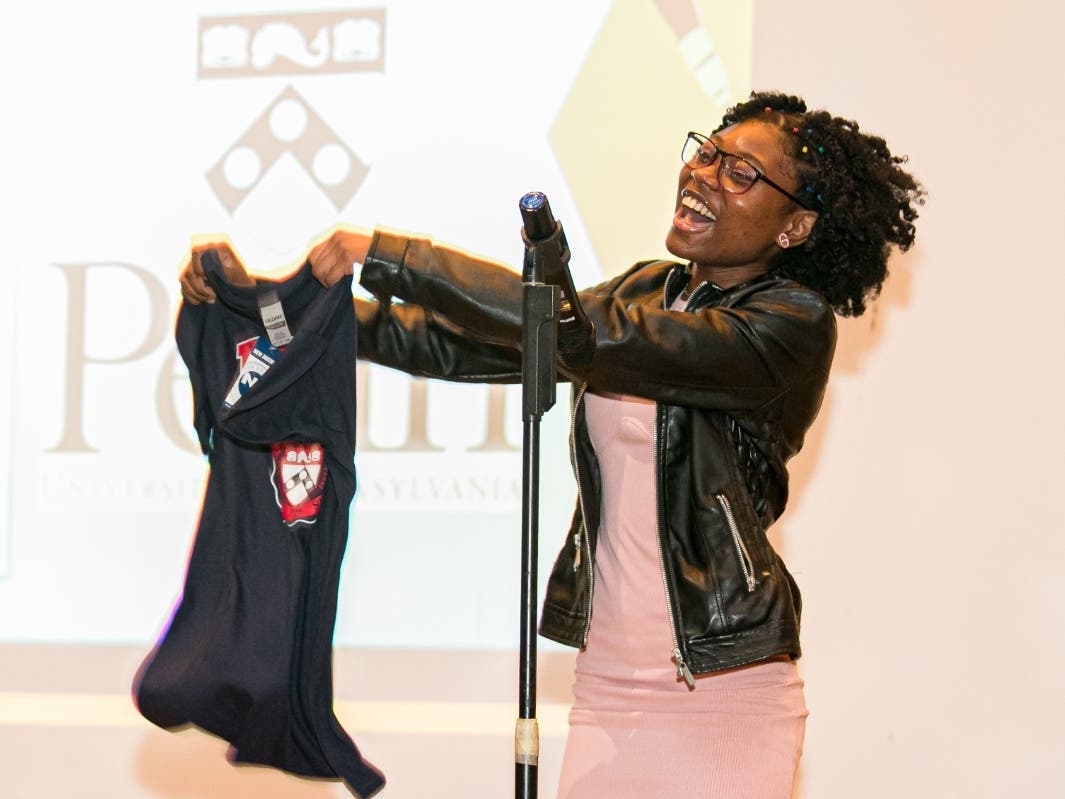
Akeeliah Grey took 10 AP courses during her three years at the high school. She applied early admission to the University of Pennsylvania, and was accepted to the Ivy League university. She plans to study pre-medicine and hopes to go to medical school after graduating, eventually becoming a pediatrician.
Grey joined Uncommon Collegiate during her sophomore year after she and her mother and sister emigrated from Antigua. Grey said she was reluctant to come to the United States, but didn’t have any choice.
“It was so nerve wracking,” Grey said. “I watched a lot of American movies about high school, like Mean Girls and Sixteen Candles. I had a lot of expectations about what high school was going to be like. I thought there was going to be a Queen Bee and mean girls and everyone was going to hate me.”
Instead, she found the opposite at her new high school.
“Everyone was so welcoming and wanted to get to know me,” she said. “The curriculum was different, so I had to have lots of support. I went to office hours every day. If I had any questions, my classmates were always there to help me.”