Politics & Government
Former NYC Councilmember Carlos Menchaca Named Director of the Collaborative Governance Academy
Menchaca brings eight years of co-governance in practice to a program that has trained more than 2,700 leaders across 46 states


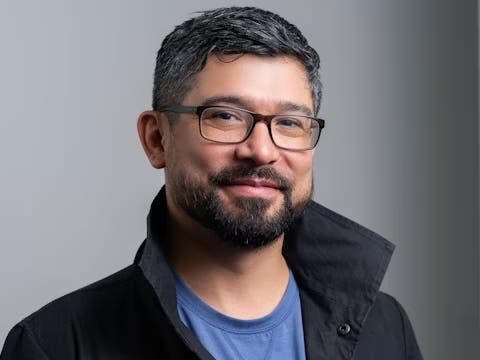
As the federal administration continues to deplete state and municipal funding, attack immigrant communities, and encroach on local power, local officials are increasingly the last line of defense for the people they serve, and the least prepared to hold that line alone. It is the gap the Collaborative Governance Academy (CGA) was built to close, and it is why re:power Fund and Local Progress Impact Lab has named Carlos Menchaca, a former two-term New York City Council Member, as its new Director.
Menchaca is the first Mexican-American elected to office in New York City and Brooklyn's first openly gay legislator. Over two terms on the City Council, he chaired the Immigration Committee, co-sponsored the city's 2016 Sanctuary City resolution, and stood with impacted families through the 2017 travel ban and ICE raids. He co-authored IDNYC, the municipal ID now held by more than one million New Yorkers, and led one of the country's largest participatory budgeting programs, putting real capital budget dollars directly in the hands of resident vote rather than his office alone.
That record is the point. CGA has spent seven years teaching elected officials and movement leaders how to govern together. Menchaca has done it himself, inside a council chamber, under pressure, with his own name on the vote.
Find out what's happening in Brooklynfor free with the latest updates from Patch.
A Program With a Track Record
Launched in 2019 as a joint initiative of re:power Fund and Local Progress Impact Lab, CGA has trained more than 2,700 elected officials, staff, and movement leaders across 46 states. Sixty-eight percent of participants identify as Black, Indigenous, or people of color, and 68 percent identify as women or gender-expansive. The current curriculum, covering power mapping, leadership styles, and collaborative governance, remains open for booking while Menchaca leads a redesign of the program's next chapter.
Find out what's happening in Brooklynfor free with the latest updates from Patch.
A Vision for Co-Governance
Menchaca describes the core failure between movements and government as one of trust, not ideology. Nonprofits sometimes dismiss officials as compromised; officials sometimes dismiss organizers as unaccountable. Both instincts, he argues, are a form of scarcity thinking, treating power as something to be hoarded rather than shared and grown.
“Power isn't scarce, it's renewable,” said Menchaca. “Once you understand that, co-governance stops being a threat to your authority and starts being the way you build something bigger than either side could build alone.”
“Carlos isn't coming to CGA with a theory of collaborative governance, he's coming with a record of it,” said Karundi Williams, Executive Director of re:power. “He has sat in the chair where the pressure to hoard power is highest, and he chose to share it instead. That is exactly the muscle we need every leader who comes through CGA to build.”
“Carlos not only understands but lives and breathes co-governance,” said Ivan Luevanos-Elms, Executive Director of Local Progress Impact Lab. “From his former role as an elected official to serving as a trainer for the CGA, all participants of the CGA will benefit from his lived experience putting collaborative governance in action by listening and learning from the ground up. Together with re:power and Carlos’ leadership, we will continue our critical work to equip and empower elected officials, staff, and movement leaders across the country to realize the true betterment of our communities across the country.”
What's Next
As Director, Menchaca will lead fundraising for the program, expand its curriculum to reach more movement leaders, and drive the full rollout of Governing While Black, the political education and leadership experience designed by and for Black elected officials. CGA's current training remains open to any city ready to bring it in now.
●Elected officials and city staff: bring a CGA training to your community.
●Experienced elected officials: become a CGA trainer or facilitator.
●Movement organizations and alumni: help shape the future of the CGA.
About the Collaborative Governance Academy
The Collaborative Governance Academy helps elected officials, staff, and movement leaders break down the barriers between government and community. Through political education, organizing tools, and peer learning, CGA participants build the trust, relationships, and shared strategy needed to govern with, not over, the people most impacted by their decisions. Since launching in 2019, CGA has trained more than 2,700 leaders across 46 states, 68 percent of whom identify as Black, Indigenous, or people of color. CGA is a joint initiative of re:power Fund and Local Progress Impact Lab.
About re:power Fund | www.repower.org
re:power Fund is a national learning organization and training home for organizers, candidates, and leaders building a liberated multiracial democracy through liberatory organizing, a pro-Black approach centering BIPOC, women, trans, and gender-expansive leadership. Its programs span organizing, electoral justice, leadership development, collaborative governance, and technology.
About Local Progress Impact Lab | www.lpimpactlab.org
The Local Progress Impact Lab brings together local leaders, partners, and issue experts to build the knowledge, skills, and leadership needed to advance racial and economic justice at the local level.