Health & Fitness
Small Business, Change, and the Future of South Brooklyn
David Naczycz, owner of local tour company Urban Oyster, tackles the recent discussion on the changing neighborhood, new vs. old, and how it all impacts the future of the community.
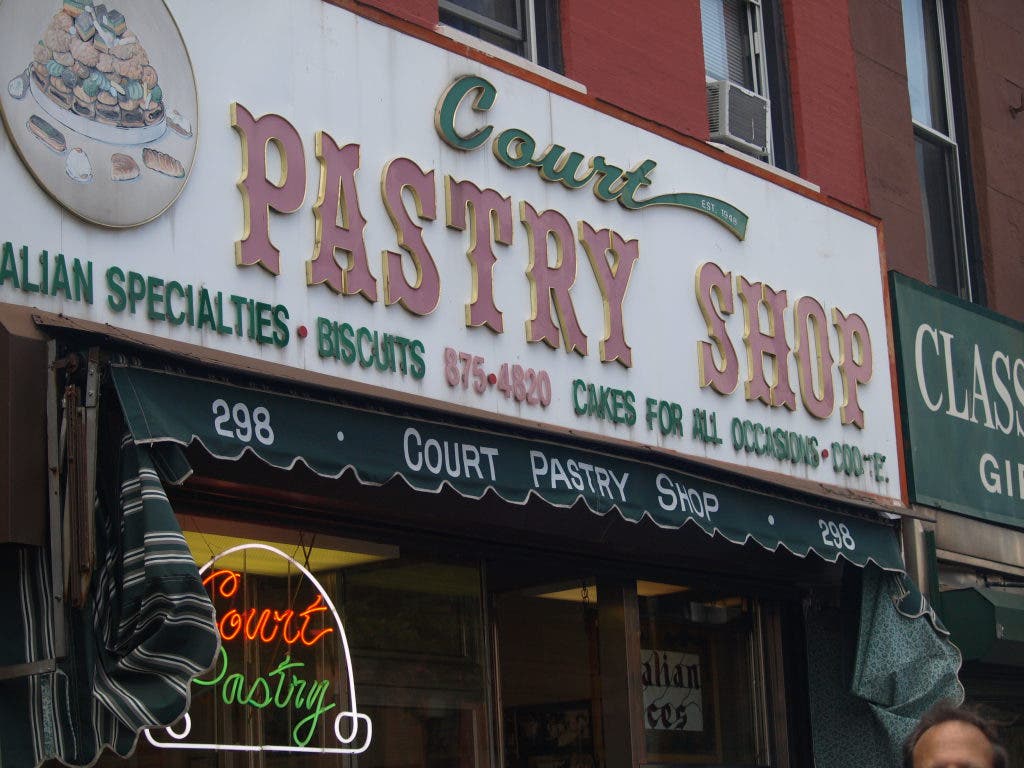


Gentrification. It’s a hot topic and one that has been at the forefront of a lot of the community dialogue here on Patch as well as in other outlets. It’s a fairly new term used by urban commentators to describe a shift or change in the population and mix of businesses in an area from one that is considered poor to one that is considered wealthy.
Initially these kinds of transformations were welcomed as a reversal of the decline of cities that took place in the second half of the 20th century. However, as that transformation gained momentum, the term began to take on the negative connotations now associated with it, including the displacement of low-income residents, the destruction of community, and the eradication of small, locally owned businesses.
Residents are concerned, rightfully so, that the characteristics that made the community desirable to higher income residents in the first place are being wiped out. We’ve witnessed similar patterns in Greenwich Village, the Lower East Side, and other NY neighborhoods. People are angry and they are looking for someone to blame and there are a number of suspects: newcomers, landlords, chain stores, the city, developers, etc.
Find out what's happening in Carroll Gardens-Cobble Hillfor free with the latest updates from Patch.
The dialogue that has ensued on the topic has been vitriolic as groups begin finger pointing at each other. I’ve seen it before in other cities as well as this city. It is anger born of feeling helpless, which leads to lashing out. I would like to offer the alternative view and a different approach.
I would like to offer hope.
Find out what's happening in Carroll Gardens-Cobble Hillfor free with the latest updates from Patch.
The truth is that we all share blame because we all share responsibility for our own community. However, we need not focus on the blame because the other thing that we all have is power. We have the power to create and maintain the community that we all love and value.
I will explain what I mean but first let me tell you about myself. My professional background is in Change Management and Urban Development. I worked for over 10 years as a consultant to cities, non-profits, and foundations helping them deal with change and create healthy and viable communities. A large part of that work was engaging and empowering citizens to participate in the development of their communities.
A little over 3 years ago, together with my long-time friend Cindy VandenBosch, we launched a tour company called . One of the goals of the company is to connect people to neighborhoods in such a way that it nourishes what makes those neighborhoods unique; local businesses, people and institutions. We recently launched a tour of this neighborhood celebrating the mom and pop shops that line Smith and Court Streets.
I am also a resident of what was once known as South Brooklyn. I live in the Cobble Hill part, barely, just north of Degraw. I find the neighborhood names confusing because to me it’s all one neighborhood and I much prefer South Brooklyn to BoCoCa. I’ve lived here for 4 years now which makes me definitely a newbie. I’ve loved every minute of those 4 years and this is by far the best place I have ever lived. But I view myself as part of this community just like someone that has been here for 80 years or 8 months. There is definitely a respect and deference owed to residents that have been here longer but we all live here and we’ve all bought in. It’s on us to make sure things remain as good as they are.
Also, for those who would question the benefit of small, locally owned businesses let me make a brief case from them. Some of the most compelling evidence is anecdotal, such as listening to how Joan and Frank D’Amico take care of their customers since they’ve known them for years and they are always in . I doubt the CEO of Starbucks has ever visited any of the locations in the neighborhood and it shows. I’m also sure that if the person who complained about roasting coffee ever came to the shop that they’d find only the most welcoming and nice people that would do anything in their power to resolve their issue. That is reason one for locally owned business.
However there is also empirical evidence. Study after study backs up what we already know and that is that locally owned businesses are better for the economy than national chains. This is a 2002 study from Austin and this is a study from Maine in 2003. Essentially both studies conclude the same thing: that a much higher percentage of money spent at a local business stays in the community.
That conclusion is held up by my own work in developing our tours where over and over again we hear how local businesses buy most of their supplies from other local businesses whenever possible. Not to mention that the owners of many local businesses live in the community themselves. So this issue is not just an issue of nostalgia. Rather, it is an important piece of community viability.
Now, what am I talking about when I say that we have the power we need to create the community we want?
First, people undervalue their individual power and over value the power of government and society at large. In this case, everyone in this community has tremendous influence over the types of businesses that populate our streets. That influence comes primarily from our wallets when we spend our money. If we spend our money in the locally owned shops and restaurants then those are the ones that will prosper and the chains will close. We can also influence how visitors and newcomers to our community spend their money by giving voice, in a positive way, to our belief that what makes this neighborhood great are the locally owned businesses. Those are the easy things that everyone can do. There are also models for community organizing and advocacy that provide other, more advanced tools.
Second, change is inevitable and not necessarily a bad thing. Change is a part of nature and it is necessary for the emergence of the new and the unique. Businesses don’t go on forever and they shouldn’t. Eventually things change, kids want to do something else, the public no longer needs the good or service, etc. That will always happen and it is not the problem. Indeed if this neighborhood hadn’t changed 100 years ago we wouldn’t have the wonderful Italian restaurants and shops that we have now. The important thing is for the community to have a say in guiding that change and to ensure that they continue to have the community that is desired. That means when a long time local business closes, it is replaced by a new local business and not always a national chain. This is accomplished again by focusing our own personal funds and also by putting in place incentives and zoning that promote locally owned businesses. We can work with politicians and businesses to establish incentive funds for landlords to keep rents lower and lease to local businesses. Tax incentives, incubators, low cost loans, mentorship and apprentice programs are all other ways of promoting locally owned business.
Third, when people feel powerless, they will attempt to rid themselves of that feeling by lashing out at other groups they perceive as threatening or responsible for their sense of powerlessness. While this lashing out is completely understandable it is more of a symptom of feeling powerless than of any real analysis of cause and effect. The key is to solve the feeling of powerlessness and discover our collective power. The likely truth is that newcomers to this community also highly value locally owned businesses and therefore they are the allies—rather than the enemy—of any effort to ensure the neighborhood retains those kinds of businesses. The same goes for landlords, business owners, city officials and so on. They all benefit from and want the best possible neighborhood. Certainly there are always going to be a few “get rich quick” individuals, as there always are. But they are the minority and their ability to cash in on chain stores is eliminated once we make it clear that our money is going to local shops. My counsel is to find ways to team up and work together rather than point fingers and vilify.
These thoughts are just the tip of the ice berg in my mind of what can be done to make sure South Brooklyn (BoCoCa, if you must) remains a neighborhood of family-run small businesses and a wonderful place to live and raise a family. I hope that it can initiate a more productive dialogue and also inspire some new efforts. One idea that I’ve been noodling on lately and haven’t had time to follow through on would be to create a social club (minus a club house) for all the neighborhood residents, old and new, so we can all get to know each other and maybe facilitate some of the cooperation I mentioned. If someone does start that I will be the first member.
We have the greatest neighborhood in NYC and it’s up to us to keep it that way. The challenge is ours.