Business & Tech
Living with Design: Taxidermy and Today's Interiors
Relics from a cultural tradition are coming back into style.
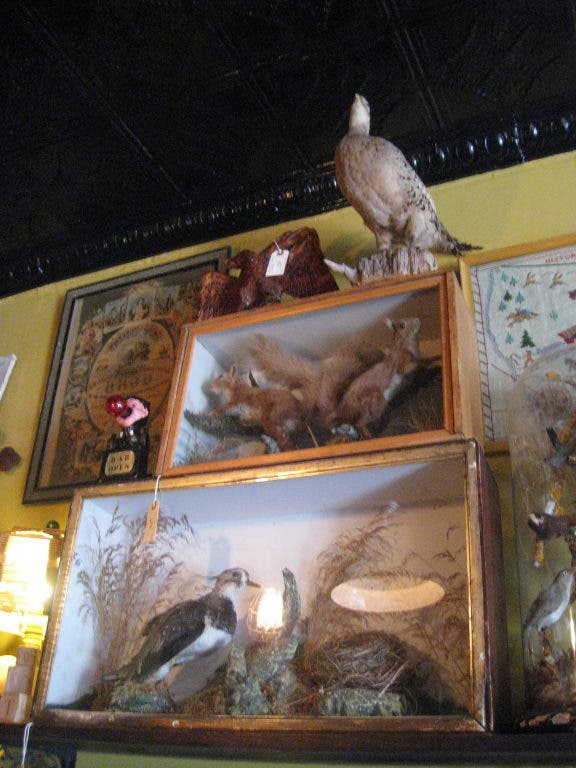


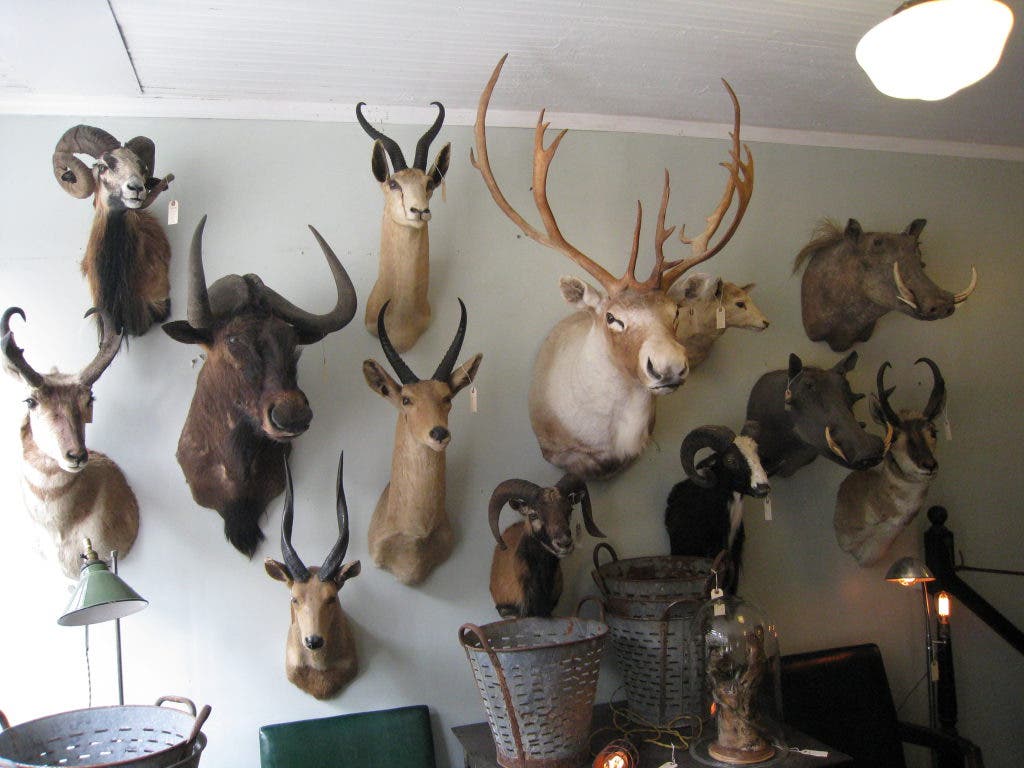


The tradition of taxidermy is, for Americans, part of our collective history.
Today, we are seeing a renaissance of taxidermy in interiors, and while most of these pieces are antiques, with this new trend comes an opportunity to re-examine this cultural tradition from a bygone era, as well as how we can understand it for today’s homes.
The mounting of animals is often associated with trophy-ism and with man’s lust to conquer nature - traits that we have come to frown upon, and which, as a component of our own human nature, has come to cause us shame.
Find out what's happening in Carroll Gardens-Cobble Hillfor free with the latest updates from Patch.
Taxidermy reached it’s heyday as an element of décor during the Victorian era, when hunters began bringing their trophies to upholstery shops to be “stuffed” with rags and cotton. (This crude form of taxidermy is the origination of the term “stuffed animal.")
But by the 20th century, techniques became increasingly sophisticated as the artists began building anatomically accurate and detailed figures and molds to wrap the animal skins around, and learned to create life-like poses. Taxidermy also found a place in museums and educational institutions.
Find out what's happening in Carroll Gardens-Cobble Hillfor free with the latest updates from Patch.
One of the founders of modern taxidermy was Martha Maxwell, an artist and naturalist who took part in Colorado’s Pike’s Peak Gold Rush in 1860. She was one of the first women to prepare her own animal skins and mounts. She was also a life-long vegetarian.
***
I visited two shops that sell taxidermy – and – to try and better understand this art form, the psychology around it, and what role it can play in today’s homes and businesses.
***
“Our collective opinion is that we are not about the traditional trophy aspect,” says Jeff Ogiba of Black Gold on lower Court Street. “We are not supporting the killing or hunting of animals.”
Indeed, both shops carry quite old pieces, many from the late 19th and early 20th centuries, a marked distinction from taking a current active part in the killing and mounting of these creatures.
But what were the motivations of Victorian era taxidermy? Was it really just based in Imperialistic, testosterone driven, macho, Hemingway–esque, competitive sport?
“A lot of it was science based,” Sommer Santoro, also of Black and Gold told me.
“They wanted to preserve nature in their homes,” she went on, bringing to light the sadly misguided but hardly sinister motivations of a people in a time when education was less accessible, and who were experiencing the rapid disappearance of nature as cities began to boom.
Thinking back to my own trips to the Natural History Museum as a child, I remember the impact of seeing life-like animals from places I had never been (and perhaps never would go) – lions, zebras, monkeys and African birds.
Suddenly, you understand the old practice of going on safari and bringing back mounted heads of exotic animals less as barbarianism than as an impulse to bring home sights that most people never had and never would see. It was a celebration of the animal, and an effort to learn and educate, however tragically ironic the outcome of this practice.
Gillette Wing, who owns Holler and Squall with her husband Zak, echoed this interpretation.
“I’ve never seen most of these animals alive,” she says motioning to the gazelles, caribou and wildebeest around her. Her baby, who just finished his lunch, looks at them too.
Gillette and Zak at Holler and Squall share the views of the people at Black Gold in that they do not support the idea of taking trophies, drawing the line at when it becomes merely a decorative piece.
“They are pieces of art,” says Zak. “It is a real gift and art.”
Indeed, taxidermists are not only highly educated in anatomy, but they are great artisans. It takes an impressive amount of skill to create an anatomically correct mold on which to carefully stretch a skin.
For the most part, customers in both stores react with fascination and awe at the mounted animals (kids really go nuts). There have been very few instances of people being offended or opposed to the taxidermy. Every once in awhile there will be a group of girls who are “grossed out by the dead animals.”
Gillette of Holler and Squall points out that this could be due to the urban life style.
“In the city we are so removed from nature," she said.
It’s a point well made. Anyone with friends or family in the country will tell you they understand and are not nearly as afraid of the cycle of life and death in the animal kingdom as we are.
And while quite interestingly, all of the four of the people I spoke to are vegetarians, just like taxidermy pioneer Martha Maxwell.
Looking at the animals in both shops, I couldn’t help being in awe of their beauty as well as fascinated by sights never before seen. It felt as if, in some regard, they were being honored, as with a culture often misunderstood.
***
If you are looking for majestic and stunning examples of mountings, Holler and Squall is your bet. You can get a lovely mounted African Gazelle for as little as $225, as well as Caribou and Wildebeest for not much more (prices range approximately from $225-$900). The showstoppers are the phenomenal Texas Longhorn Steer and the American Bison for $2,500.
For a more “cabinet of curiosities” vibe, check out Black Gold, where you will find more small, full-bodied animals like Victorian-era birds ($300-$400), squirrels ($600) and raccoons ($300). Many of the small animals and birds are displayed in museum-like dioramas or in glass domes. However you won’t just find everyday animals here – don’t miss the peacock ($250), the baboon ($1,300) or the museum-quality, award-winning Hyena (not for sale).