Politics & Government
Uber Spotlighted by East Hampton Supervisor In Letter to Cuomo Nixing Plan To Abolish Local Control
Before reforms, taxi drivers were fighting over fares, sleeping in cars and assaulting one another, Supervisor Larry Cantwell said.


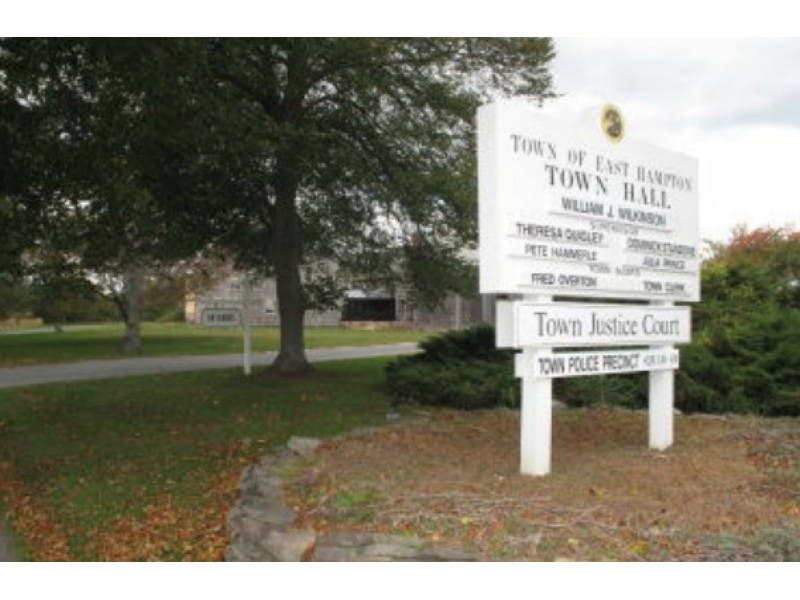
EAST HAMPTON, NY - With the summer fast approaching, East Hampton Town Supervisor Larry Cantwell has reached out to New York State Governor Andrew Cuomo to protest a move that could put the brakes on local regulation of Uber and other ride sharing app services.
In a letter to Cuomo dated March 21, Cantwell said he'd learned that the governor is considering legislative amendments through the budget process that would provide a statewide franchise, or license, for the livery service industry, including ride-sharing apps like Uber.
"It is my understanding that such legislative action would be specifically designed so as to preempt local regulation of these services," he wrote.
Find out what's happening in East Hamptonfor free with the latest updates from Patch.
When he took office just over two years ago, Cantwell said there were nearly 1,100 licensed vehicles for hire, including taxi and livery, belonging to more than 89 companies in the Town of East Hampton.
"Our public safety resources — already stretched to the limits due to the massive influx of seasonal residents and tourist visitors — were being overwhelmed by the questionable tactics and actions of these vehicles for hire and their operators. These vehicles for hire were congesting roadways, taking up huge percentages of the limited parking areas in our hamlet centers, and causing disruption at our public transportation hubs as the drivers literally fought over fares. Complaints about drivers sleeping in their vehicles all day between night shifts, fare gouging, passenger stranding, and driver assaults, of one other and passengers alike, were commonplace."
Find out what's happening in East Hamptonfor free with the latest updates from Patch.
In order to address the "untenable" situation, the town, Cantwell said,
In order to combat these untenable conditions, the Town adopted reforms during the first six months of his term "in an effort to improve and professionalize industry operation within the town."
The reforms required companies to maintain an office within the town for the purposes of having an accessible lost-and-found, having a physical presence to make complaints, and to prevent drivers and companies from using inappropriate properties, such as single-family residences and public spaces, as depots and offices, he said.
In addition, he said, the town required that all cars being used as vehicles for hire be registered to their respective vehicle-for-hire businesses to prevent fraud and abuse, which was resulting in numerous inquiries from the State’s Department of Motor Vehicle investigators to the East Hampton town clerk’s office.
"These changes have been very successful — lauded by the local business community and the vast majority of the local vehicle-for-hire companies," Cantwell said. "While there are still significant issues with parking and traffic congestion during the summer season, as well as complaints of fare gouging and the unregulated nature of the fares charged, the fever pitch of complaints has subsided as companies and drivers have responded positively, improving conditions for everyone."
Unfortunately, Cantwell said, some vehicle-for-hire companies such as Uber "violated and refused to comply with these local regulations. Not wanting to register their vehicles in the licensed companies’ names, establish a local office for the businesses and pay associated town licensing fees, these entities decided to withdraw from operating in the Town and to commence a public relations effort and lobbying campaign for the preemption legislation" the governor is considering.
"If the town were to lose its ability to regulate a large percentage of the vehicle-for-hire industry due to preemption legislation, it would immediately reverse the productive reforms the town has instituted under my administration. As such, our community cannot support any legislation that would make certain vehicle-for-hire companies, such as livery service vehicles, exempt from local regulation," he said.
In addition, Cantwell said, a "patchwork approach of state regulations of some vehicles and local regulations of others would create an uneven business environment within the town, confuse consumers and push the town’s hamlet centers and transportation hubs toward the type of chaos that my administration has spent two years cleaning up."
Enforcement would be similarly "inherently uneven," he said.
As an alternative to legislation preempting local control of a specific class of vehicles for hire, there are a number of legislative measures involving the vehicle-for-hire industry that Cantwell said the community would welcome.
Those include:
The jurisdiction to prohibit or time limit livery-, TLC- and taxi- registered vehicles from parking on certain public streets within the town in order to prevent these vehicles for hire from monopolizing parking in our business districts, hamlet centers, and transportation hubs.
Establishment of a maximum vehicle-for-hire rate system without the need for extensive actuarial studies or the establishment of a rate setting commission to prevent price gouging and the charging of unreasonable fares.
An absolute prohibition on drivers of livery-, TLC- and taxi- registered vehicles from sleeping in said vehicles.
Current law allows the town to regulate only vehicle-for-hire trips that are comprised of travel that begins and ends wholly within the town, Cantwell said. East Hampton would like the ability to regulate all vehicle-for-hire trips that begin within the town, regardless of the final destination. 'This would prevent a significant number of unlicensed vehicle-for-hire operators from operating under the cover that they are only taking fares going outside the municipality."
He added, "Whereas statewide preemption legislation of livery services licensing would be a step backward for our community, the above listed reforms would bolster our efforts to provide necessary and vital public transportation services to our constituents in a safe, responsible, and reliable manner."
In January, Cantwell spoke to Patch about Cuomo’s proposal to institute a statewide regulatory framework for Uber and other apps used by individuals to call taxis.
Cantwell said the proposal would take away local control. “I”m not pleased about this,” he said.
To that end, Cantwell said the plan was to prepare the letter released this to Cuomo, stating that if the state is going to consider such a measure, East Hampton Town would ask to be addressed with respect to regulation of cabs and Uber-type services, without a limousine commission, which, Cantwelll said, is an expensive means of control available for local adoption.
All taxis and cabs, and not just Uber, the supervisor said, have raised traffic and safety issues, especially in the summer months when Montauk becomes a Montauk for the party crowd.
“We don’t have control over where cabs park and in places like downtown Montauk, we could have hundreds of cabs operating on a weekend, and they park wherever they want, taking up parking spaces up and down Main Street.
The goal, Cantwell said, would be to direct cabs and taxis to designated areas “that don’t take up valuable public parking space while waiting.”
During the summer months, when scores of revelers pack Montauk, an endless stream of hundreds of Uber type vehicles and taxi companies descend on the area, creating “enormous congestion and safety issues,” the supervisor said.
That’s why, Cantwell said, last year, the town adopted laws to require cabs to be operating under a license with an East Hampton address. The Town announced last year that Uber, a mobile app that connects riders with a taxi, private car or ride-share from their mobile phone, had suspended operations in East Hampton immediately.
Several Uber drivers went to court last year facing misdemeanor charges for licensing violations in East Hampton after the Town cracked down on the ride-sharing service.
Cantwell said last year that three solutions could exist. Uber could open a home office in the town so drivers who wanted to work in the town could register their cars with the office address. The drivers could chose to own or lease their cars which would allow them to operate as a separate business for hire, and each would apply for their own business license. Second, Uber could form a partnership with a local company that is already licensed and headquartered in East Hampton. Or, the supervisor said, Uber could recruit East Hampton residents as Uber owners or drivers.
Cantwell also said that the regulations governing cars for hire specifically allow an owner of one or two cars to run the business using his or her home address, as long as it is in the town.
Get more local news delivered straight to your inbox. Sign up for free Patch newsletters and alerts.