Health & Fitness
Addition By Subtraction: It’s Not Personal, It’s Business
The 2011 Mets are all business and not personal anymore.
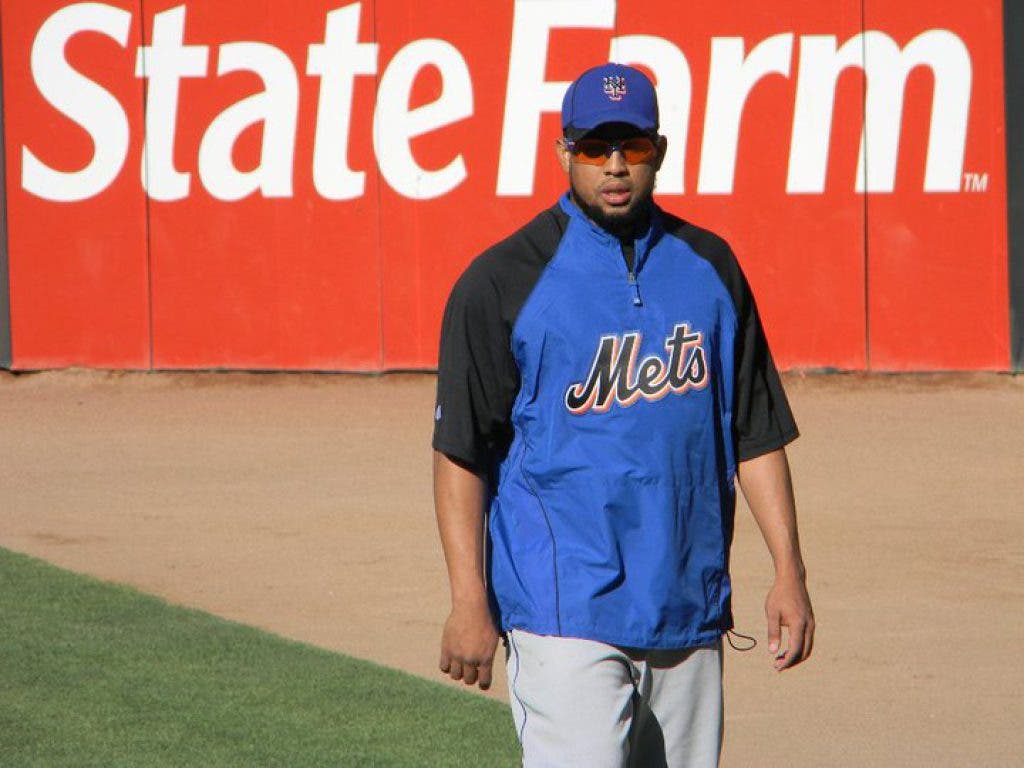
The Mets had infamously been carrying around a lot of dead weight in the form of bad contracts, players with equally as bad attitudes, and just overall malaise on the field and in the clubhouse.
This could be partially attributed to Omar Minaya and his free-spending days, along with Jerry Manuel’s laissez-faire attitude towards managing his team. High-priced underachievers hampered the team’s success, while the lethargy of the manager and coaches spread to the players.
Sandy Alderson came in and said, “Enough.”
Find out what's happening in East Meadowfor free with the latest updates from Patch.
Most of us who follow the New York Mets baseball as a way of life thought the Mets were easily a .500 team, and at the All-Star Break, they are…technically, one game over .500. Given their performance over the years with bench players and regulars trying to play over their head, this was nothing short of miraculous.
Sure, with the payroll they have, there is no reason the Mets shouldn’t be well over .500. On the other hand, when your pitching ace Johan Santana is out with no definitive timetable, your best RBI machine is wearing a protective boot and your All-Star third baseman is not playing, then we can say that.
Find out what's happening in East Meadowfor free with the latest updates from Patch.
With the trading of closer Francisco “K-Rod” Rodriguez to the Milwaukee Brewers, it’s evident that Alderson is serious about cutting the dead weight. Though to be fair, K-Rod had been doing his best as closer (when have the Mets closers’ never given us heart attacks?), but it was that option…that stupid ugly vesting option that declared the Mets must pony up $17.5mm after 55 games finished this year.
To reserve that much money to a guy who may pitch one inning 50-70 games per year (this year, he was going to be well over that number), Alderson made the right move as to reallocate that source of income to better and wiser moves (such as signing Jose Reyes to a long-term contract).
Alderson has been criticized for not doing his best to fill in the Mets weaker spots, but I disagree with that. He was able to pick up Chris Capuano from the damaged goods heap, as he did with Chris Young.
Young didn’t work out, but at $1.1 mm per year theoretically he earned that money in his short stint with the team. Capuano has been very good for the Mets as well. He also provided for very low costs DJ Carrasco, Ronny Paulino, among others, who have provided some needed breath-of-fresh-air changes for the team as well.
Where I think Alderson’s greatest strength has been for 2011? His ability to add by subtracting. He had a knack for evaluating talent for short-term solutions while it was well-known that the Mets have and will have payroll issues so long as Sterling Equities is still the majority ownership group.
In spring training, he was able to cut ties with two players who retained the ire from Mets fans all over, Luis Castillo and Oliver Perez. Collectively, these two were under contract for another year for a total $18 mm. One could argue that Alderson was in the “red” as far as player capital goes prior to him even taking this job, because $18mm is a lot of money that could be reallocated.
But because he was not emotionally attached to the players or was not responsible for giving out the contracts, I suspect it was easier for him to be objective in cutting his losses and just paying them to not play for the Mets.
His move was certainly the right one: neither player is on a Major League roster at the moment (though Perez is playing in the Washington Nationals minor league system). There is also that little thing called the Mets 25-man roster. When Perez refused to go to the minors in 2010 (and 2009!) and when Luis Castillo started whining that he wasn’t playing enough (when his bat certainly wasn’t making a good case of him continuing to do so in 2010), it literally hampered the manager’s ability to work with a full roster.
When you have position player playing at ½ his capacity (as Castillo did at times) and a pitcher you can only use in blowout situations out of the ‘pen (and even Oliver Perez was like throwing gasoline on the fire) didn’t leave him with many choices.
And if anyone bore witness to the Mets very last game in 2010, it was clear that Oliver Perez was no longer trying, almost literally making the Mets wave the white flag in surrendering the last game of the season to the Nationals.
If it was taxing for fans to watch, imagine what the team had to go through?
Both Castillo and Perez were the first to go in a symbolic and also very real move: if you don’t perform, we don’t care how much money you are making. You’re gone.
Next with this vesting option looming on K-Rod, and his coupling with Super Agent Scott Boras, Alderson needed to make a business decision to impact the current and future state of the franchise and K-Rid himself of the issue.
Something to consider are that if Omar Minaya were still running the team, there’s a great chance that Oliver Perez may still be on the team wasting a roster space, and Luis Castillo may be the second baseman since he was the “best option” to the team. Keep in mind many were saying the same thing when Castillo was cut, and he is not currently on a major league roster…at the league minimum!!
Alderson is ridding himself of the bad vibes of the previous regime, and cleaning up the mess as deftly as he can.
It’s business, it’s not personal (though to fans, it may be slightly personal). Addition by subtraction can actually be a great morale booster for the team, and it shows.