Health & Fitness
Are There Too Many Stars to Count?
It's easy and fun to take part in the Worldwide Star Count. Count the stars in a section of the sky to determine light pollution. What is it, its' effects and how to fix it? Take back the night sky!
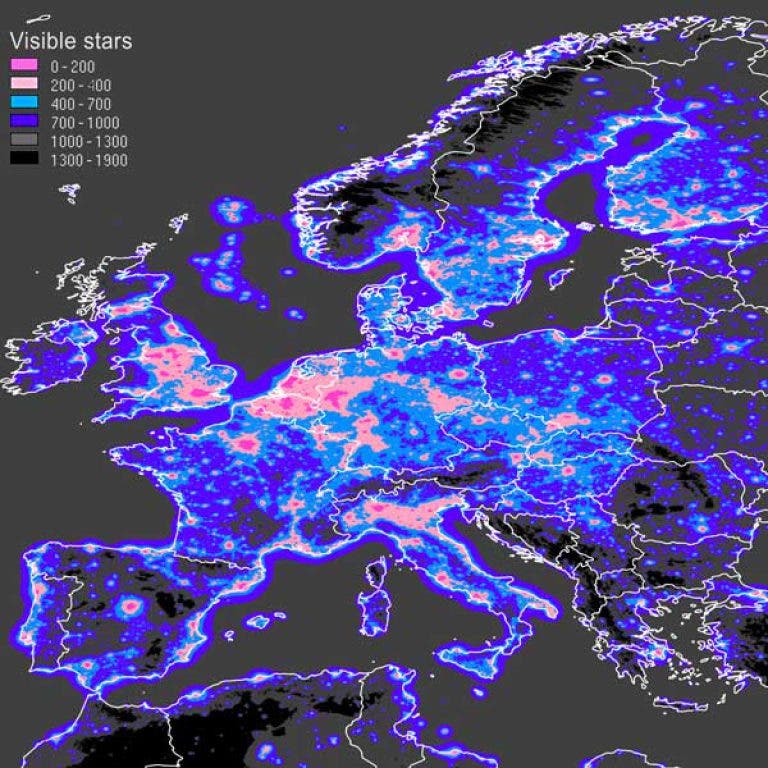

We're talking visible to the naked eye stars here.
If you were in an area far from city lights, you might be able to count upwards of a thousand. If you’re unfortunate enough to be in an area where much of the available light fixtures allow light to shine at the sky, instead of down where you really want it, then you might only see a few, if any. This is called light pollution.
Is light pollution the kind of pollution that can create a problem for us humans, or maybe other life forms on Earth? The answer is yes, although it is a lot more subtle. More and more studies are coming out stating that we need an extended period of darkness while we sleep to recharge our internal batteries.
Find out what's happening in East Meadowfor free with the latest updates from Patch.
There are even some studies which suggest that incomplete darkness while we sleep may lead to some diseases. It seems that people who work the overnight shift are more susceptible to many illnesses. The culprit here is our hormones. When it isn’t fully dark, they act like it is daytime when work is usually done. This puts stresses on our systems which allow us to accomplish what we need to do. If the body doesn’t get a period of rest from these stressors, problems occur.
Animals, too, have difficulties when the night isn’t dark. They are programmed to do things under the cover of darkness and their eyes are adapted that way. The light affects their ability to find food, and hide from predators. Sea turtles hatch in the safety of darkness, or use to. In Florida, there are teams of volunteers who gather up the hatchlings and bring them to the sea to avoid the predatory birds. While nature provides increased numbers to be food, the amount being lost due to night light was becoming a serious issue requiring intervention from those who created the problem in the first place.
Find out what's happening in East Meadowfor free with the latest updates from Patch.
What does all this have to do with counting stars? The amount of unnecessary light shining into the sky directly affects the amount of stars and celestial objects which we can see. It’s easy to say that seeing stars is a luxury in cities. If you want to see stars, go to the country. We need our increased light for safety. Actually, that would be an inaccurate statement. You need the safety on the ground. I have yet to see a study showing that light shining into the sky made anyone safer.
So, why is artificial light getting into the sky? Simple, we are using the wrong fixtures. As you drive around at night, notice the streetlights. If you can see the light coming from the fixture from a distance, it’s the wrong fixture. These are the ones which have a globe under them. If you see a fixture which doesn’t have a globe but a flat glass underneath, you won’t see the light directly until you are under it. That also means no light is escaping into the sky.
Your pupils react to light in allowing you to see under different conditions. When the light is bright, your pupils become small so less light enters your eye. This also means that your ability to see things clearly and with great detail is compromised when the glare of the light is too much. With light shining down only, you don’t get that glare, your ability to see details is greater, and the chance of someone hiding in the area is diminished.
Here’s a local example. Although the lights on the SSP are not the best, they are not very concentrated and your eyes can adapt to that level. Full cutoffs would still be better. Anyway, when you turn off at Exit 24N, onto Merrick Ave, you are absolutely blinded by the near daylight conditions. These new lights are not merely the half globe of a regular overhead light, they are full globes which means that every bit of those bright high pressure sodium photons are finding their way into our eyes, the sky, and residents’ homes.
To make matters worse, the original overhead ones weren’t removed and the only 2 businesses in the area open late have their own lights so these new ones were never needed. When you come off of the darker SSP to this area, your pupil contracts to a tiny opening instantaneously. That means you might easily miss details like people walking across the street or on bicycles or something else in the road.
Nassau County wasted a huge amount of money on this local “improvement.” I’m quite amazed that the people in the area haven’t screamed, or I haven’t heard of it anyway. These lights have invaded their homes, undoubtedly making their ability to sleep in darkness much reduced. This, by the way, is called light trespass. No one has the right to disrupt your ability to get much needed dark night sleep by shining their lights into your home.
Oh, by the way, I forgot to mention that when you focus all the light downward, the amount of light needed from the bulb is greatly decreased. So, to get the same amount of light on the ground that you have with the offending fixtures, if you use full cutoffs you can use a lower wattage bulb.
That requires less energy, less burning of oil and gas (reducing carbon dioxide in the atmosphere-air pollution) and a lower electric bill. County Executive Ed Mangano is looking for ways to save money. Here is an easy one and everyone wins in the end. Make these changes on your homes as well.
It would be nice if this occurred all over the state. I can tell you that I am proud of our local NYS Senator, Charles Fuscillo, who has diligently worked to get a proper lighting ordinance passed and signed into law. Other states have done it, why not NY? We, the Empire State, should lead, not follow!
I hope you’ll begin to notice the right kind of light as you drive around at night. A good place to see the right ones is on Glenn Curtiss Blvd, at the old EAB Plaza. You will be amazed. Please be aware that it can take up to 20 minutes for your eyes to readjust from an overly lit environment to a dimmer one and the older you are, the longer it takes, yet another reason for stopping all these drastic changes in lighting and settle on full cutoffs everywhere.
Back to counting stars. From Oct 14-28, the international community which keeps track of these things is asking for your help to map out light polluted areas and the degree of effect and any changes from year to year. Hopefully, with this kind of information, we can get enough people to see the benefit and demand better lighting.
How can you participate in the Worldwide Star Count? It’s very easy, only takes a few minutes and doesn’t require any equipment. Take a look at the Activity Guide mentioned below the AOS logo at www.aosny.org. For more information, please study the website of the International Dark Sky Association. You will be amazed!
Take an observation of the designated area of the sky on 1 or more nights from 1 or more locations. Get your friends, neighbors, family members, your fellow classmates and workmates, near and far, involved.
What can we accomplish? I have heard many people remark about how much they enjoyed seeing the stars during the recent blackout from Hurricane Irene. We can make that happen again AND keep the light we need, if we change to the right fixtures. Maybe then, there will be too many stars to count.
There is one loser in this, the electric companies, because our bills will go down!
Till next time. Ad astra