Health & Fitness
Protect Yourself from Carbon Monoxide Poisoning
Early exposure to this can be difficult to diagnose.

Early exposure to carbon monoxide (CO) – a deadly, colorless, odorless, poisonous gas – can be tough to diagnose.
“Patients come in with multiple vague symptoms that we potentially don’t recognize because CO poisoning is a great mimic for a lot of other medical conditions – the main one being the flu,” said Michael Guttenberg, DO, director of emergency medicine at Forest Hills Hospital.
Like the flu, CO poisoning symptoms may include headaches, weakness, confusion, chest tightness, skin redness, dizziness, nausea, and sleepiness.
Find out what's happening in Forest Hillsfor free with the latest updates from Patch.
That often leaves ED doctors to make a decision based on clinical suspicion, said Dr. Guttenberg.
“When multiple family members or people from the same setting come in with the same complaint of flu-like symptoms that’s a clue,” he explained. “But if it’s one person and they live alone, very often it can be passed off medically as something else.”
Find out what's happening in Forest Hillsfor free with the latest updates from Patch.
Nationwide, CO-related incidents are responsible for about 50,000 emergency department visits each year. In 2015, Northwell Health treated 266 cases of carbon monoxide exposure and/or poisoning.
Common sources of carbon monoxide include malfunctioning forced-air furnaces, kerosene space heaters, natural gas ranges, wood stoves, fireplaces and motor vehicle engines.
“About 40 to 50 percent of cases are seasonal to the early winter months because people are starting to close all their windows, turn on their heat and fireplace for the first time,” said Dr. Guttenberg.
So, fresh air is sealed out, which creates the potential for carbon monoxide to build up.
CO interferes with the body’s ability to distribute oxygen to the cells, leaving them deprived of adequate levels of oxygen. At lower levels of exposure, you may not even be aware that CO is present.
In order to prevent carbon monoxide poisoning, Dr. Guttenberg advises people to:
- Always keep your windows open a little to allow for air flow.
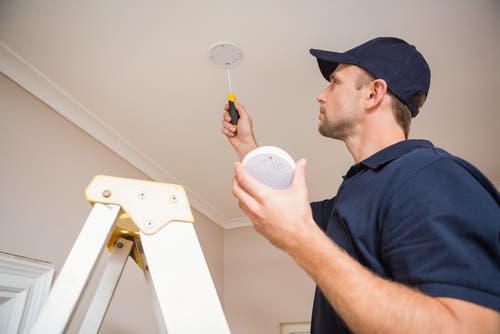
- Have a working carbon monoxide detector in your home and make sure to test it and check batteries regularly.
Carbon monoxide detectors measure the level of CO concentration in parts per million (ppm).
According to the Consumer Product Safety Commission, CO levels above 70 ppm can cause flu-like symptoms. If levels rise to 150 to 200 ppm, you may become disoriented, be unable to wake up and even die. On average, about 170 Americans die every year from CO produced by non-automotive consumer products.