Politics & Government
Op-Ed: MTA Report Doesn't Tell The Full Truth Of Third Rail Project
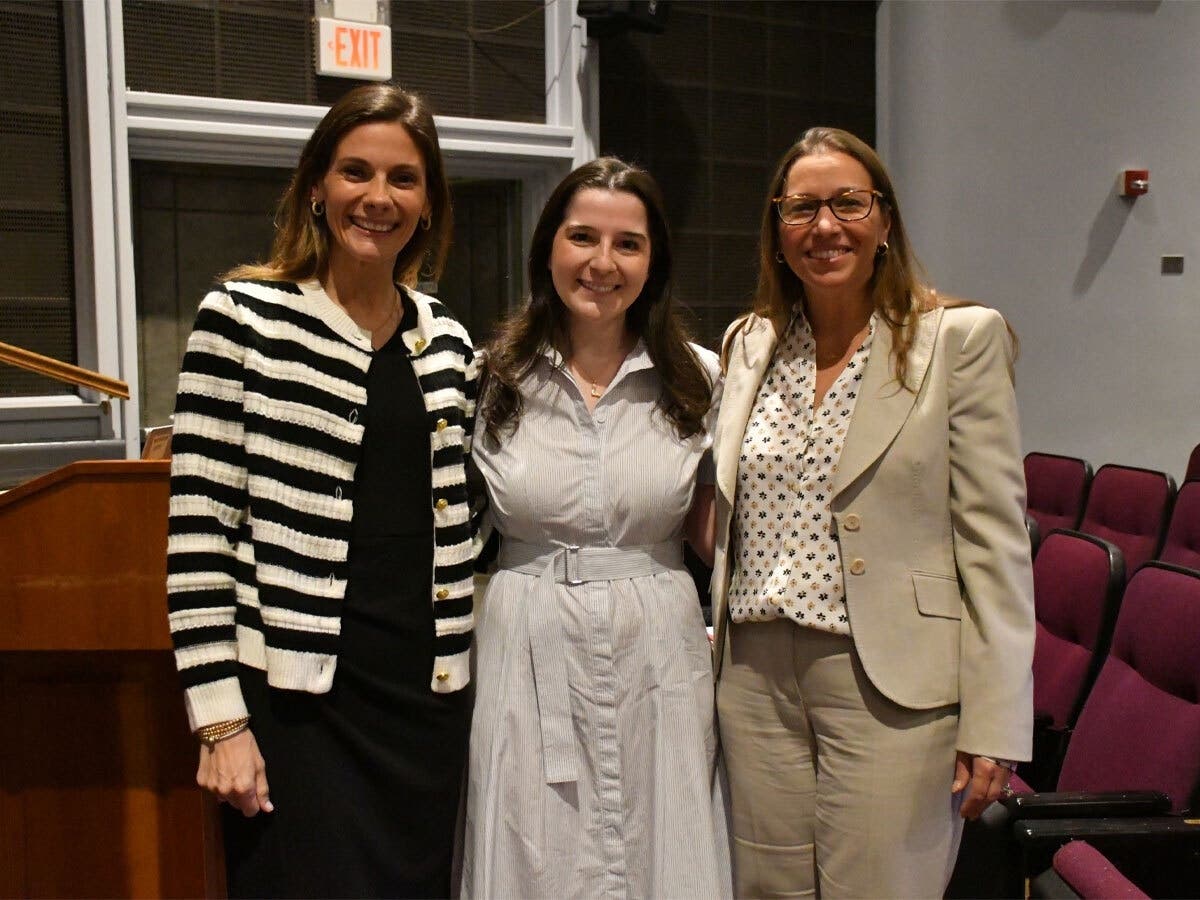
Mayor Episcopia wants the MTA to consider all the variables before going forward with the Third Rail project.


Garden City Chamber of Commerce President Thomas McCambridge invited me to attend the Chamber’s Feb. 8 luncheon and express my opinion on the MTA/LIRR’s proposed third track expansion project. David Kapell, executive director of the Right Track for Long Island Coalition, served as the keynote speaker.
While Mr. Kapell spoke about regional benefits of the LIRR expansion project, I highlighted many of the concerns the villages of Garden City, Floral Park and New Hyde Park have with the project as well as the environmental review process, as summarized by Beveridge & Diamond and The Vertex Companies, the experts we retained to analyze the lengthy Draft Environmental Impact Statement (DEIS).
Find out what's happening in Garden Cityfor free with the latest updates from Patch.
Garden City, along with Floral Park and New Hyde Park and the Town of Hempstead, are all sharing in the costs of retaining these experts. I wish to again thank Town of Hempstead Supervisor Anthony Santino and the entire Town Council for their monetary contribution.

Project Need
Find out what's happening in Garden Cityfor free with the latest updates from Patch.
Much emphasis is placed on the need for a third track to deal with “congestion” due to equipment failure and accidents. The DEIS also suggests that there would have been fewer delayed or cancelled trains if there were a third track.
Data, however, reveals a failure on the part of the LIRR to adequately inspect and maintain its equipment and existing infrastructure. Many of the Main Line events would have caused system wide problems even if there was a third track, including the Feb. 8 derailment at Jamaica Station. This is not acknowledged in the DEIS. In fact, the DEIS states that there will be only one added rush hour morning train and one rush hour evening train. The villages on the Main Line will suffer all the disruption of this construction and the rush hour commuters will only gain one extra train each way.
Project Schedule
The MTA asserts that the project will “conservatively” take about four years to complete, will be completed in phases and will take six to nine months to complete each grade crossing separation project. The Vertex Report shows that, if anything, the scheduling assumptions have no basis in fact and could be “wildly optimistic.” Vertex further asserts that no schedule information is provided for certain components of the project and important contingencies are not factored into the Project schedule.
Funding Sources
No source of funds is identified to pay for this project - not in the MTA Capital Plan and not in the new state budget. The Capital Plan Approval Board must unanimously say yes to any changes in the $29 billion plan approved in May 2016, however there is no guarantee that this will happen. If this is approved, however, the taxpayers have to shoulder the whole burden.
Property Values
The DEIS fails to address socioeconomic impacts associated with diminution in residential property values. The three villages requested that the final Scoping Document include a requirement to prepare a residential property value impact analysis. The MTA/LIRR refused, stating such an evaluation was beyond the scope of SEQRA.
Impact on Residents
Residents living along the Main Line will be particularly affected by this project. For example, although the DEIS acknowledges that thick vegetation existing along the Main Line Right-Of-Way will be removed to accommodate the third track and retaining walls, it fails to include a single photograph from a homeowner’s backyard. Further, the DEIS fails to address where equipment staging areas will be located during the construction period.
Impact on Local Businesses
The DEIS pays little attention to impacts on local business districts within the three villages during construction. For example, 2nd Avenue in New Hyde Park runs directly adjacent to the north side of the Main Line and intersects with no less than three grade crossings that are slated for construction.
Contaminated Materials
Vertex uncovered major deficiencies in the DEIS regarding contaminated materials. No analysis was ever conducted to evaluate whether construction or operation of the proposed project could potentially increase exposure to contaminated materials and whether the proposed project could result in potential adverse impacts to the public health and/or the environment. No data was ever gathered to determine what the potential threat is.
Drainage
The DEIS fails to adequately address drainage impacts to residences and other properties adjacent to the Main Line, where the LIRR Right-Of-Way will be elevated and retaining walls will be installed.
Alternatives
The villages believe there are other, less intrusive alternatives available. For example, the Jamaica Capacity Improvements Project streamlines the Jamaica track layout, according to the MTA, while upgrading and modernizing the switch and signal system. This includes the installation of higher-speed switches.
The Vertex Report, as well as a summary by our environmental counsel, has been sent to the MTA. We await its response. To read the DEIS in full, click here.
Photos: Village of Garden City
Get more local news delivered straight to your inbox. Sign up for free Patch newsletters and alerts.