Arts & Entertainment
'The Dragon' Anagama Kiln Firing
Ceramics Department at Adelphi University hosts a firing.



It’s not too often anyone sees a “dragon” at Adelphi University, especially a fire-breathing, smoking one. It is located in the university’s Ceramics Department. “The Dragon” is in the shape of a Japanese anagama kiln in the courtyard at the Adele and Herbert J. Klapper Center for Fine Arts.
This special four-day wood firing event is held approximately once a year for ceramics students at Adelphi and Nassau Community College. The wood-fire kiln is the only one of its kind on Long Island, and is only one of three in New York State, that includes Alfred University and SUNY New Paltz.
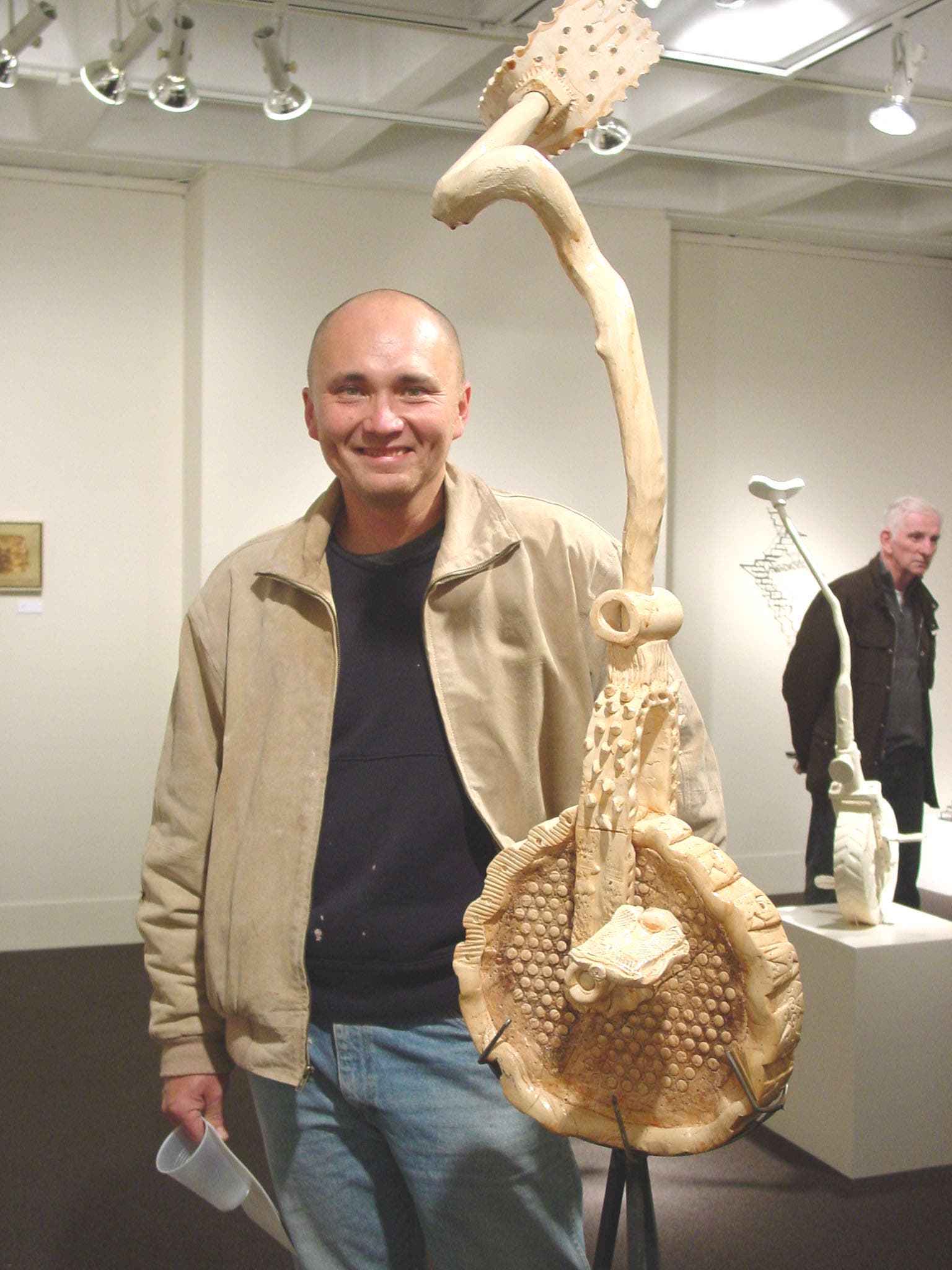
The art students create their pots and sculpture especially for the unique effects this special kiln can give them. The students and professors enjoy the smoky, shadowy look that is caused by the way the flame, wood smoke and ash envelope the unglazed pieces as they are fired. In these kilns temperatures can climb to 2,500 degrees Fahrenheit. Placement in the kiln affects the pottery as well.
Find out what's happening in Garden Cityfor free with the latest updates from Patch.
When you look at the pottery, “you can see where the flame traveled, how it rolls through and kisses them,” Seth Failla poetically remarked. The Adelphi graduate teaches in a Brooklyn charter high school.
The Adelphi anagama kiln is 15-feet long and can hold 300-400 pieces, all stacked up very carefully. Walls are two feet thick, made of a concrete mix with grog and wood shavings. It requires round-the-clock, six-hour shifts for the full 96 hours of firing time, filled at all hours with 30 students and professors helping out. Cooling down takes over a week before the contents can be removed.
Find out what's happening in Garden Cityfor free with the latest updates from Patch.
“We prepare for this firing for six months. It’s like the community teamwork required for glass work…and we’re working with a kiln design over 10,000 years old. We’re touching history,” stated professor Bill Shillalies, who has been teaching ceramics at Adelphi and Nassau for years. Anagama kilns originated in Japan, China and Korea.
Ceramics professor Puneeta Mittal concurred. “It’s interesting to be blending the old and new technology with 10,000-year-old technique and our 4G phones.”
Shillalies told this story. “At one point the kiln was getting too hot. I phoned a master ceramicist in Shigaraki, Japan to get help. [Shigaraki is a ceramics center and temperatures need to be regulated in order for the ceramics not to break.] He asked me, ‘Did you enjoy your lecture from the kiln?’ I received this spiritual energy and support from him, even though we never met.”
Shillalies was able to get things back to normal and was thankful there is a community of ceramic artists willing to help each other.
The community continues to help new ceramic artists. Failla explained, “The lineage is from Bill [Shillalies] and his background, and now from myself and Chris [Karas] teaching others.”
“I have helped here for every firing. If there’s wood to burn I’m here!” exclaimed Karas, a graduate of Nassau and SUNY New Paltz.
Failla said Adelphi “President Scott supported us 100 percent. Ever since he came here he’s been open-minded about art. It’s important to have support.”
Michele Matthews, a BFA student in ceramics and painting from Baldwin, said, “I have a number of pieces in the kiln. This has been a great experience. I’m glad I got involved, and we’re fortunate to have a great professor here,” referring to Shillalies.
For more information on Adelphi’s ceramics program, visit www.adelphi.edu.