Health & Fitness
New Treadmill Test Not Accurate Mortality Predictor: Cardiologist
The treadmill test may not really be that accurate.

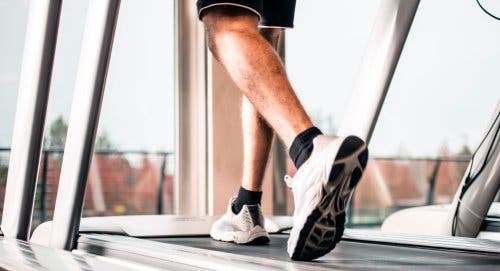
Your ability to exercise on a treadmill may predict your likelihood of dying in the next 10 years, say researchers at John Hopkins who developed a formula called the FIT Treadmill Score.
But, a New York cardiologist says it’s just a new twist on an old idea without any predictive improvements.
“The benefit of a treadmill exercise test is something that we’ve known for quite some time,” said Evelina Grayver, MD, director of the coronary care unit at North Shore University Hospital. “Since 1987, we’ve had the Duke Treadmill Score, which specifically looks at patients who’ve undergone stress tests on the treadmill by looking at how long they can stay on the treadmill, if there are any changes to their electrocardiogram and if they develop any symptoms.”
Find out what's happening in Great Neckfor free with the latest updates from Patch.
The new FIT test uses a patient’s age and gender, as well as peak heart rate reached during intense exercise and the ability to tolerate physical exertion as measured by metabolic equivalents (METs), a gauge of how much energy the body expends during exercise. So, for example, slow walking equals two METS, compared with eight METs for running.
To develop their formula, researchers examined the stress test data of 58,000 individuals who underwent exercise stress testing between 1991 and 2009. They found that fitness level was the most important predictor of death and survival, even after researchers accounted for other variables such as diabetes and family history of premature death.
Find out what's happening in Great Neckfor free with the latest updates from Patch.
However, Dr. Grayver says basing a person’s mortality risk solely on treadmill exercise performance is woefully inaccurate.
“If I get on a treadmill and my peak heart rate goes up to 160 after 10 minutes of exercise it’s completely different than if it goes up to 160 within the first three minutes of exercise,” said Dr. Grayver. “That sort of excessive response to exercise could actually have poor prognostic features associated with its value as well.”
The researchers published the results of their work in the journal Mayo Clinic Proceedings,