Health & Fitness
Secondhand Smoke Hits Vulnerable Populations the Hardest
One in four nonsmokers is affected by secondhand smoke.

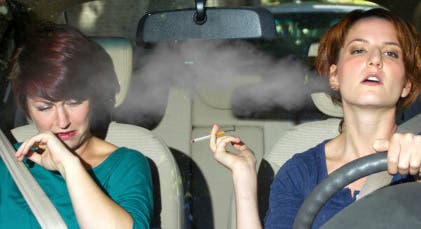
Although secondhand smoke exposure for Americans dropped by half since 2000, a new report by the US Centers for Disease Control and Prevention (CDC) says that one in four nonsmokers – 58 million people -- are still affected by secondhand smoke, and too many children are exposed to its dangers.
“There is no safe level of exposure to secondhand smoke because it contains toxic chemicals that can cause cancer and other deadly diseases,” says Patricia Folan, DNP, director of the North Shore-LIJ Tobacco Control Center.
According to the CDC report, two out of every five children ages 3 to 11are still exposed to secondhand smoke.
Find out what's happening in Great Neckfor free with the latest updates from Patch.
“Infants and children are more vulnerable to secondhand smoke,” Dr. Folan said. The study showed that secondhand smoke is estimated to cause the deaths of 400 babies in this country from sudden infant death syndrome.
The CDC report also states that secondhand smoke is dangerous to adult nonsmokers killing 41,000 a year through heart disease and lung cancer.
Find out what's happening in Great Neckfor free with the latest updates from Patch.
“These deaths are preventable and the best way to reduce harm from secondhand smoke is to reduce smoking,” Dr. Folan says.
In the last few decades, 26 states have banned smoking in public places and smoking has significantly been reduced in American homes. However, the report indicates these nonsmokers are most at risk from secondhand smoke:
- About 15 million children ages 3 to 11
- Nearly half of African American nonsmokers, including seven in 10 black children
- More than two in five nonsmokers who lived below the poverty line
- More than one in three nonsmokers who live in rental multi-unit housing
“As healthcare providers, we need to ask our patients whether they use tobacco products and encourage those who do to quit and provide meaningful help to stop smoking,” says Dr. Folan.
“To further reduce exposure to secondhand smoke, people should not smoke in their cars or home,” Dr. Folan said. “We also need to support local and state government to prohibit smoking in apartment buildings because secondhand smoke seeps through walls, doorways and air vents, which is harmful.”
Dr. Folan adds, smoking cessation programs must be affordable and accessible, and recommends the CTC on Long Island at 516-466-1980, or calling 1-800-QUIT-NOW.