Health & Fitness
Smartphone Separation Anxiety Is Real Say Researchers
If you feel stressed when you're away from your iPhone, you're not alone.

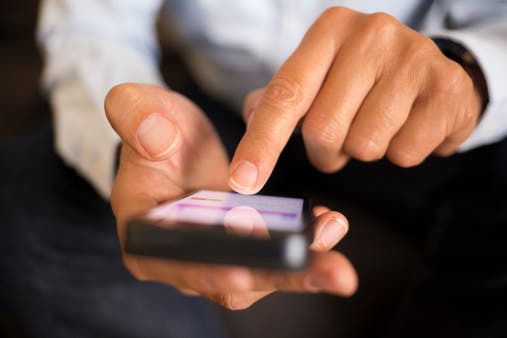
If you feel stressed when you’re away from your iPhone, you’re not alone.
According to a new study by researchers at the University of Missouri, smartphone separation anxiety can cause real physical and psychological changes.
“iPhones and other smart phones are social communications devices which keep us connected to a very complex world. In this world are our friends, family, colleagues and bosses,” says psychologist Curtis Reisinger, PhD, Corporate Director of the North Shore-LIJ Health System’s Employee Assistance Program.
Find out what's happening in Great Neckfor free with the latest updates from Patch.
“When we know what is going on with them we can actually relax knowing that things are ‘under control.’ ”
Without that connection, people can feel a sense of uncertainty that they may experience as anxiety or stress, Dr. Reisinger said.
Find out what's happening in Great Neckfor free with the latest updates from Patch.
Researchers observed a group of 40 college students as they worked on word search puzzles. The researchers let participants have access to their iPhones for the first phase of the study, and then took the smartphones away for the next phase.
Without their iPhones, participants experienced anxiety and elevated heart and blood pressure rates. The subjects also exhibited a decrease in cognitive ability to do the puzzle.
“This is explained by the fact that things we worry about use our cognitive resources (aka “working memory”), said Dr. Reisinger. “Working memory, like attention, is a very limited resource in humans. When some of our working memory is being used to be concerned about not knowing what is going on, our communications tether and we don’t perform as well.”
The researchers say their findings suggest that smartphone users keep their phones with them when taking tests, attending business meetings or during other activities that require a lot of attention.
The study was published Thursday in the Journal of Computer-Mediated Communication.