Community Corner
"Future Fashion" Can Save Our Future
Clothing is one of the most shocking contributors to climate change. This holiday season, you can help the planet if you purchase wisely.
This weekend I went to the Walt Whitman Mall and I truly felt the Christmas spirit in the air. The whole mall was flooded with the smell of Starbucks coffee, twinkling snowflake-shaped lights, and excited shoppers hurrying to grab the best deals, ultimately resulting in their struggle to carry around numerous, oversized clothing bags. I was no different than my fellow shoppers, for how was I supposed to just pass by the comfiest pajamas which were on sale!? I had to buy them. And I’m pretty sure the rest of you are allured by these temptations as well. By nature, we are consumers… so we consume. Our problem is that we think so much about the appeal of new clothes that we disregard the consequences of our excessive purchases. Do we really need a new pair of Adidas sneakers every year or a new sweater that is basically the same as the seven others that we already own? The answer is no. But the fashion industry makes us believe that the answer is yes.
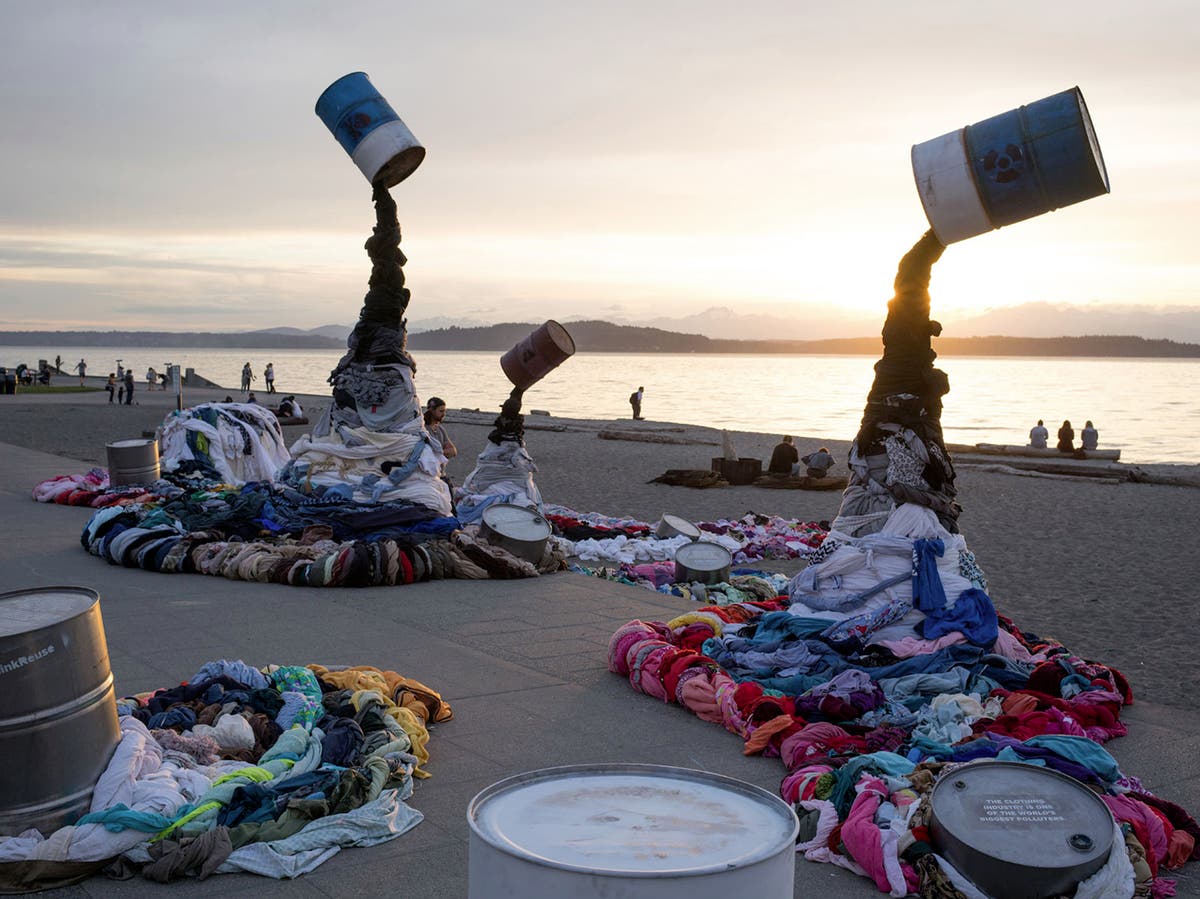
The expansion of the fashion industry is fantastic for the present-day global economy. After all, it contributes a whopping $3-5 trillion annually. Yet, it exerts an equally large detrimental impact on the environment, which is typically left unnoticed. Tasha Lewis, an assistant professor in Cornell University’s Department of Fiber Science & Apparel Design, dedicates her research to analyzing the impact of clothing consumption. In her podcast, “Future Fashion,” she explains that the production of clothing requires a massive quantity of water and energy. According to Lewis, it also “releases toxins into water supplies via dye baths, pesticides, and insecticides.” Additionally, Americans throw out, on average, 70 pounds of clothes per year per capita. Most of this waste ends up in landfills. This contributes to a large problem, as in the U.S. alone, the number of open landfills has decreased by nearly 80% since 1990. As the world continues to rapidly urbanize and we continue to generate more waste, we are running out of landfill space.
So, how does Lewis propose to fix this problem we are facing? She has a designed a business model that would collect and reuse clothing by “upcycling” it, or turning it into something new and desirable for consumers. This process would minimize waste, energy use, and pollution. Overall, we would be able to develop an industry which values consumer trends while being mindful of cost and the environment. As it turns out, you can have your cake and eat it too.
Find out what's happening in Half Hollow Hillsfor free with the latest updates from Patch.
In the meantime, many affordable, sustainable clothing brands do exist. For example, PACT carries eco-friendly, fair trade clothing. Alternative Apparel uses non-toxic dyes and eco-friendly production methods. And, of course, thrift shops are the most sustainable of all. Many of us waste our Christmas season dwelling on material things. This year, I challenge you to focus on the true meaning of Christmas spirit by helping not only other people, but also the planet.