Community Corner
LIDC: Controversy Over Conditions
The controversy surrounding LIDC didn't end with its construction.
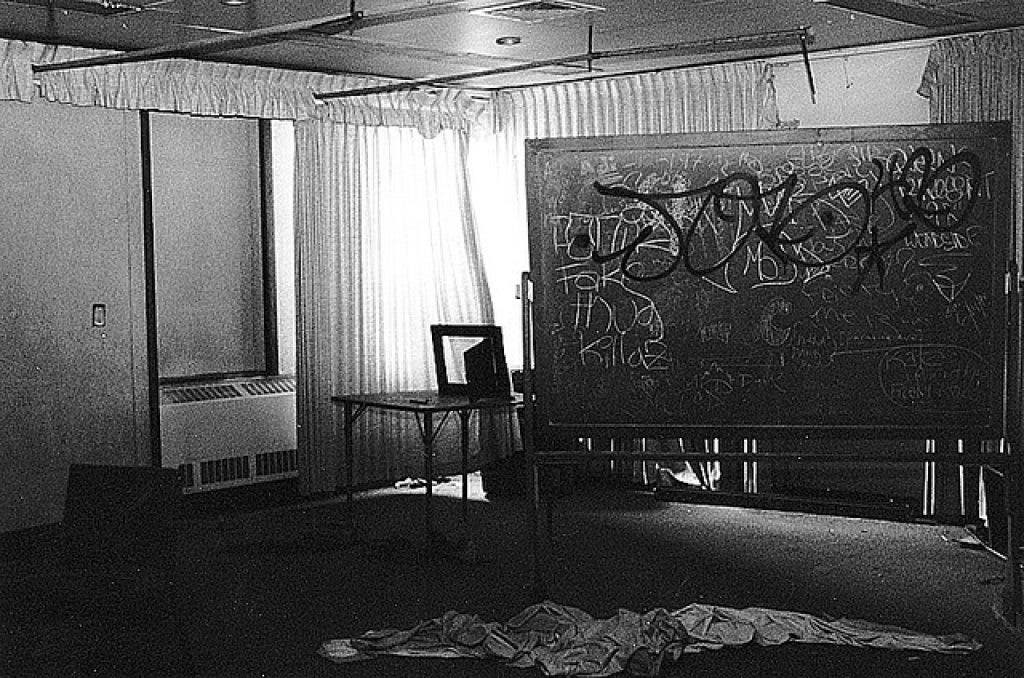


When we left off , the state was moving forward with its plans to construct a facility for the mentally retarded and handicapped in Melville despite loads of public opposition.
In the summer of 1962 the state opened up the first bids for the center’s construction. This bid included the power plants and the first building.
By December of the same year, the second bidding process had begun and this included 50 buildings to go up on the site. That same month, the public was invited to a presentation in Smithtown in which the state presented its plans and functions for the new center. (Long-Islander, Dec. 6, 1962)
Find out what's happening in Half Hollow Hillsfor free with the latest updates from Patch.
On Feb. 28, 1963 the Long-Islander reported that, “Contracts have been issued to the lowest bidders for construction…. The total of the bids, accepted by the state about the middle of January was $7,225,702, of which the general construction bid was $5,074,950.”
Then on March 12, 1964 the Long-Islander reported that: “There was more smoke and a number of house fires Monday at the State School for Mentally Retarded when the demolition contractor burned fromer homes, barns, and other buildings to further clear the property. More than 20 buildings were consumed by the flames.”
Find out what's happening in Half Hollow Hillsfor free with the latest updates from Patch.
In mid-October 1965 the new Suffolk State School for the Mentally Retarded, (later known as Long Island Development Center), officially opened its doors and admitted its first 10 patients. These children were transferred together from the Bronx State Hospital. At this time, construction would not be completed for at least a year.
The School estimated it would take five years to reach full capacity at 2,800 patients, with 1,100 staff, accepting a rate of 10 patients per week until staff was fully trained and they could accept more rapidly. (Long-Islander, Oct. 21, 1965)
Two years later, in October 1967, the Society for the Good Will to Retarded Children was formed with the mission of ensuring that conditions and treatment was always correct. As part of this volunteer effort, the doors were opened to the general public to come and see the purpose and possibilities of the school.
The program for the day included a presentation by the director of the school about the varied functions of the school and all phases of its operation, a tour of the school and its facilities, and a question and answer period. The society hoped that the program and tour would encourage people to volunteer to and work with their organization. (Long-Islander, Oct. 5, 1967)
The real controversy began when the living conditions of the patients at LIDC were being questioned. In August 1989 District Court Judge Jack B. Weinstein ruled for the second time (first in 1984) that conditions need to be improved and populations reduced at the site.
This ruling, “is yet another twist in a case that has been winding through the courts for a over a decade. It was launched in 1978, when a parent group filed a class-action suit charging the residents’ constitutional rights were violated because the center had not provided adequate housing, clothing, sanitary conditions, and training programs. The state asked the community to upgrade condition by placing residents in community group homes. “(Newsday, May 8, 1990) The State agreed in to start moving patients into community settings.
In 1986, the State Office of Mental Retardation and Developmental Disabilities proposed “the building of 40 to 50 small residential units to be built along the perimeter of the 500 acres of the Long Island Developmental Center for 600 clients now living in dormitories on the site… the units would be temporary homes, until the clients could be moved into the community in a 10-year period,” according to the Feb. 8, 1987 Newsday.
Plots adjacent to the residential units would be sold to private families, in the hopes of integrating the patients into the mainstream community and moving them out of their sheltered dormitories. The debate over these homes sparked more controversy in the community who were concerned about the cost of construction, the cost of upkeep, and the state’s unrealistic plan for resale. The state’s plan was to sell the residential units to private hands after the 10-year period.
In 1990, in order to settle the lawsuit originally brought in 1978 by patients, the state agreed to move all its residents into small residential homes. (In 1992, they bought 40 homes and converted them for this use.) But by the end of 1990, the state decided to close all of its developmental centers.
On March 31, 1993, in the face of this and another major lawsuit, as well as shifts in the state policy, the Long Island Development Center closed its doors. The article regarding its closing in that day’s Newsday, describes two of the patients who used to “spend their time in barren corners of cold rooms with hard floors” while they lived at LIDC.
The article described the conditions at the center in the 1970s when the lawsuits began, “In some of the wards, profoundly retarded children spent their day lying on mats with the smell of excrement, institutional food and antiseptic hanging heavy in the air. Some sat in pools of urine. Others were badly dressed. Activity, if there was any, consisted of staring at a television screen.”
At the time of the center’s closing, the two patients described in the article, lived in community homes, and volunteered at a soup kitchen, in the hopes of learning skills that may someday be transformed into a job. The developmentally disabled were no longer isolated and locked away to die, but were now engaging in and being a part of their community.
But as LIDC was surrounded in controversy in its planning and operating stages, it would again become the center of debate as the decision of what to do with the 400 acres of property unraveled.
Tune in next week for the conclusion of our series on LIDC.