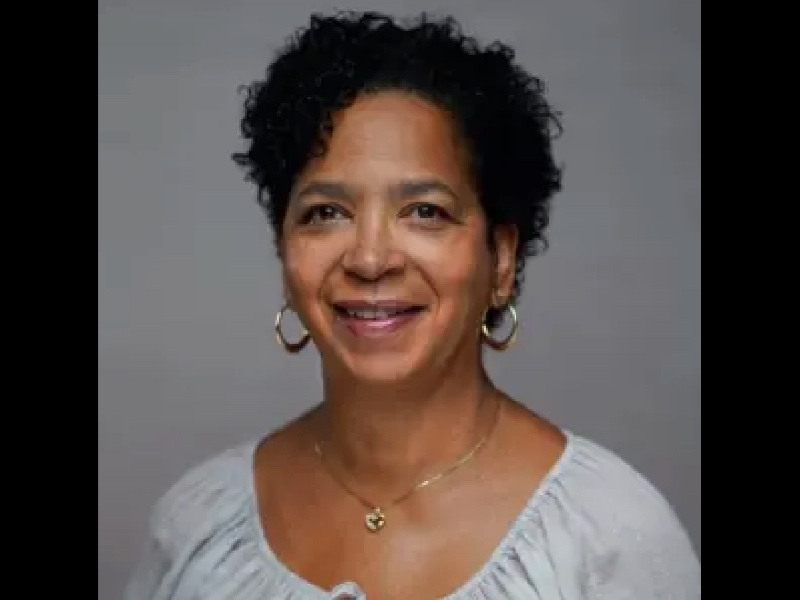
HHS Math teacher Kelly Fahmer presented her Masters of Special Education thesis in co-teaching at the Annual Council of Exceptional Children Conference in Melville, New York. The CEC is the largest international professional organization dedicated to improving the educational success of individuals with disabilities and/or gifts and talents.
Ms. Fahmer has been part of co-teaching teams since she began working in the Harrison Central School District. She has been a part of three different pairings, the latest with HHS teacher Claire Katz and as she says, the chemistry really works for the two of them and their students. Kelly’s students would rather refer to her as their math cheerleader.
What makes Kelly’s approach unique is that she believes that she has been in her student’s shoes. “I let them know that I failed a math test as well,” she said. She believes that she can relate to the student who is sitting in class quietly, afraid to ask or answer questions for fear of being wrong. Together with Ms. Kaitz, she has students develop “mathographies” or autobiographies of their math lives which helps build confidence, commonality, and a sense of community in her classroom.
Find out what's happening in Harrisonfor free with the latest updates from Patch.
“Unfortunately in math, almost every single student can pinpoint the exact moment where they felt they began to hate math,” she said. “I absolutely do not think that people are specifically math students or English students. A student might be stronger in a discipline other than math but it doesn’t mean that they can’t develop their strengths. Students want to be a part of the process of learning and they are incredibly self-aware.”
When she began researching co-teaching, she was shocked at how little research was out there on the actual practice. As part of Ms. Fahmer’s study, she used two known styles of co-teaching to pilot. One example was to “Team Teach” – a process where both teachers are teaching in tandem. The other was “One Teach/One Assist” – a process where one teacher is responsible for leading the class in the lessons and the other circulates through the classroom, answering questions and providing guidance. Kelly developed two assessments each week to gauge the success of one approach over the other. Her data indicated that students scored higher on the assessments when one teacher was teaching and one was assisting than in the team teach method.
Find out what's happening in Harrisonfor free with the latest updates from Patch.
Fahmer included a student survey showing they preferred the one/one method as well. Students mentioned that it was helpful to ask the other teacher a question in a “more private setting” as opposed to having all eyes on them when asking that same question to the entire class. They believed that it helped them stay on task and not fall behind by waiting to ask the question when no one was around.
“Students really do care what happens and they feel respected and validated when they are part of the process,” she said. “I believe that co-teaching and an exploration in special education instruction makes us better teachers because we are truly working toward meeting every student’s needs. It involves great discussions and is a fabulous way to share ideas.”
There are 130 teachers from kindergarten through twelfth grade that are involved in co-teaching in the Harrison Central School District and internal research shows that a student’s academic achievement improves through access and exposure. They develop better attitudes about themselves and their social skills, and a teacher’s efficacy increases. In fact, in 2006, 45% of Harrison students with disabilities graduated with the cohort in four years. Last year, 77% of students with disabilities graduated with their cohort and 62% of them received a Regents diploma. Co-teaching has benefitted the general education students who demonstrate similar or slightly high performance in co-taught classes.
Often teachers are aided by support services such as school social workers or administrators that are able to pull-out or push-in on related material. Some students benefit from explicit small group instruction.
Joan McNeece and Anthony Shay, co-teachers at LMK said at a recent Board of Education presentation on the merits of HCSD co-teaching, “We as teachers don’t have the same teaching styles and it is important to remember that children have different learning styles. A student will say to me ‘I didn’t quite understand it when you were teaching it to the class but when Mr. Shay was explaining, it made more sense to me.’ Teaching takes a village.”