Schools
Manhattanville University Welcomes Class of 2030
Incoming class projected to be Manhattanville's second largest in five years and its strongest academically in more than a decade.
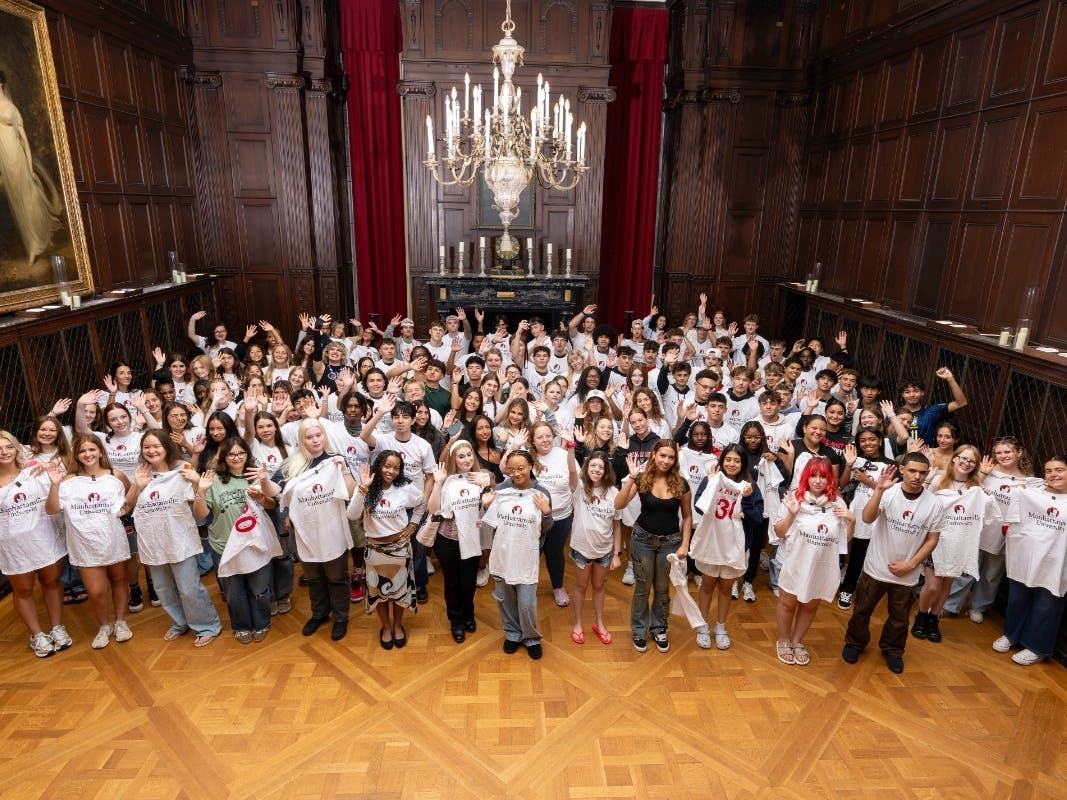
Purchase, NY, September 2026 – Manhattanville University has officially welcomed the Class of 2030, continuing a multi-year trend of success that is helping position the institution among the region's rising universities. The Class of 2030 is Manhattanville's second-largest first-year class in the past five years, reflecting sustained demand for the University's distinctive blend of liberal arts education, career preparation, and accelerated degree pathways.
The Class of 2030 builds upon the momentum of the record-setting Class of 2029, which was the University's largest first-year class in nearly a decade. Students entering this fall boast the highest average GPA since 2015, making this Manhattanville's strongest academic cohort in more than a decade.
"The Class of 2030 is a powerful reflection of Manhattanville University's upward trajectory," said President Frank D. Sánchez, Ph.D. "We are excited to welcome these talented students to our community. I know they will have a transformative experience at Manhattanville that will prepare them for success in their careers and lives.”
Find out what's happening in Harrisonfor free with the latest updates from Patch.
Interest in Manhattanville's academic offerings continues to rise, particularly in its accelerated academic programs, will allow students to receive a bachelor’s and master’s degree in as little as five years. In New York State, applications to accelerated programs have increased by 93% since fall 2024 and are up 11% over last year. Deposits among in-state students in accelerated programs have also increased by 2% year over year.
Several trends stand out within that growth:
Find out what's happening in Harrisonfor free with the latest updates from Patch.
·Enrollment from New York state residents is up 21% in accelerated degree programs within the sciences (Biology, Computer Science, Neuroscience, Biochemistry).
·Growth is being driven largely by commuter students, suggesting increased interest in pathways that allow students to earn advanced credentials more efficiently while reducing educational costs.
·Participation among Hispanic students continues to increase, with deposits into 4+1 accelerated programs rising approximately 8% this year.
These trends reinforce Manhattanville's strategic focus on affordability, flexibility, and career outcomes while maintaining its liberal arts tradition.
"The class of 2030 demonstrates that students and families continue to see tremendous value in Manhattanville," said Jessica T. Binns-Dickinson, Vice President for Enrollment Management and Strategy. "Students are looking for institutions that provide both a strong academic foundation and a clear path to career success. Manhattanville's commitment to experiential learning, personalized support, and innovative degree options continues to resonate with prospective students."
Every Manhattanville student participates in hands-on learning opportunities, including internships, clinical experiences, practicums, research, study abroad, or other experiential learning activities. The University's momentum also reflects investments in market-responsive academic programs alongside a curriculum designed to educate ethical and socially responsible leaders in a global community.
About Manhattanville University
Manhattanville University (formerly Manhattanville College) is a private liberal arts institution dedicated to academic excellence, purposeful education, and social responsibility. “U.S. News and World Report” ranks Manhattanville among the Top Performers of Social Mobility in Regional Universities North. The university has been recognized among the best colleges in The Princeton Review for close to 20 years. Located 30 miles from New York City on a 100-acre suburban campus in the heart of Westchester County, Manhattanville enables easy access to entertainment offerings, educational resources, and business opportunities for its diverse student body. The university serves more than 1,400 undergraduate students and nearly 1,000 graduate students from more than 44 countries and 33 states. Founded in 1841, the university offers more than 75 undergraduate and graduate areas of study in the arts and sciences, education, nursing and health sciences, business, and creative writing, as well as continuing and executive education programs. Graduate students can choose from over 70 graduate and certificate programs. Extracurricular offerings include more than 45 clubs and activities, and 23 NCAA Division III teams. For more information, visit mville.edu