Community Corner
One Good Deed Deserves Another
Harrison's Japanese community seeks to repay the town for its support during this year's earthquake and tsunami in Japan.
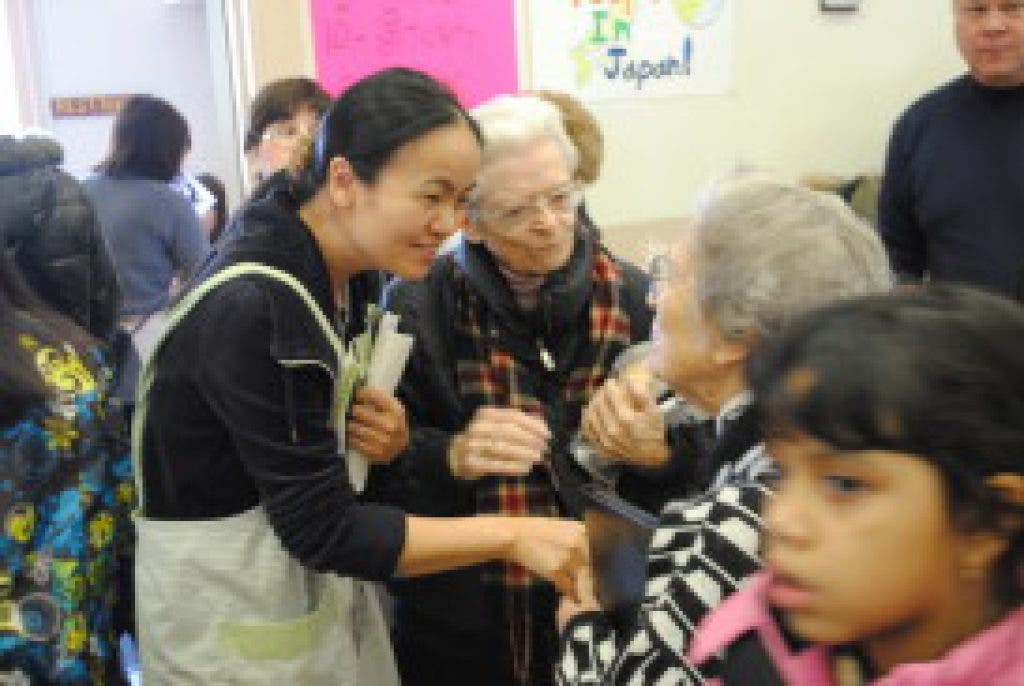


Young mother, Yukiko Ito, first heard about Harrison a year ago in her hometown in Japan.
“My husband, who is a banker, was being transferred to Manhattan for several years,” she explained. “Our realtor in Japan said there was a town we should think about for our home during that time and that town was Harrison.”
Harrison has been attracting a steady flow of Japanese businesspersons and their families for years. The easy commute to Manhattan, our country aesthetic and the chance to experience the four seasons are the initial attractions.
Find out what's happening in Harrisonfor free with the latest updates from Patch.
More importantly, schools in Harrison have an excellent reputation and there is a strong existing Japanese community. The town offers duplex zoning, which allows temporary residents, not wishing to buy a home, the opportunity to rent in a house setting rather than a small city apartment.
“The schools’ reputation is most important,” said Ito. “But we also love the parks and life here in town.”
Find out what's happening in Harrisonfor free with the latest updates from Patch.
Allan Bruckheim, previously a doctor in Harrison and past president of the Harrison Rotary Club, recognized the cultural and language difficulties the Japanese women, in particular, were facing and their resulting isolation. With the support of Rotary, Bruckheim initiated a free course 11 years ago to bridge the cultural and language gaps and encourage social integration.
That class continues today with weekly gatherings of 30-50 Japanese women at the Salazzo Recreation Center. An American teacher is funded by the Rotarians and works with the assistance of Leo Shinozaki, a Japanese-born volunteer instructor.
Shinozaki explained that the course focuses on encouraging interaction between the Japanese women and the general community.
“There are many cultural differences that need to be explained. These cultural differences can be small but confusing. For example, Japanese children are taken aback by the noise and behavior of children during lunch and play times at school. Their mothers are taken aback and unsure how to respond when they are greeted by people they don’t know who say hello. Later, they come to love these cultural differences,” he said.
“One of the reasons we have this class is to familiarize them with American ways so they can make American friends. We help with language and cultural issues, and then encourage them to open conversation and not wait for others to break the ice,” Shinozaki explained.
The success of these initiatives was shown earlier this year when, spearheaded by Bruckheim and Chamber of Commerce President Ada Angarano, the community rallied to support a Japanese-led fundraiser for victims of the earthquake and tsunami that hit Japan.
Watching the disaster and suffering live on television broadcasts, Harrison residents were strongly affected. Donations of everything from large furniture to small decorative pieces and baked goods rolled in from residents. Local men volunteered trucks and labor to transport the donations to the sale site and additional volunteers worked from early morning to day’s end to set up the goods for sale and work the tables alongside the Japanese residents.
Harumi Yamano was one of the Japanese residents who initiated the fundraiser.
“We were overwhelmed by the friendship and support that came from the town,” she said.
That one-day tag sale raised $10,000. It also created a feeling of incredible good will and fellowship amongst the Japanese community and an ongoing sense of gratitude.
“Everyone in Harrison stood up to support us and we will never forget that support and friendship,” Shinozaki explained.
Since then, the Japanese community has been looking for some chance to repay the favor. They found that opportunity when Bruckheim recently mentioned the severe shortages being faced by the Harrison Food Pantry.
“We didn’t even know there was a food pantry or a need like that in this community,” Shinozaki said. “We decided it was something we could finally help with.”
Shinozaki and Yamano drafted a flier that went out to the Japanese community this month.
“It said that we had found an opportunity for us to repay the support and friendship the Harrison people showed us in some small way,” Shinozaki said.
“We asked the community to participate in a one day contribution drive in early October to bring money and other contributions for the food pantry and the town residents who need that help. We explained that it was a way we could show a small part of our appreciation and support to the town and the townspeople.”
Director of Community Services Nina Marraccini says the help couldn’t come at a better time.
“We are in a desperate situation at the food pantry and without help Harrison children and their families will be going hungry,” she said.
The Japanese community is taking the old saying “one good deed deserves another” and turning it into positive action.